Sovereignty Module: Flex the Material
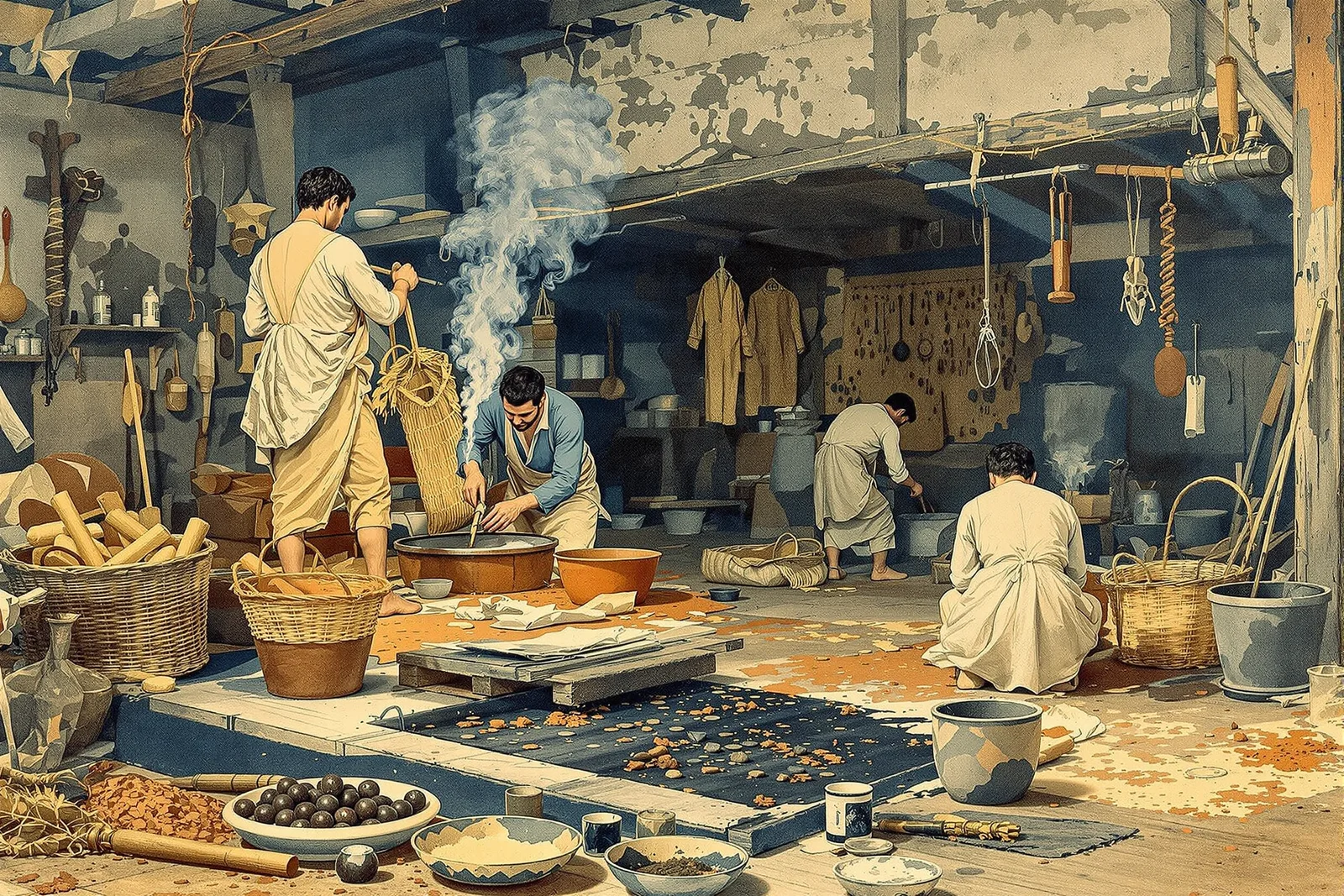
Flex the Material
Complete Rubber, Latex, and Elastomer Processing Guide
Complete Rubber, Latex, and Elastomer Processing Guide
Rubber seals pipes, insulates wires, cushions wheels, waterproofs clothing, and makes gaskets that hold engines together. This campaign covers natural rubber harvesting, vulcanization, and substitute elastomers from available materials.
Chapter 1: Natural Rubber Sources
| Source | Latex Yield | Climate | Processing |
|---|---|---|---|
| Hevea brasiliensis (rubber tree) | Highest (commercial standard) | Tropical | Tap bark, collect latex |
| Ficus elastica (rubber fig) | Moderate | Tropical/subtropical | Tap bark |
| Taraxacum kok-saghyz (Russian dandelion) | Low-moderate | Temperate | Extract from roots |
| Guayule (Parthenium argentatum) | Moderate | Arid/semi-arid | Extract from stems |
| Milkweed (Asclepias) | Low | Temperate | Extract from stems |
| Chicle (Manilkara zapota) | Moderate (gum, not true rubber) | Tropical | Tap bark |
Chapter 2: Latex Collection and Processing
| Step | Action | Details |
|---|---|---|
| 1 | Tap tree (diagonal cut through bark, not into wood) | Use tapping knife; cut 1/3 circumference |
| 2 | Collect latex in cup (flows 2-4 hours) | 30-50 ml per tapping |
| 3 | Add preservative (ammonia, 0.5%) | Prevents coagulation during storage |
| 4 | Coagulate (when ready to process) | Add acid (formic acid, vinegar, or lemon juice) |
| 5 | Press into sheets (remove water) | Pass through rollers or press with boards |
| 6 | Smoke or air-dry sheets | Smoking (3-7 days) adds preservative; air-dry (1-2 weeks) |
| 7 | Result: raw rubber (crepe or smoked sheet) | Elastic but sticky when hot, brittle when cold |
Chapter 3: Vulcanization
Raw rubber is nearly useless: sticky in heat, brittle in cold. Vulcanization (heating with sulfur) cross-links the polymer chains, creating stable, elastic rubber.
| Method | Temperature | Sulfur Content | Time | Result |
|---|---|---|---|---|
| Hot vulcanization | 280-320F (140-160C) | 3-5% by weight | 30-60 minutes | Standard rubber (tires, gaskets) |
| Cold vulcanization | Room temperature | Sulfur chloride solution (dip) | 1-5 minutes | Thin items (gloves, balloons) |
| Hard rubber (ebonite) | 300F+ | 25-35% sulfur | 2-6 hours | Hard, rigid (combs, cases, insulation) |
Process: Mix raw rubber with sulfur powder (knead thoroughly on heated surface or in mill). Add filler (carbon black from soot for strength, clay for bulk). Shape into desired form. Heat in mold or oven at 300F for 30-60 minutes. Cool. Result: stable, elastic, durable rubber.
Chapter 4: Applications
| Product | Rubber Type | Construction Method |
|---|---|---|
| Gaskets/seals | Standard vulcanized | Cut from sheet rubber |
| Hoses | Rubber over fabric reinforcement | Wrap rubber around mandrel with fabric layers |
| Tires (solid) | Hard compound with carbon black | Mold around wheel rim |
| Waterproof clothing | Rubber-coated fabric | Spread dissolved rubber on cloth |
| Electrical insulation | Vulcanized rubber or ebonite | Wrap around conductor |
| Shock absorbers | Soft vulcanized rubber | Molded blocks or cylinders |
| Erasers | Soft rubber with pumice | Molded |
Chapter 5: Rubber Substitutes
| Substitute | Source | Properties | Use |
|---|---|---|---|
| Leather (oiled) | Animal hides | Flexible, moderate seal | Gaskets, washers, pump valves |
| Cork | Cork oak bark | Compressible, waterproof | Gaskets, floats, insulation |
| Gutta-percha | Palaquium trees (tropical) | Similar to rubber but thermoplastic | Wire insulation, dental, golf balls |
| Pitch/tar compounds | Coal tar or pine resin | Waterproof, not elastic | Sealant, waterproofing |
| Silicone (if available) | Salvaged silicone products | Heat-resistant, flexible | Gaskets, molds, medical |
| Waxed cloth | Fabric + beeswax/paraffin | Waterproof, stiff | Waterproof covers, containers |
Reference Card
- Natural rubber comes from latex (milky sap) of rubber trees and several temperate alternatives
- Raw rubber is useless without vulcanization (heating with 3-5% sulfur at 300F for 30-60 min)
- Carbon black (soot) added to rubber increases strength and UV resistance dramatically
- Cold vulcanization (sulfur chloride dip) works for thin items like gloves
- 25-35% sulfur produces hard rubber (ebonite): rigid, insulating, machinable
- Russian dandelion and guayule produce rubber in temperate/arid climates
- Leather, cork, and pitch serve as rubber substitutes for gaskets and sealing
- Always tap rubber trees carefully: cut bark only, never into the wood (kills the tree)
TransmissionCOMPLETE — unaltered & unabridged
Words750 — every one of them
SHA-256 of source text56c102a22a1d0d9187ee07dfd64b06a14e7734bb3b9453ca951ba6754cae5b23
Canonical textdownload campaign-rubber.md — byte-identical to what this page renders