Sovereignty Module: Set the Table
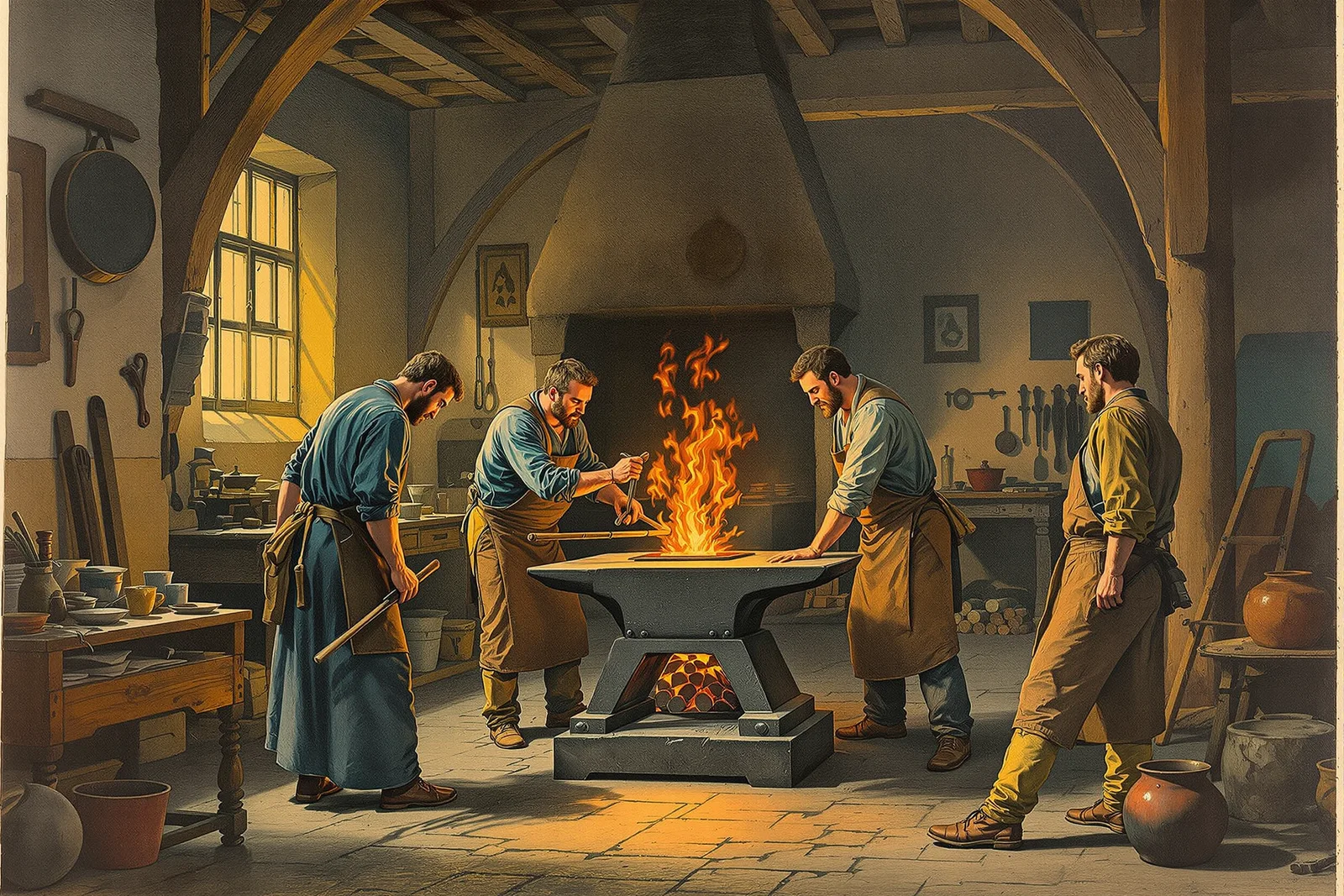
Set the Table
Complete Wrought Iron Table and Furniture: From Bar to Functional Art
Complete Wrought Iron Table and Furniture: From Bar to Functional Art
Iron furniture combines structural engineering with decorative art. This campaign covers table base design, chair construction, bench making, and the integration of iron with wood and stone.
Chapter 1: Iron Furniture Types
| Type | Components | Weight | Complexity |
|---|---|---|---|
| Coffee table base | 4 legs, stretchers, top frame | 25-40 lbs | Moderate |
| Dining table base | 4 legs, stretchers, top supports | 40-70 lbs | High |
| Console table | 2 legs, wall mount, top frame | 20-35 lbs | Moderate |
| Bar stool | 4 legs, seat ring, footrest | 15-25 lbs | Moderate |
| Garden bench | Scroll ends, seat supports | 40-60 lbs | High |
| Plant stand | 3-4 legs, ring top | 10-20 lbs | Low-moderate |
Chapter 2: Table Base Construction
Dining table base: 1) Legs: 3/4 inch square bar, 28-29 inches tall (standard dining height). 2) Forge decorative elements on legs (twists, collars, tapers). 3) Top frame: 1/2 x 1.5 inch flat bar, sized for tabletop. 4) Stretchers: 1/2 inch bar connecting legs at mid-height. 5) Stretchers provide lateral stability. 6) Feet: forged pads or scrolls (protect floor, add stability). 7) Leveling adjusters: threaded bolt in each foot. 8) Top attachment: tabs or clips welded to frame.
| Table Type | Leg Size | Height | Top Frame | Stretchers |
|---|---|---|---|---|
| Coffee table | 5/8 inch | 16-18 inches | 1/2 x 1 inch | Optional |
| End table | 5/8 inch | 22-24 inches | 1/2 x 1 inch | Recommended |
| Dining table | 3/4 inch | 28-30 inches | 1/2 x 1.5 inch | Required |
| Bar height | 3/4 inch | 40-42 inches | 1/2 x 1.5 inch | Required |
Chapter 3: Joinery
| Joint Type | Method | Strength | Appearance |
|---|---|---|---|
| Mortise and tenon | Punch hole, insert tenon | Excellent | Clean, traditional |
| Collar joint | Wrap collar around junction | Good | Decorative |
| Forge weld | Heat and hammer | Excellent | Seamless |
| Rivet | Pin through overlapping pieces | Good | Visible, decorative |
| Bolt | Through-bolt with nut | Excellent | Allows disassembly |
| Arc weld (hidden) | Weld then grind smooth | Excellent | Invisible |
Chapter 4: Iron and Wood Integration
| Method | Description | Best For |
|---|---|---|
| Tabletop on iron base | Wood or stone top sits on iron frame | Tables |
| Iron legs, wood seat | Iron frame supports wooden seat | Chairs, stools |
| Iron and wood bench | Iron scroll ends with wood slat seat | Garden benches |
| Iron brackets on wood | Iron brackets support wood shelves | Shelving |
| Iron inlay in wood | Iron elements set into wood surface | Decorative panels |
Chapter 5: Finishing for Indoor Use
| Finish | Method | Durability | Appearance |
|---|---|---|---|
| Beeswax | Apply to warm steel | Moderate (reapply yearly) | Natural, subtle sheen |
| Paste wax | Apply and buff | Moderate | Smooth, satin |
| Clear lacquer | Spray multiple coats | Good | Preserves forge color |
| Powder coat | Professional application | Excellent | Uniform, any color |
| Patina + clear coat | Chemical patina then seal | Good | Aged, artistic |
Reference Card
- Structural integrity comes first (furniture must support weight safely; a table base must support the tabletop plus whatever is placed on it; design for at least 3x the expected load). 2. Stretchers prevent racking (without stretchers, table legs can splay outward under load; stretchers connect the legs and prevent this lateral movement; they are structural, not just decorative). 3. Level feet are essential (an uneven floor causes furniture to rock; adjustable feet (threaded bolts) allow leveling on any surface; this small detail makes a large difference in quality). 4. Iron and wood complement each other (the strength and permanence of iron combined with the warmth and beauty of wood creates furniture that is both functional and beautiful). 5. Forge marks add character (the hammer marks, fire scale, and slight irregularities of hand-forged iron give furniture a warmth and personality that machined metal lacks; preserve these marks). 6. Weight is a feature, not a flaw (iron furniture is heavy; this weight provides stability and a sense of permanence; a heavy table does not slide or tip; embrace the weight). 7. Iron furniture lasts generations (properly made and finished iron furniture will outlast the building it sits in; it is an investment in permanence that wooden furniture cannot match). 8. Furniture is the blacksmith's most intimate work (people sit on, eat at, and live with furniture every day; a beautifully forged table or bench becomes part of the family's daily life and memories).
TransmissionCOMPLETE — unaltered & unabridged
Words841 — every one of them
SHA-256 of source textf256394bcf37cd496b80ef669f0717b5025a70f048ff1a9d2f6af02edb3aabb3
Canonical textdownload campaign-set-table.md — byte-identical to what this page renders