Sovereignty Module: Raise the Roof
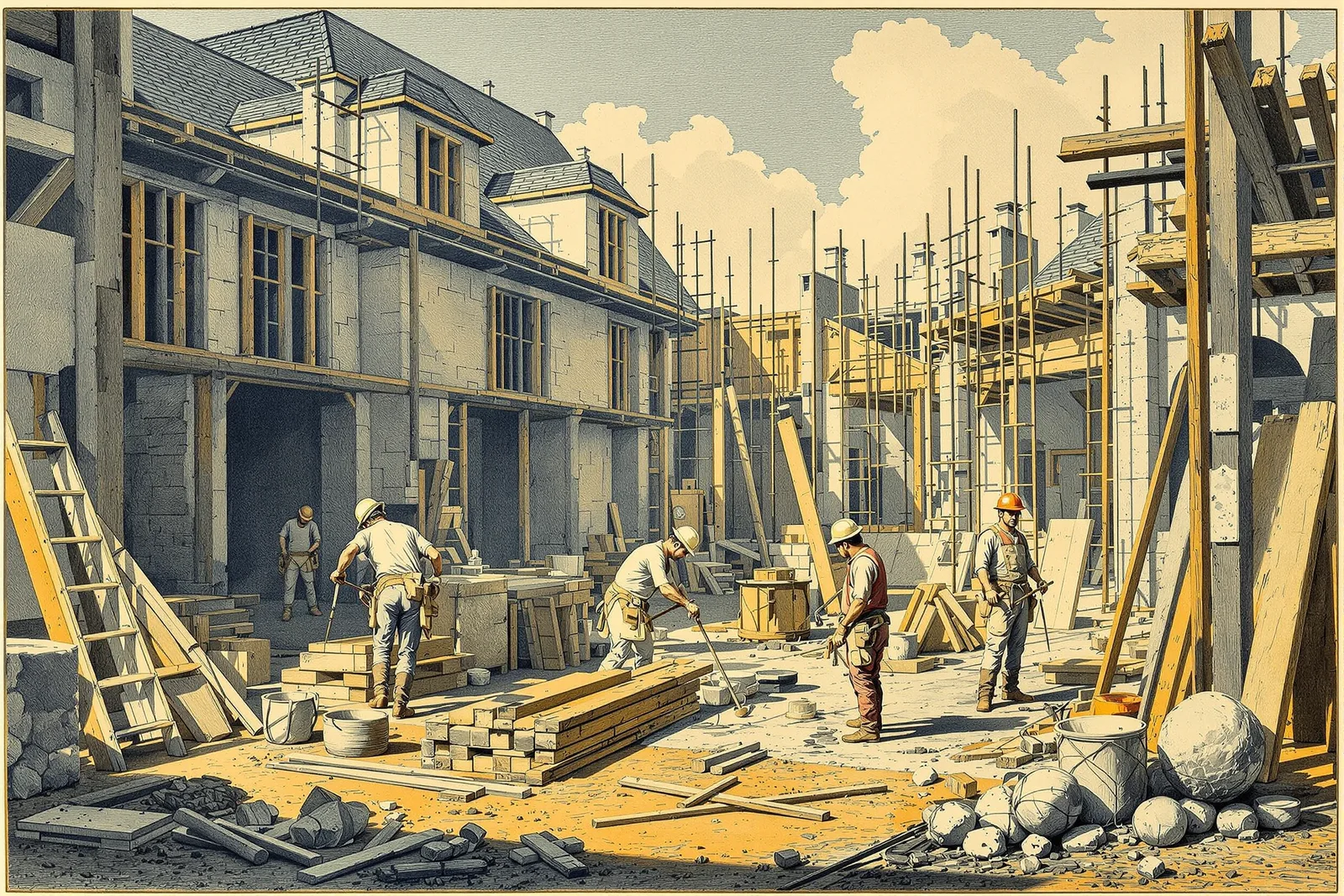
Raise the Roof
Complete Shelter Construction: From Foundation to Finish
Complete Shelter Construction: From Foundation to Finish
Shelter protects from elements, provides security, and enables all other activities. This campaign covers site selection, foundation, framing, roofing, and finishing.
Chapter 1: Site Selection
| Factor | Ideal | Avoid | Why |
|---|---|---|---|
| Elevation | Slightly elevated, mid-slope | Valley floor, hilltop | Valleys: cold air, flooding. Hilltops: wind, lightning |
| Drainage | Slope away from building | Flat or concave ground | Water must flow away from foundation |
| Water access | Within 200 yards | Directly adjacent (flood risk) | Close enough for daily use, far enough for safety |
| Sun exposure | South-facing (N. hemisphere) | North-facing, deep shade | Passive solar heating, drying, garden potential |
| Wind protection | Natural windbreak (trees, hill) | Exposed ridgeline | Reduces heat loss, structural stress |
| Soil | Well-drained, firm | Wet clay, fill, sand | Foundation stability, basement possibility |
| Trees | Nearby (building material) | Directly overhead (falling risk) | Material access without hazard |
| Flood history | Above 100-year flood line | Floodplain, dry creek bed | Floods destroy everything |
Chapter 2: Foundation Types
| Type | Best Soil | Load Capacity | Cost | Difficulty | Best For |
|---|---|---|---|---|---|
| Stone pier | Any firm soil | Moderate | Low | Easy | Cabins, light structures |
| Rubble trench | Most soils | Moderate | Low | Moderate | Natural buildings, good drainage |
| Concrete slab | Stable soil | High | Moderate-high | Moderate | Permanent, heated floors |
| Concrete block | Most soils | High | Moderate | Moderate | Standard construction |
| Post-in-ground | Firm soil | Low-moderate | Very low | Very easy | Temporary, pole buildings |
| Dry stone | Rocky soil | High | Low (material) | High (skill) | Historical, permanent |
Foundation rules: Below frost line (prevents heaving). On undisturbed soil (never fill). Level (use water level). Drainage away from building. Damp-proof between foundation and wood (prevents rot). Wider than wall above (spreads load). Deeper = more stable.
Chapter 3: Framing Systems
| System | Material | Skill Level | Tools | Span | Best For |
|---|---|---|---|---|---|
| Pole/post frame | Round logs | Low-moderate | Axe, saw, drill | 12-20 ft | Barns, workshops, quick |
| Log cabin (stacked) | Round/hewn logs | Moderate | Axe, saw, drawknife | Wall length | Cold climates, available timber |
| Timber frame | Squared timbers | High | Saw, chisel, mallet, auger | 16-30 ft | Permanent, beautiful, strong |
| Stick frame (2×4/2×6) | Dimensional lumber | Moderate | Saw, hammer, level | 12-16 ft | Standard modern construction |
| A-frame | Any timber | Low | Saw, fasteners | 12-20 ft | Quick shelter, steep roof |
| Earthbag/superadobe | Earth-filled bags | Low-moderate | Bags, barbed wire, tamper | 12-15 ft | Earthquake resistant, cheap |
| Cob/adobe | Earth + straw | Low | Hands, forms | 10-12 ft | Thermal mass, natural |
Chapter 4: Roofing
| Material | Lifespan | Cost | Weight | Difficulty | Fire Resistance |
|---|---|---|---|---|---|
| Metal (corrugated) | 40-70 years | Moderate | Light | Easy | Excellent |
| Thatch (straw/reed) | 15-30 years | Very low | Heavy | Moderate-high | Poor (treat with lime) |
| Wood shingle/shake | 20-40 years | Low-moderate | Moderate | Moderate | Poor (unless treated) |
| Slate | 100+ years | High | Very heavy | High | Excellent |
| Clay tile | 50-100 years | Moderate | Heavy | Moderate | Excellent |
| Sod/living roof | 20-40 years | Very low | Very heavy | Moderate | Good (when wet) |
| Tar/pitch + fabric | 10-20 years | Low | Light | Easy | Poor |
Roof pitch: Steeper = sheds water/snow better but uses more material. Minimum pitches: Metal 3:12 (14°). Shingle 4:12 (18°). Thatch 45°+ (12:12). Flat roofs need membrane (not recommended for DIY). Standard residential: 6:12 to 8:12. Snow country: 8:12 to 12:12.
Chapter 5: Insulation and Climate Control
| Material | R-value/inch | Cost | Availability | Fire Risk | Best For |
|---|---|---|---|---|---|
| Straw bale | R-1.5-3/inch (R-30+ wall) | Very low | Agricultural areas | Moderate (plastered = low) | Walls (load-bearing or infill) |
| Wool (sheep) | R-3.5/inch | Low-moderate | Sheep farming areas | Low (self-extinguishing) | Walls, attic |
| Cellulose (shredded paper) | R-3.5/inch | Low | Anywhere (recycled) | Low (treated with borax) | Walls, attic |
| Sawdust/wood shavings | R-2.5/inch | Very low | Sawmill areas | Moderate | Walls, attic (pack tight) |
| Cattail/reed | R-2-3/inch | Very low | Wetland areas | Moderate | Walls, roof |
| Earth (thermal mass) | R-0.25/inch (stores heat) | Free | Everywhere | None | Walls (cob, adobe, rammed earth) |
| Cork | R-3.6/inch | Moderate-high | Cork oak regions | Low | Walls, floors |
| Fiberglass (modern) | R-3.2/inch | Moderate | Commercial | None | Standard modern construction |
Chapter 6: Essential Systems
| System | Purpose | Complexity | Priority | Notes |
|---|---|---|---|---|
| Ventilation | Fresh air, moisture control | Low-moderate | Critical | Cross-ventilation minimum. Ridge vent ideal |
| Chimney/flue | Exhaust smoke from heating | Moderate | Critical (if heating with fire) | Proper draft prevents carbon monoxide |
| Drainage (exterior) | Keep water away from foundation | Low | Critical | Grade away 6" in first 10 feet |
| Vapor barrier | Prevent moisture in walls | Low | Important | Warm side of insulation |
| Pest exclusion | Keep rodents/insects out | Low | Important | Seal all gaps >1/4". Screen vents |
| Lightning protection | Prevent fire from strikes | Moderate | Important (tall structures) | Rod + conductor + ground rod |
Reference Card
- Site: south-facing, mid-slope, well-drained, near water but above flood line. Wind protection. Good soil.
- Foundation: below frost line, on undisturbed soil, level, wider than wall, drainage away from building.
- Roof pitch: steeper = better water/snow shedding. Metal 3:12 minimum. Thatch 45°+. Standard 6:12 to 8:12.
- Insulation: straw bale walls = R-30+ for almost free. Plaster both sides for fire protection and durability.
- Ventilation: never seal a building completely. Cross-ventilation minimum. Moisture kills buildings (rot, mold).
- Thermal mass: heavy materials (stone, earth, concrete) store heat during day, release at night. Free heating/cooling.
- Chimney: must draw properly (warm air rises). Taller = better draft. Insulate chimney. Clean annually (prevent chimney fire).
- Build small first: a 12×16 cabin is livable and buildable by one person. Expand later. Shelter now > perfect house someday.
TransmissionCOMPLETE — unaltered & unabridged
Words1,154 — every one of them
SHA-256 of source textec6ff033f95c5f6fa3915ac5fd41ca15334bfe3a9e5da105a0869fc02522fcf8
Canonical textdownload campaign-shelter-complete-v2.md — byte-identical to what this page renders