Sovereignty Module: Start the Seed
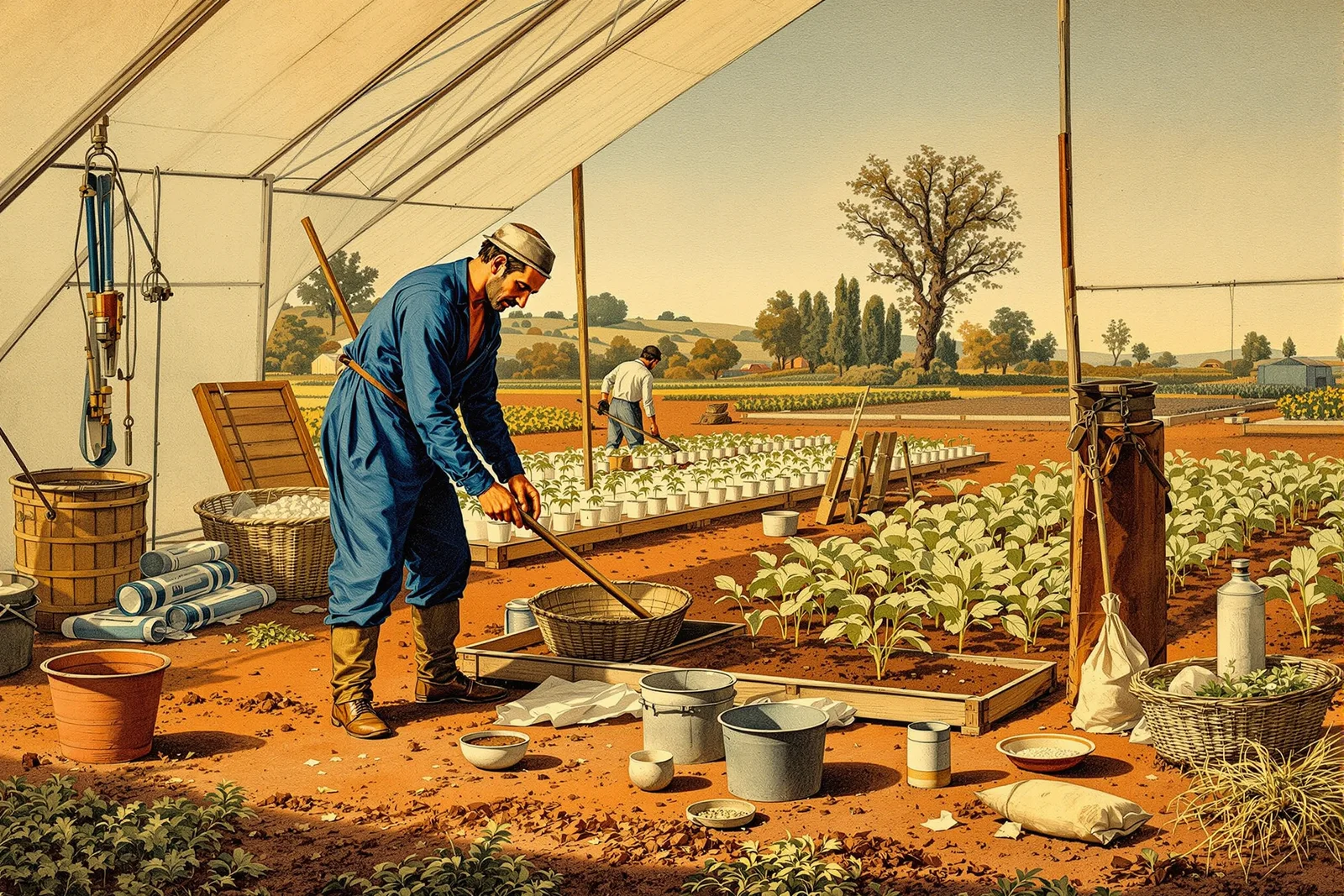
Complete Seed Starting and Greenhouse Propagation: From Dormancy to Transplant
Starting plants from seed is the foundation of food sovereignty. This campaign covers seed viability, germination techniques, soil mixes, transplanting, and season extension.
Chapter 1: Seed Viability
| Seed Type | Viability (years) | Germination Rate (fresh) | Storage Method | Test Method |
|---|---|---|---|---|
| Tomato | 4-7 years | 85-95% | Cool, dry, dark | Water float test |
| Pepper | 2-4 years | 80-90% | Cool, dry, dark | Paper towel test |
| Squash/pumpkin | 4-6 years | 85-95% | Cool, dry, dark | Water float test |
| Bean/pea | 3-4 years | 85-95% | Cool, dry, dark | Paper towel test |
| Corn | 2-3 years | 85-95% | Cool, dry, dark | Paper towel test |
| Lettuce | 3-5 years | 80-90% | Cool, dry, dark | Paper towel test |
| Carrot | 3-4 years | 70-85% | Cool, dry, dark | Paper towel test |
| Onion | 1-2 years | 70-85% | Cool, dry, dark | Paper towel test |
| Brassica (cabbage family) | 4-5 years | 85-95% | Cool, dry, dark | Paper towel test |
Germination test: 1) Place 10 seeds on damp paper towel. 2) Fold towel over seeds. 3) Place in plastic bag (partially open for air). 4) Keep at 70-80°F. 5) Check daily for 7-14 days. 6) Count germinated seeds. 7) Multiply by 10 for germination percentage. 8) Above 70%: good viability. 9) 50-70%: plant extra seeds to compensate. 10) Below 50%: obtain fresh seed.
Chapter 2: Seed Starting Mix
| Component | Proportion | Function | Source |
|---|---|---|---|
| Peat moss or coir | 40-50% | Moisture retention, light texture | Garden supply |
| Perlite or vermiculite | 25-30% | Drainage, aeration | Garden supply |
| Compost (fine, screened) | 20-30% | Nutrients, biology | Homemade |
| Worm castings | 5-10% (optional) | Gentle nutrients | Worm bin |
DIY seed starting mix: 1) Screen compost through 1/4 inch mesh (remove chunks). 2) Mix equal parts: screened compost, peat/coir, perlite. 3) Moisten mix before filling containers (should hold shape when squeezed). 4) Do not use garden soil (too heavy, contains pathogens). 5) Sterilize compost if damping-off is a problem (bake at 180°F for 30 minutes). 6) Fill containers to 1/4 inch below rim. 7) Firm gently (not packed tight).
Chapter 3: Starting Techniques
| Method | Best For | Difficulty | Cost | Scale |
|---|---|---|---|---|
| Cell trays (plastic) | Most vegetables | Low | Low | Large |
| Soil blocks | All vegetables | Moderate | Very low (DIY blocker) | Medium-large |
| Paper pots (DIY) | Transplant-sensitive plants | Low | Free | Small-medium |
| Direct sow | Root crops, beans, corn | Very low | Very low | Any |
| Winter sowing (milk jugs) | Cold-hardy plants | Very low | Free | Small-medium |
| Peat/coir pellets | Convenience | Very low | Moderate | Small |
Seed starting schedule: 1) Count backward from last frost date. 2) Tomatoes, peppers: start 6-8 weeks before last frost. 3) Brassicas (cabbage, broccoli): start 4-6 weeks before last frost. 4) Lettuce, herbs: start 4-6 weeks before last frost. 5) Squash, melons, cucumbers: start 2-3 weeks before last frost. 6) Beans, corn, root crops: direct sow after last frost. 7) Onions: start 8-12 weeks before last frost (or from sets).
Chapter 4: Light and Temperature
| Crop | Germination Temp | Growing Temp | Light (hours/day) | Days to Germinate |
|---|---|---|---|---|
| Tomato | 70-85°F | 65-75°F | 14-16 | 5-10 |
| Pepper | 75-90°F | 70-80°F | 14-16 | 7-14 |
| Lettuce | 60-70°F | 55-65°F | 12-14 | 3-7 |
| Cabbage | 65-75°F | 60-70°F | 14-16 | 4-7 |
| Squash | 70-90°F | 65-75°F | 14-16 | 4-7 |
| Onion | 65-75°F | 55-65°F | 14-16 | 7-14 |
Light requirements: 1) Seedlings need 14-16 hours of light per day. 2) Window light is usually insufficient (leggy, weak seedlings). 3) Fluorescent or LED shop lights work well. 4) Position lights 2-4 inches above seedlings. 5) Raise lights as seedlings grow. 6) Timer: 14-16 hours on, 8-10 hours off. 7) Rotate trays daily if using window light (prevents leaning).
Chapter 5: Hardening Off and Transplanting
| Day | Exposure | Duration | Conditions |
|---|---|---|---|
| 1-2 | Sheltered shade | 2-3 hours | No wind, no direct sun |
| 3-4 | Partial sun | 3-4 hours | Light breeze OK |
| 5-6 | Full sun | 4-6 hours | Normal conditions |
| 7-8 | Full sun | 6-8 hours | Leave out longer |
| 9-10 | Full day outside | All day, bring in at night | Near-normal conditions |
| 11-14 | Full day and night | 24 hours | Leave out overnight if no frost |
Transplanting: 1) Water seedlings thoroughly before transplanting. 2) Transplant on cloudy day or in evening (reduces shock). 3) Dig hole larger than root ball. 4) Set plant at same depth (or deeper for tomatoes). 5) Firm soil around roots. 6) Water immediately after planting. 7) Mulch around plant (retains moisture, suppresses weeds). 8) Protect from wind and sun for 2-3 days if needed.
Reference Card
- Start with good seed (fresh seed from reliable sources germinates reliably; test old seed before planting to avoid wasted time and space). 2. Seed starting mix is not garden soil (garden soil is too heavy and contains pathogens; use a light, sterile mix of peat, perlite, and compost). 3. Light is the most common limiting factor (seedlings need 14-16 hours of strong light; insufficient light produces weak, leggy plants). 4. Bottom heat speeds germination (most seeds germinate faster at 75-85°F; a heat mat under trays can cut germination time in half). 5. Harden off before transplanting (moving seedlings directly from indoors to garden causes shock; gradually expose them to outdoor conditions over 10-14 days). 6. Transplant on cloudy days (direct sun and wind stress transplants; cloudy, calm evenings give plants time to adjust). 7. Water from below (bottom watering encourages deep root growth and prevents damping-off disease; set trays in shallow water and let mix wick up). 8. Save your own seed (seed saving closes the loop of food sovereignty; learn to save seed from your best plants for next year's garden).