Sovereignty Module: Clothe the People
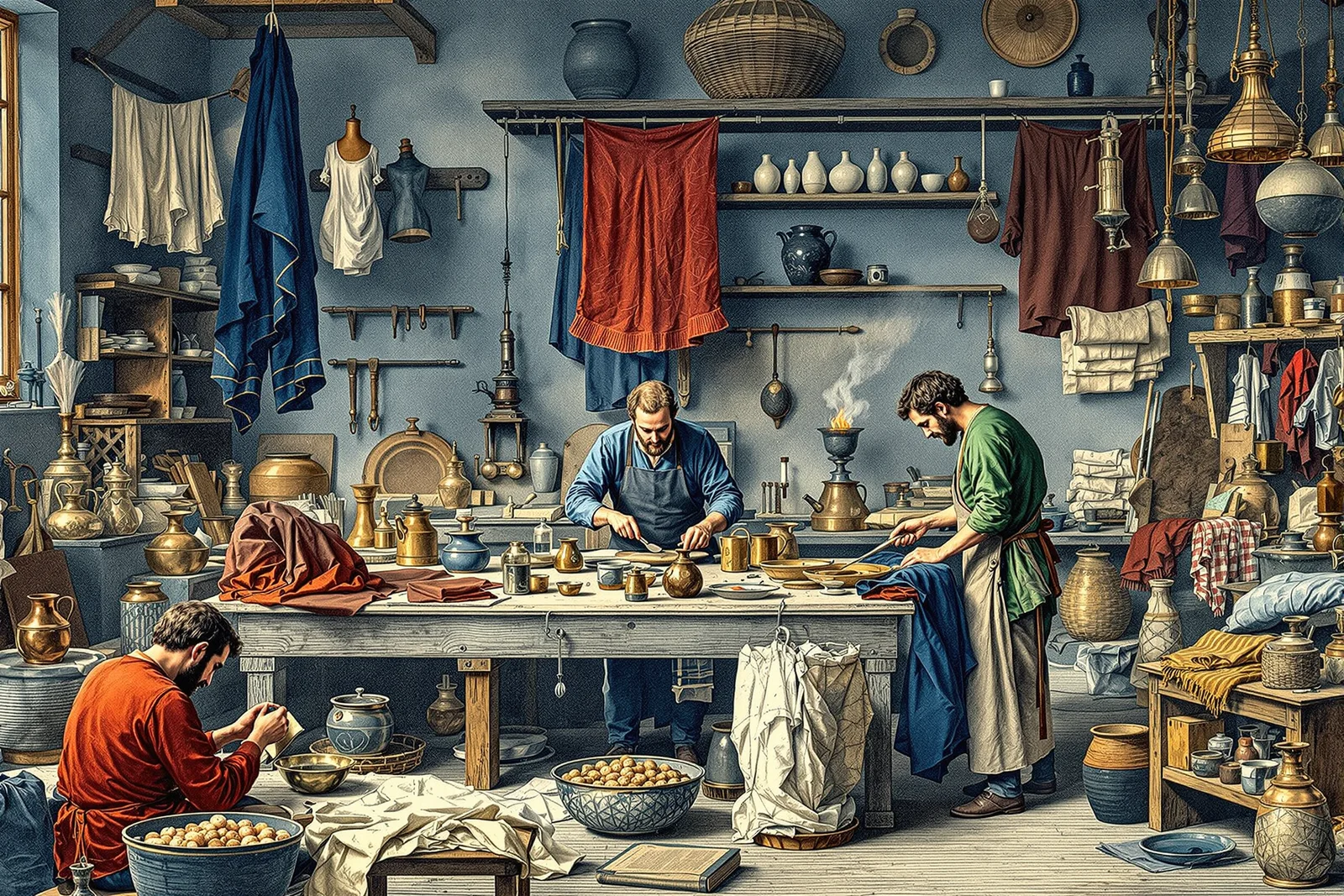
Complete Textiles: From Fiber to Finished Garment
Clothing protects from elements, prevents disease, and enables work in all conditions. This campaign covers fiber production, spinning, weaving, dyeing, and garment construction.
Chapter 1: Fiber Sources
| Fiber | Source | Climate | Processing | Properties | Difficulty |
|---|---|---|---|---|---|
| Flax (linen) | Flax plant stems | Temperate, cool | Ret, break, hackle | Strong, cool, durable | Moderate-high |
| Cotton | Cotton plant bolls | Warm, long season | Gin, card, spin | Soft, absorbent, versatile | Moderate |
| Wool | Sheep fleece | Any (sheep adaptable) | Shear, wash, card | Warm, water-resistant, elastic | Moderate |
| Hemp | Hemp plant stems | Temperate | Ret, break, hackle | Very strong, durable, coarse | Moderate |
| Silk | Silkworm cocoons | Warm, mulberry trees | Reel from cocoons | Luxurious, strong, fine | High |
| Nettle | Stinging nettle stems | Temperate, wild | Ret, strip, process | Strong, fine, like linen | Moderate |
| Bark cloth | Inner bark (mulberry, elm) | Tropical-temperate | Pound, soak, pound | Soft, paper-like | Low |
| Animal hide | Any animal skin | Any | Tan (see leather campaign) | Waterproof, durable, warm | Moderate |
| Sinew | Animal tendons | Any | Dry, split, twist | Extremely strong thread | Low |
Chapter 2: Spinning
| Method | Speed | Quality | Portability | Skill Level |
|---|---|---|---|---|
| Hand twisting (thigh spinning) | Very slow | Moderate | Maximum | Beginner |
| Drop spindle | Slow-moderate | High | High | Beginner-intermediate |
| Supported spindle | Slow | Very high (fine thread) | High | Intermediate |
| Spinning wheel (great wheel) | Fast | Good | Low (stationary) | Intermediate |
| Spinning wheel (flyer) | Very fast | High | Low (stationary) | Intermediate |
Spinning principle: All spinning is the same — twist fibers together so friction holds them. Draft (pull fibers thin) → Twist (rotate to lock) → Wind on (store finished yarn). Drop spindle: attach leader yarn, hook fiber supply (roving), spin spindle, draft fibers into twist, wind on when full. Practice 10 hours to produce usable yarn.
Chapter 3: Weaving
| Loom Type | Complexity | Width | Speed | Best For | Portability |
|---|---|---|---|---|---|
| Backstrap loom | Low | Narrow (12-24") | Slow | Belts, narrow cloth | Very high |
| Frame loom | Low | Any (frame size) | Slow | Learning, tapestry | Moderate |
| Inkle loom | Low | Narrow (2-4") | Moderate | Bands, straps, trim | High |
| Rigid heddle | Moderate | Medium (24-48") | Moderate | Plain weave cloth | Moderate |
| Floor loom (2-shaft) | Moderate | Wide (36-60") | Fast | Plain weave, twill | None (stationary) |
| Floor loom (4-shaft) | High | Wide (36-60") | Fast | Complex patterns | None (stationary) |
Weaving basics: Warp (vertical threads, under tension) + Weft (horizontal threads, woven through). Plain weave: over-under-over-under. Twill: over-2-under-1 (diagonal pattern, stronger). Satin: long floats (smooth, shiny). The loom holds warp under tension and lifts alternate threads (heddles) so weft can pass through quickly.
Chapter 4: Dyeing
| Color | Natural Source | Mordant | Lightfastness | Washfastness |
|---|---|---|---|---|
| Blue | Indigo (woad, indigo plant) | None (vat dye) | Excellent | Excellent |
| Red | Madder root | Alum | Good | Good |
| Yellow | Onion skins, weld, marigold | Alum | Moderate-good | Moderate |
| Green | Indigo + yellow (overdye) | Alum (for yellow) | Good | Good |
| Brown | Walnut hulls, oak bark | None (tannin dye) | Good | Good |
| Black | Oak galls + iron | Iron mordant | Good | Good |
| Purple | Madder + indigo (overdye) | Alum (for madder) | Good | Good |
| Orange | Madder (different mordant) | Tin or chrome | Moderate | Moderate |
Mordanting: Most natural dyes need a mordant (metal salt) to bond permanently to fiber. Alum (potassium aluminum sulfate) is safest and most common. Process: dissolve mordant in hot water, add wet fiber, simmer 1 hour, cool overnight. Then dye. Without mordant, color washes out.
Chapter 5: Garment Construction
| Garment | Fabric Needed | Skill Level | Time | Pattern Complexity |
|---|---|---|---|---|
| Simple tunic | 2-3 yards | Beginner | 2-4 hours | Rectangle (no pattern) |
| Pants (drawstring) | 2-3 yards | Beginner | 3-5 hours | Simple (2 rectangles + gusset) |
| Cloak/cape | 3-4 yards | Beginner | 1-2 hours | Half circle |
| Shirt (fitted) | 3-4 yards | Intermediate | 4-8 hours | Multiple pieces |
| Coat | 4-6 yards | Intermediate-advanced | 8-16 hours | Complex pattern |
| Socks (knitted) | 100-200g yarn | Intermediate | 8-12 hours | Tubular + heel turn |
| Hat (felted) | Wool roving | Beginner | 2-4 hours | Wet felting |
| Mittens | Wool yarn or leather | Beginner-intermediate | 4-6 hours | Simple pattern |
Simplest garment (tunic): 1) Fold fabric in half (shoulder fold). 2) Cut neck hole at fold. 3) Sew sides (leave arm holes). 4) Belt at waist. Done. This basic pattern clothed most of humanity for thousands of years. Add sleeves (rectangles sewn to arm holes) for warmth.
Reference Card
- Wool for warmth (insulates when wet). 2. Linen for summer (cool, strong, dries fast). 3. Hemp for durability (rope, canvas, workwear). 4. Spin before you weave (yarn is the foundation). 5. Mordant before you dye (color won't stick otherwise). 6. Simple garments work (tunic + belt clothed civilizations). 7. Layer for versatility (base + insulation + shell). 8. Repair before replace (patching and darning extend garment life 3-5x).