Sovereignty Module: Tie It Right
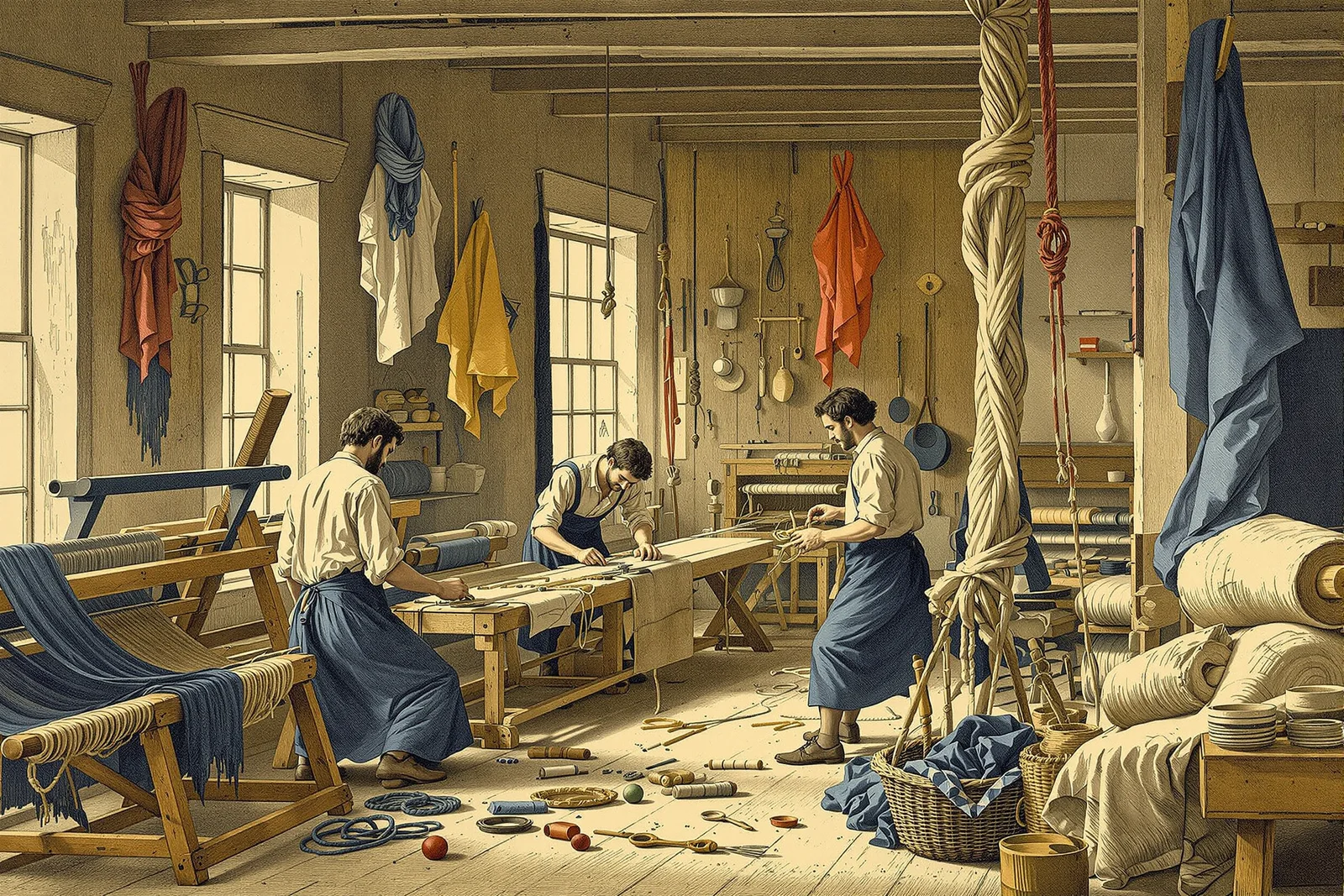
Complete Knot Craft and Rigging: From Basic Hitches to Complex Systems
Every trade depends on knots — sailing, climbing, construction, camping, rescue, and daily life. This campaign covers essential knots, their applications, decorative knotwork, and rigging systems.
Chapter 1: The Essential Twelve
| Knot | Category | Primary Use | Strength | Untie After Load | Difficulty |
|---|---|---|---|---|---|
| Bowline | Loop | Fixed loop that won't slip | 65% | Easy | Moderate |
| Figure-8 on a bight | Loop | Climbing anchor loop | 75% | Moderate | Low |
| Clove hitch | Hitch | Attach to post/pole | 65% | Easy | Low |
| Two half hitches | Hitch | Secure to ring/post | 65% | Easy | Very low |
| Taut-line hitch | Hitch | Adjustable tension | 65% | Easy | Moderate |
| Sheet bend | Bend | Join two ropes | 55% | Easy | Low |
| Double fisherman's | Bend | Join two ropes (permanent) | 65% | Very difficult | Moderate |
| Square (reef) knot | Binding | Tie two ends of same rope | 45% | Easy | Very low |
| Trucker's hitch | Compound | Mechanical advantage tie-down | 65% | Easy | Moderate |
| Prusik | Friction | Slide-and-grip on rope | 65% | Easy | Moderate |
| Timber hitch | Hitch | Drag logs/poles | 70% | Falls off slack | Very low |
| Constrictor knot | Binding | Permanent binding | 60% | Cannot untie | Low |
Chapter 2: Knots by Application
| Application | Best Knot | Why | Alternative |
|---|---|---|---|
| Tie to a post | Clove hitch + half hitch | Quick, secure, adjustable | Round turn + two half hitches |
| Join two ropes (same size) | Sheet bend | Easy, reliable | Double fisherman's |
| Join two ropes (different size) | Double sheet bend | Grips smaller rope | N/A |
| Fixed loop in rope end | Bowline | Won't slip, easy to untie | Figure-8 loop |
| Loop in middle of rope | Alpine butterfly | Load-bearing, easy untie | Figure-8 on a bight |
| Adjustable guy line | Taut-line hitch | Slides to adjust, grips under load | Midshipman's hitch |
| Tie down cargo | Trucker's hitch | 3:1 mechanical advantage | Ratchet strap |
| Climbing anchor | Figure-8 on a bight | Strongest loop knot | Bowline on a bight |
| Drag a log | Timber hitch | Grips under load, releases when slack | Clove hitch |
| Permanent binding | Constrictor knot | Grips tighter than any other | Cable tie |
| Shorten a rope | Sheepshank | Temporary shortening | Chain sinnet |
| Fishing hook | Improved clinch | Standard fishing knot | Palomar knot |
Chapter 3: Knot Tying Instructions
Bowline (King of Knots): 1) Form small loop in standing part (the "rabbit hole"). 2) Pass working end up through loop (rabbit comes out of hole). 3) Around behind standing part (rabbit goes around the tree). 4) Back down through the small loop (rabbit goes back in hole). 5) Tighten by pulling on the loop and standing part. 6) Test: the loop should not slip regardless of load. 7) Uses: rescue loop, mooring, any fixed loop needed. 8) Memory aid: "The rabbit comes out of the hole, goes around the tree, and back down the hole."
Trucker's hitch (mechanical advantage): 1) Tie one end to anchor point. 2) Form a loop in the standing part (slip knot or alpine butterfly). 3) Pass free end through/around load anchor. 4) Thread free end up through the loop. 5) Pull down — you now have 3:1 mechanical advantage. 6) Secure with two half hitches. 7) Uses: tying down loads, tensioning ridge lines, any situation needing tight line. 8) This single knot system replaces ratchet straps.
Chapter 4: Splicing and Whipping
| Technique | Purpose | Rope Type | Strength Retained | Time | Difficulty |
|---|---|---|---|---|---|
| Eye splice | Permanent loop | Three-strand | 90-95% | 15-30 min | Moderate |
| Short splice | Join two ropes | Three-strand | 85-90% | 20-40 min | Moderate |
| Back splice | Prevent unraveling | Three-strand | 100% | 10-15 min | Low |
| Common whipping | Prevent unraveling | Any | N/A | 5-10 min | Low |
| Sailmaker's whipping | Prevent unraveling (permanent) | Three-strand | N/A | 10-15 min | Moderate |
| West Country whipping | Prevent unraveling | Any | N/A | 5 min | Very low |
Chapter 5: Lashing
| Lashing Type | Purpose | Wraps | Fraps | Time | Strength |
|---|---|---|---|---|---|
| Square lashing | Join poles at 90° | 8-10 | 3-4 | 5-10 min | High |
| Diagonal lashing | Join poles at angle | 8-10 | 3-4 | 5-10 min | High |
| Shear lashing | Join parallel poles (spread) | 8-10 | 3-4 | 5-10 min | High |
| Tripod lashing | Three poles into tripod | 6-8 | Between each pair | 5-10 min | High |
| Round lashing | Join parallel poles (fixed) | 10-15 | None | 5 min | Moderate |
Square lashing: 1) Start with clove hitch on vertical pole (below crossing). 2) Wrap over horizontal, behind vertical, under horizontal, behind vertical (square pattern). 3) Repeat 8-10 times (tight, each wrap beside the last). 4) Frap: wrap between poles (perpendicular to lashing wraps) 3-4 times. 5) Finish with clove hitch on horizontal pole. 6) Tighten all wraps. 7) Result: rigid 90° joint capable of supporting significant weight.
Reference Card
- Bowline for loops (the one knot everyone must know — fixed loop, won't slip, easy to untie). 2. Clove hitch for posts (quick attachment to any pole or post — add half hitch for security). 3. Sheet bend for joining (connects two ropes reliably — double it for different-sized ropes). 4. Trucker's hitch for tension (3:1 mechanical advantage — tightest tie-down without tools). 5. Figure-8 for life safety (strongest loop knot — standard for climbing and rescue). 6. Practice until automatic (in emergencies, you tie what your hands know — practice weekly). 7. Dress your knots (a neat, properly dressed knot is stronger than a sloppy one — take the extra second). 8. Right knot for right job (a knot that's perfect for one task may be dangerous for another — know the differences).