Sovereignty Module: Sour the Spirits
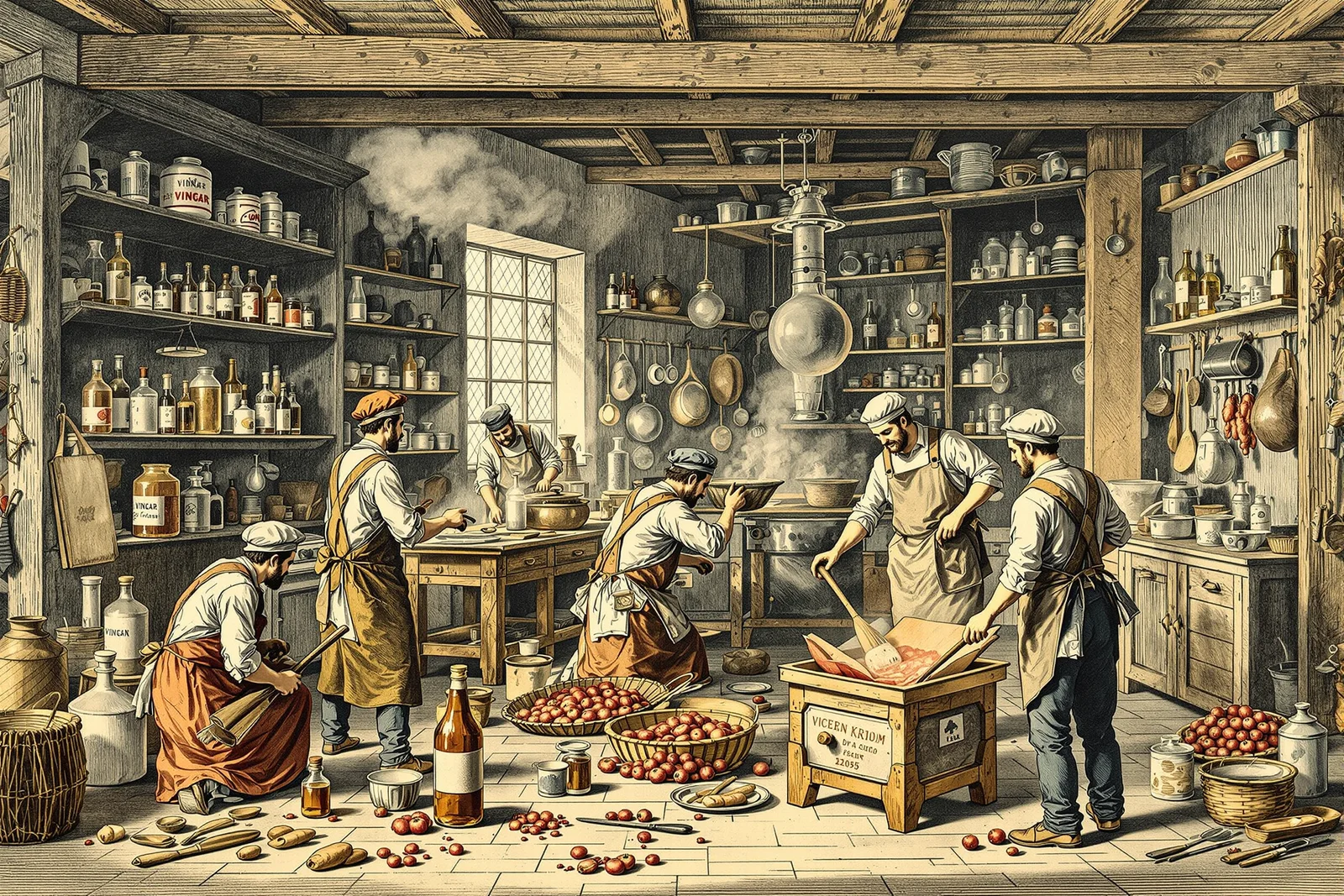
Sour the Spirits
Complete Vinegar Production, Acetic Fermentation, and Acid Applications Guide
Complete Vinegar Production, Acetic Fermentation, and Acid Applications Guide
Vinegar is one of civilization's most versatile substances: preservative, cleaner, medicine, herbicide, and cooking essential. Any alcohol source can become vinegar. This campaign covers production methods and applications.
Chapter 1: Vinegar Types and Sources
| Vinegar Type | Source | Alcohol Base | Acidity | Primary Use |
|---|---|---|---|---|
| Apple cider vinegar | Apples | Hard cider (4-6% ABV) | 5-6% | Cooking, health, preserving |
| Wine vinegar (red/white) | Grapes | Wine (10-14% ABV, diluted) | 6-7% | Cooking, dressings |
| Malt vinegar | Barley | Ale/beer (4-6% ABV) | 5-6% | Fish and chips, pickling |
| Rice vinegar | Rice | Rice wine/sake (diluted) | 4-5% | Asian cuisine, sushi |
| Distilled white vinegar | Any grain | Distilled alcohol (diluted to 5-10%) | 5-10% | Cleaning, pickling, industrial |
| Coconut vinegar | Coconut sap | Coconut wine (toddy) | 4-5% | Tropical cooking |
| Fruit scrap vinegar | Any fruit scraps | Wild-fermented fruit alcohol | 3-5% | General purpose |
| Honey vinegar | Honey | Mead (diluted) | 5-6% | Gourmet, medicinal |
Chapter 2: The Two-Stage Process
| Stage | Organism | Input | Output | Time |
|---|---|---|---|---|
| 1. Alcoholic fermentation | Yeast | Sugar + water | Alcohol (ethanol) + CO2 | 1-4 weeks |
| 2. Acetic fermentation | Acetobacter bacteria | Alcohol + oxygen | Acetic acid (vinegar) | 2-12 weeks |
Key principle: Yeast needs NO oxygen (anaerobic). Acetobacter needs LOTS of oxygen (aerobic). Stage 1 = sealed vessel. Stage 2 = open to air (cloth-covered).
Chapter 3: Making Apple Cider Vinegar
| Step | Action | Time | Details |
|---|---|---|---|
| 1 | Press apples (or use scraps + water + sugar) | Day 1 | Fresh juice or scraps in water with 1 tbsp sugar per cup |
| 2 | Allow alcoholic fermentation (sealed with airlock) | 1-3 weeks | Yeast converts sugar to alcohol |
| 3 | Strain liquid, transfer to wide-mouth vessel | After bubbling stops | Remove solids |
| 4 | Cover with cloth (allows air, blocks flies) | Ongoing | Acetobacter needs oxygen |
| 5 | Add mother (if available) or wait for wild inoculation | Day 1 of stage 2 | Mother = living culture (accelerates process) |
| 6 | Wait (warm, dark, undisturbed) | 4-12 weeks | Taste weekly after week 4 |
| 7 | When desired acidity reached, bottle and cap | When sour enough | Sealing stops further acidification |
| 8 | Age (optional, improves flavor) | 1-6 months | Mellows harshness |
Chapter 4: Mother of Vinegar
| Aspect | Details |
|---|---|
| What it is | Cellulose mat formed by Acetobacter bacteria (SCOBY-like) |
| Appearance | Translucent, rubbery disc floating on surface |
| Function | Concentrated colony of bacteria that converts alcohol to acid |
| How to get one | Buy, receive from another maker, or wait for wild formation (2-4 weeks) |
| Care | Keep submerged in vinegar when not in use. Feed with alcohol periodically. |
| Sharing | Peel off layers to share. Each piece starts a new batch. |
| Signs of health | Smooth, uniform, no mold (fuzzy spots = contamination, discard) |
Chapter 5: Vinegar Applications
| Application | Method | Purpose |
|---|---|---|
| Food preservation (pickling) | 5%+ acidity vinegar + salt + spices | Preserves vegetables 1-2 years |
| Cleaning (all-purpose) | 1:1 vinegar and water spray | Dissolves mineral deposits, degreases |
| Weed killer | Full-strength vinegar + salt + dish soap | Kills surface vegetation (not roots) |
| Fabric softener | 1/2 cup in rinse cycle | Removes soap residue, softens |
| Meat tenderizer | Marinate 2-12 hours in vinegar-based marinade | Breaks down tough fibers |
| Wound antiseptic (mild) | Diluted apple cider vinegar (1:3 with water) | Mild antimicrobial |
| Hair rinse | 1 tbsp per cup of water, after washing | Removes buildup, adds shine |
| Cheese making (acid coagulation) | Heat milk, add vinegar (1 tbsp per cup) | Curds form immediately |
| Egg preservation | Pickle eggs in vinegar brine | Preserves 3-6 months |
| Rust removal | Soak rusted items in full-strength vinegar | Dissolves iron oxide (12-24 hours) |
| Soil acidifier | Diluted vinegar around acid-loving plants | Lowers soil pH temporarily |
Chapter 6: Troubleshooting
| Problem | Cause | Solution |
|---|---|---|
| No mother forming | Too cold, too little oxygen, too much alcohol | Warm to 75-85F, ensure cloth cover (air), dilute if over 8% ABV |
| Mold on surface | Contamination (flies, dirty vessel) | Discard batch if fuzzy mold present. Prevent with tight cloth cover. |
| Vinegar too weak | Not enough time, too cold | Wait longer, move to warmer spot (75-85F ideal) |
| Vinegar too strong | Over-fermented | Dilute with water to desired strength |
| Fruit flies | Attracted to vinegar smell | Tighter cloth weave, rubber band seal |
| Off flavors | Contamination or poor-quality alcohol base | Start with clean equipment, good-quality base alcohol |
Reference Card
- Two stages: yeast makes alcohol (sealed), bacteria makes acid (open to air)
- Acetobacter needs oxygen: use wide-mouth vessel covered with cloth
- Ideal temperature for vinegar: 75-85F (24-29C). Too cold = very slow.
- Alcohol must be below 8% ABV for acetobacter to work (dilute if needed)
- Mother of vinegar accelerates the process: share and maintain cultures
- Minimum 5% acidity required for safe food preservation (pickling)
- Full-strength vinegar removes rust, mineral deposits, and kills surface weeds
- Age vinegar 1-6 months after reaching desired acidity for best flavor
TransmissionCOMPLETE — unaltered & unabridged
Words991 — every one of them
SHA-256 of source textd1a38943a6b8dd02aa2623fe30959bade517cdb475338c7cab07612b3bfaee77
Canonical textdownload campaign-vinegar.md — byte-identical to what this page renders