Sovereignty Module: Weave the Cloth
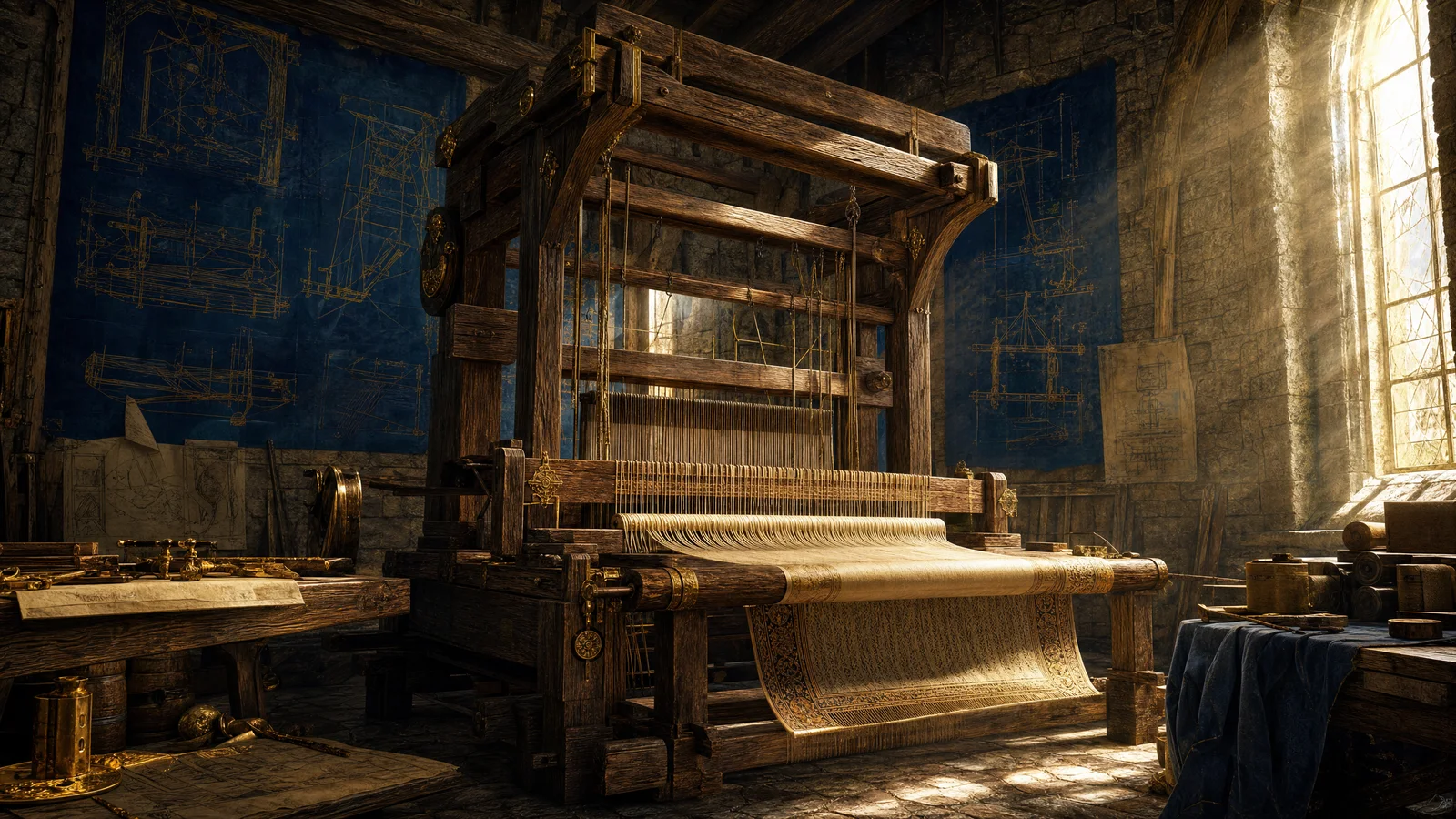
Complete Weaving, Loom Construction, and Fabric Production Guide
Woven cloth is the foundation of clothing, shelter, and trade. A single loom transforms thread into fabric at speeds impossible by any other method. This campaign covers loom types, construction, and weaving techniques from simple to complex.
Chapter 1: Loom Types
| Loom Type | Complexity | Width | Speed | Portability | Best For |
|---|---|---|---|---|---|
| Backstrap loom | Low | 12-24 inches | Slow | Excellent (rolls up) | Narrow bands, belts, straps |
| Inkle loom | Low | 1-4 inches | Moderate | Good | Bands, straps, trim |
| Rigid heddle loom | Low-moderate | 10-32 inches | Moderate | Good | Scarves, towels, simple cloth |
| Frame loom | Low | Any size | Slow | Moderate | Tapestry, rugs, learning |
| Warp-weighted loom | Moderate | 24-60 inches | Moderate | Low | Historical, heavy fabrics |
| Floor loom (2-shaft) | Moderate | 24-60 inches | Fast | None | Plain weave, basic patterns |
| Floor loom (4-shaft) | High | 24-60 inches | Fast | None | Twills, complex patterns |
| Floor loom (8+ shaft) | Very high | 24-60 inches | Fast | None | Complex patterns, damask |
Chapter 2: Weave Structures
| Structure | Shafts Needed | Properties | Use |
|---|---|---|---|
| Plain weave (tabby) | 2 | Balanced, strong, simple | General cloth, canvas, muslin |
| Twill (2/2) | 4 | Diagonal lines, drapes well, strong | Denim, flannel, gabardine |
| Twill (2/1, 3/1) | 3-4 | Warp or weft dominant face | Drill cloth, serge |
| Satin/sateen | 5-8 | Smooth, lustrous, floats | Formal fabrics, linings |
| Basket weave | 2 | Like plain but paired threads | Monks cloth, heavy fabrics |
| Waffle weave | 4-8 | Textured squares, absorbent | Towels, dishcloths |
| Herringbone | 4 | Zigzag twill pattern | Coats, blankets |
| Overshot | 4 | Decorative pattern floats over plain ground | Coverlets, decorative cloth |
Chapter 3: Building a Simple Frame Loom
| Component | Material | Dimensions | Function |
|---|---|---|---|
| Frame | Hardwood (oak, maple) or sturdy lumber | 24x30 inches (adjustable) | Holds warp under tension |
| Nails or pegs (top and bottom) | Finishing nails or dowels | Spaced 1/4 inch apart (8 per inch) | Warp spacing |
| Shed stick | Flat smooth stick | Width of loom + 2 inches | Creates shed (opening for weft) |
| Heddle bar | Dowel with string heddles | Width of loom | Lifts alternate warp threads |
| Shuttle | Flat stick with notched ends | 2 inches longer than weaving width | Carries weft thread |
| Beater/comb | Wide-tooth comb or fork | Width of weaving | Packs weft threads tight |
Chapter 4: Warping and Setup
| Step | Action | Details |
|---|---|---|
| 1 | Calculate warp: width x sett x length + loom waste | Sett = threads per inch (varies by yarn weight) |
| 2 | Wind warp (warping board or pegs) | Maintains even tension and cross |
| 3 | Transfer warp to loom | Maintain cross (thread order) |
| 4 | Tie warp to back beam or pegs | Even tension across all threads |
| 5 | Thread heddles (every other thread through heddle) | Creates the shed mechanism |
| 6 | Tie warp to front beam or pegs | Even tension, adjust as needed |
| 7 | Check tension (all threads equal) | Strum like harp, listen for even pitch |
| 8 | Begin weaving (throw shuttle, beat, change shed) | Establish rhythm |
Sett guide: Fine thread (sewing weight) = 20-30 epi (ends per inch). Medium (worsted yarn) = 12-18 epi. Bulky yarn = 6-10 epi. Rug yarn = 4-8 epi.
Chapter 5: Weaving Process
| Step | Action | Rhythm |
|---|---|---|
| 1 | Open shed (lift heddle bar or press treadle) | Creates opening between warp layers |
| 2 | Pass shuttle through shed (left to right) | Carries weft across |
| 3 | Beat weft into place (push toward finished cloth) | Firm, even pressure |
| 4 | Change shed (lower heddle, lift shed stick) | Alternate warp threads now up |
| 5 | Pass shuttle back (right to left) | Second weft pick |
| 6 | Beat again | Same pressure as before |
| 7 | Repeat | Develop consistent rhythm |
Selvedge (edge): Maintain consistent weft tension at edges. Do not pull weft tight (draws in width). Leave small arc of weft before beating (allows for take-up). Consistent selvedges indicate skill.
Chapter 6: Finishing Woven Cloth
| Process | Method | Purpose |
|---|---|---|
| Cutting off loom | Cut warp, tie fringe or hem | Removes finished cloth |
| Washing (fulling for wool) | Warm soapy water, agitate gently | Blooms fibers, evens weave |
| Pressing | Iron while damp | Smooths, sets weave |
| Hemming | Fold and stitch edges | Prevents unraveling |
| Fringing | Twist or braid warp ends | Decorative edge finish |
| Sizing (optional) | Starch or gelatin wash | Stiffens for specific uses |
Fulling (wool only): Wash in warm soapy water with gentle agitation. Fibers bloom and fill gaps in weave, creating denser, warmer, more wind-resistant fabric. Control carefully (too much = felt).
Reference Card
- Plain weave requires only 2 shafts: over one, under one, repeat
- Sett (threads per inch) determines fabric density: too open = sleazy, too tight = stiff
- Warp must be strong yarn (under constant tension). Weft can be any fiber.
- Even tension across all warp threads is the single most important factor
- Beat consistently: same pressure every pick creates even cloth
- Selvedge quality shows skill: do not pull weft tight at edges
- Twill (4-shaft) produces stronger, more drapey fabric than plain weave
- Fulling (controlled washing) transforms loose wool weave into dense, warm cloth