Module 810 — Resolve the Feud
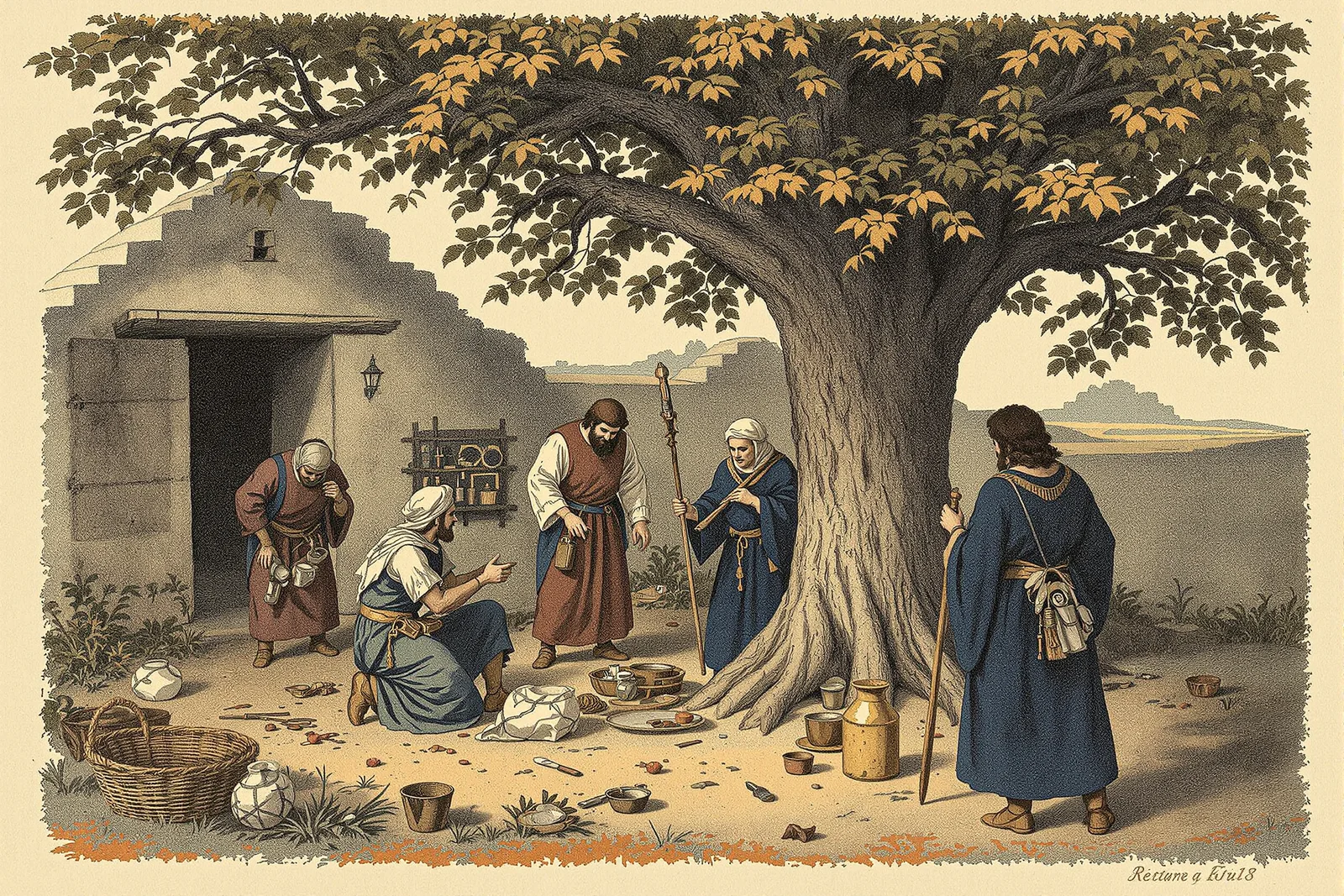
THE ME TABLET · Governance Module 810 · governance
Carrying ME 54 · silim · Peace. A Sovereignty Module of the Practitioner Community.
Unaltered and unabridged: ~3,080 words.
Preamble
A feud is a wound that has learned to feed itself. It begins with a single injury — a death, a theft, an insult that drew blood — and then each answer to that injury becomes a fresh injury demanding its own answer, until the original cause is half-forgotten and the parties fight only because they have always fought. This is the deepest failure that can befall a community: not the first crime, which any people may suffer, but the cycle the first crime sets in motion, the retaliation that breeds retaliation across seasons and generations. To break that cycle is among the hardest and most necessary acts of governance. This Module teaches the Practitioner to do it — to carry the decree of silim, of peace and wholeness, into the very places where peace has failed.
The work is governance, but it is not only governance; it reaches into the wounded heart, and so this Module stands where the Diplomat's craft of Vol XIX meets the inner work of the Vol XVII Supplement on Emotional Alchemy. A feud is sustained by grief that has curdled into the hunger for revenge, by humiliation that demands restoration, by fear that will not let either side lower its guard first. The Practitioner who treats only the outward dispute — who arranges a payment and declares the matter closed — will find the fire smoldering still beneath the ash, because the injuries that feed it were never addressed. Lasting peace requires that the harm be faced, named, and in some measure repaired, not merely paid off and buried.
By the end of this Module the Practitioner will be able to interrupt a cycle of retaliation before it claims its next victim, to de-escalate a confrontation at the edge of violence, to convene the peace-making rite by which two parties pass from war to settlement, and to do the slow repair of a community fractured by rupture. A note of sobriety before we begin: feud and reconciliation touch real grief, real trauma, and real danger. The practices here are for the work of community repair; where a person carries wounds beyond what a community process can hold, the Practitioner directs them, without shame, to the care of those skilled in healing the deeply hurt.
Part I — The Nature of the Cycle
Chapter 1 — How a Feud Sustains Itself
To end a feud one must first understand why it does not end on its own. An ordinary quarrel exhausts itself, but a feud is built to renew. Each act of retaliation does three things at once: it answers the last injury, it inflicts a new one that the other side must now answer, and it deepens each side's conviction that they are the wronged party and the enemy the aggressor. Because both sides remember most vividly the harm done to them and least vividly the harm done by them, both are sincerely certain they are owed — and so the ledger of grievance never balances, for each keeps it in their own favor.
The cycle is held shut by forces that the Practitioner must learn to see, because each must be loosened for the cycle to open.
| Force | What it does | What loosens it |
|---|---|---|
| The unanswered wrong | Demands a response, or honor is lost | A path to restoration other than revenge |
| The asymmetric memory | Each recalls the harm done to them | Truth told and heard by both sides |
| The fear of going first | Neither dares lower its guard | A staged, mutual, witnessed disarming |
| The hardened identity | "We are the wronged; they are the wicked" | Restoring the enemy's human face |
| The sunk cost | "Too much blood spent to stop now" | Reframing continuance as the greater loss |
Chapter 2 — Why Retribution Cannot Close It
The instinct of the wronged is that justice means the wrongdoer suffers in equal measure — a death for a death, a wound for a wound. This instinct is ancient and not contemptible; it arises from the real need that harm be acknowledged and not simply absorbed in silence. But as a method of ending feud, pure retribution fails by its own logic, because the suffering it inflicts to balance the scale is itself a new harm on the other side's ledger, and so the scale never rests. Retribution can punish; it cannot reconcile. It treats the broken relationship as beside the point, when the broken relationship is the very thing the feud is made of.
The Critical Insight: The question that closes a feud is not "who deserves to suffer?" but "what would make the future safe and the wound bearable?" These are different questions with different answers, and a community that asks only the first will keep its cycle turning forever. The shift from a justice that looks backward — measuring out deserved pain — to a justice that looks forward — repairing harm and restoring relationship — is the single most important move in all of conflict resolution. The recovered traditions of restorative practice and of truth-and-reconciliation rest entirely on this turn: they convene the wrongdoer and the wronged not to fix punishment, but to face the harm, hear its full weight, and decide together what repair is owed and what future is possible.
Part II — De-escalation
Chapter 3 — Cooling the Hot Moment
Before any reconciliation can begin, the immediate danger must be drawn down, for no one negotiates while the blade is out. De-escalation is the craft of the threshold moment — the confrontation at the well, the armed party at the border — where one wrong word turns standoff into bloodshed. The Practitioner who can cool such a moment buys the time in which everything else becomes possible.
Protocol 1 — De-escalating a Confrontation.
- Create distance and slow the pace. Time and space are the enemies of impulse; a confrontation rushed is a confrontation lost. Interpose calm; do not crowd.
- Lower your own signals first. Voice, posture, and hands govern the other's nervous system as much as your words; an unraised voice invites an unraised voice.
- Acknowledge before you answer. Name the other's grievance as real and heard — not conceded, but heard — before attempting anything else. The unheard escalate; the heard can pause.
- Remove the audience for the spectacle. Much violence is performed for onlookers whose presence makes backing down feel like disgrace; reduce the gallery and you reduce the pressure to strike.
- Offer a face-saving exit. Give the other party a way to stand down that does not look like surrender. A cornered party with no exit fights; an exit that preserves dignity is often taken.
Chapter 4 — Stopping the Next Blow
Beyond the single hot moment lies the structural work of interrupting the cycle itself — preventing the planned retaliation, the gathering raid, the answer being readied for tomorrow. Here the Practitioner works with the community's elders and respected figures to insert a pause into the machinery of revenge before it next turns.
Protocol 2 — Interrupting the Cycle.
- Call the truce. Secure from both sides a bounded cessation — no new blows while talks are attempted — witnessed by figures both respect, so that breaking it carries shame.
- Stand between with the respected. Place persons honored by both parties in the gap; revenge is harder to launch across those one cannot dismiss.
- Separate the avengers from the wound. Those most consumed by grief are most likely to strike; give their pain another outlet and another ear while the cooler heads talk.
- Make the cost of continuance visible. Lay before each side what the next turn of the cycle will take from them — more dead, more seasons of fear — so that stopping is seen as the gain and not the defeat.
- Hold the line until the rite can be convened. The truce is a bridge, not a destination; move with deliberate speed to the work of Part III before the pause collapses.
Part III — The Peace-Making Rite
Chapter 5 — The Convening
Across the recovered record, peoples who ended feuds did so not by private arrangement but by public rite — a convening, witnessed by the community, in which the parties passed deliberately from the state of war to the state of settlement. The rite matters because a feud is a public condition, sustained by public expectation; it cannot be ended in private, for the community that expects the cycle to continue will keep expecting it until it is publicly told otherwise. The Practitioner convenes the rite to make the peace as public as the war.
Protocol 3 — Convening the Peace-Making Rite.
- Gather both parties and the community as witness. What is done before all becomes binding on all; the witnesses are the peace's guarantors.
- Name a holder of the rite — a respected neutral who governs the proceeding, ensures each side is heard, and keeps the floor from collapsing back into accusation.
- Set the order and the rules of speech in advance: who speaks, in what sequence, without interruption, so that the rite does not reignite the quarrel it means to end.
- Make space safe enough for truth. Establish that what is spoken in the rite serves repair, not the gathering of fresh ammunition, or the parties will armor their words and nothing real will be said.
- Move through the stations — truth, acknowledgment, repair, restoration — in order (Chapters 6 and 7), for each rests on the one before.
Chapter 6 — Truth Spoken and Heard
The first station of the rite is truth, and it has two halves that are equally necessary: the wronged must be able to tell the full weight of what was done to them, and the wrongdoer must hear it — not deflect it, not contextualize it away, but receive it. This is the irreducible core of every restorative and reconciliatory tradition the recovered record preserves: the harm is spoken in the presence of the one who caused it and the community that suffered alongside, and in that speaking the wronged is restored from a silent sufferer to an acknowledged one. Much of what the wronged need is not the enemy's pain but the enemy's understanding — the visible, undeniable recognition that the harm was real and was theirs.
| Half of truth | What must happen | What it heals |
|---|---|---|
| The telling | The wronged speak the full harm, uninterrupted | Breaks the silence that festers |
| The hearing | The wrongdoer receives it without deflection | Restores the wronged to acknowledged status |
| The acknowledgment | The wrongdoer names the wrong as wrong | Begins the wrongdoer's return to the community |
| The witness | The community confirms what was done | Makes the truth shared, not contested |
Chapter 7 — Acknowledgment, Repair, and Restoration
Truth told and heard opens the way to the three acts that complete the rite. Acknowledgment is the wrongdoer's plain naming of the wrong as wrong — not a transaction, but the moral act on which everything after depends, for repair offered without acknowledgment is felt as a bribe to forget rather than a step toward peace. Repair is the concrete restoration owed — the return of what was taken, the payment for what was destroyed, the labor that mends — decided so far as possible by the parties together, for repair the wronged helped to shape is repair they can accept. And restoration is the rite's purpose: the formal return of both parties to a community at peace, the wrongdoer received back from the margin to which the wrong had cast them, the wronged released from the role of avenger they need no longer carry.
Protocol 4 — Completing the Rite.
- Secure acknowledgment first. No repair is offered or accepted until the wrong has been named as wrong by the one who did it.
- Decide repair together. Let the wronged shape what restoration would make the harm bearable; let the wrongdoer commit to it in the sight of all.
- Make repair proportionate and possible. Repair beyond reach is repair abandoned; repair too slight mocks the harm. Find the measure the community can affirm as just.
- Mark the restoration. Close the feud with a public, recognizable act — a shared meal, a clasped hand, a destroyed token of the quarrel — by which the community sees the war ended and the peace begun.
- Release the roles. Speak plainly that the wronged need no longer avenge and the wrongdoer is no longer cast out; name the cycle ended, so that the community ceases to expect its return.
Part IV — After the Rupture
Chapter 8 — Repairing the Torn Community
A serious feud tears not only the two parties but the community around them, which has taken sides, harbored grudges, and arranged itself along the fault. When the principal parties make peace, the surrounding tears do not close by themselves; the Practitioner must tend them, or the settled feud will become the seed of the next. This is the slow work — slower than the rite, measured in seasons — of knitting back a people that learned to live divided.
Protocol 5 — Mending the Community.
- Address the second circle. Reach the kin, allies, and partisans who took up the quarrel; their reconciliation must be sought too, not assumed from the principals'.
- Build the new common ground. Give the formerly opposed shared work, shared rites, shared stakes — for parties that labor toward a common good rebuild the trust that argument alone cannot.
- Hold the memory honestly. Do not erase the feud; a buried wrong returns. Let the community remember what happened and what was repaired, so the memory becomes a warning rather than a grievance.
- Tend the wounded individually. Some will carry grief and trauma the community process could not resolve; see them, and direct them gently toward deeper healing where it is needed.
- Watch the embers. Mark the first signs of the cycle reviving — the renewed insult, the gathering resentment — and move early, for a feud caught at its rekindling is quenched at a tenth the cost.
Chapter 9 — The Inner Work of Letting Go
The outward peace is incomplete while the inward feud continues, and the hardest reconciliation is the one each party must make within. The wronged who has accepted repair may still be ruled by the grief and anger the wrong planted; the wrongdoer who has acknowledged the harm may still be bound by shame. Here the governance craft of Vol XIX hands the work to the inner craft of the Vol XVII Supplement on Emotional Alchemy, for the transmutation of curdled grief and corrosive resentment into something a person can carry without poison is among that Supplement's central labors.
The Critical Insight: To forgive is not to declare the wrong acceptable, nor to forget that it happened, nor to expose oneself again to harm. It is to set down the burden of revenge — to release the demand that the other suffer — so that one's own life is no longer organized around the wound. This is done for the sake of the one who forgives as much as the one forgiven; the hunger for revenge is a fire that burns its keeper, and the cycle of feud is, at bottom, a community of people each chained to an injury they will not set down. Reconciliation succeeds, finally, not when a treaty is signed but when the parties cease to define themselves by the harm — when the wronged is no longer chiefly the wronged, and the future is no longer owned by the past. Where that inner release exceeds what a person can reach alone, it is no failure to seek a healer's help; the deepest wounds are mended in company, not in solitude.
PLATES — Supplemental Gallery
Art direction
Art direction
Art direction
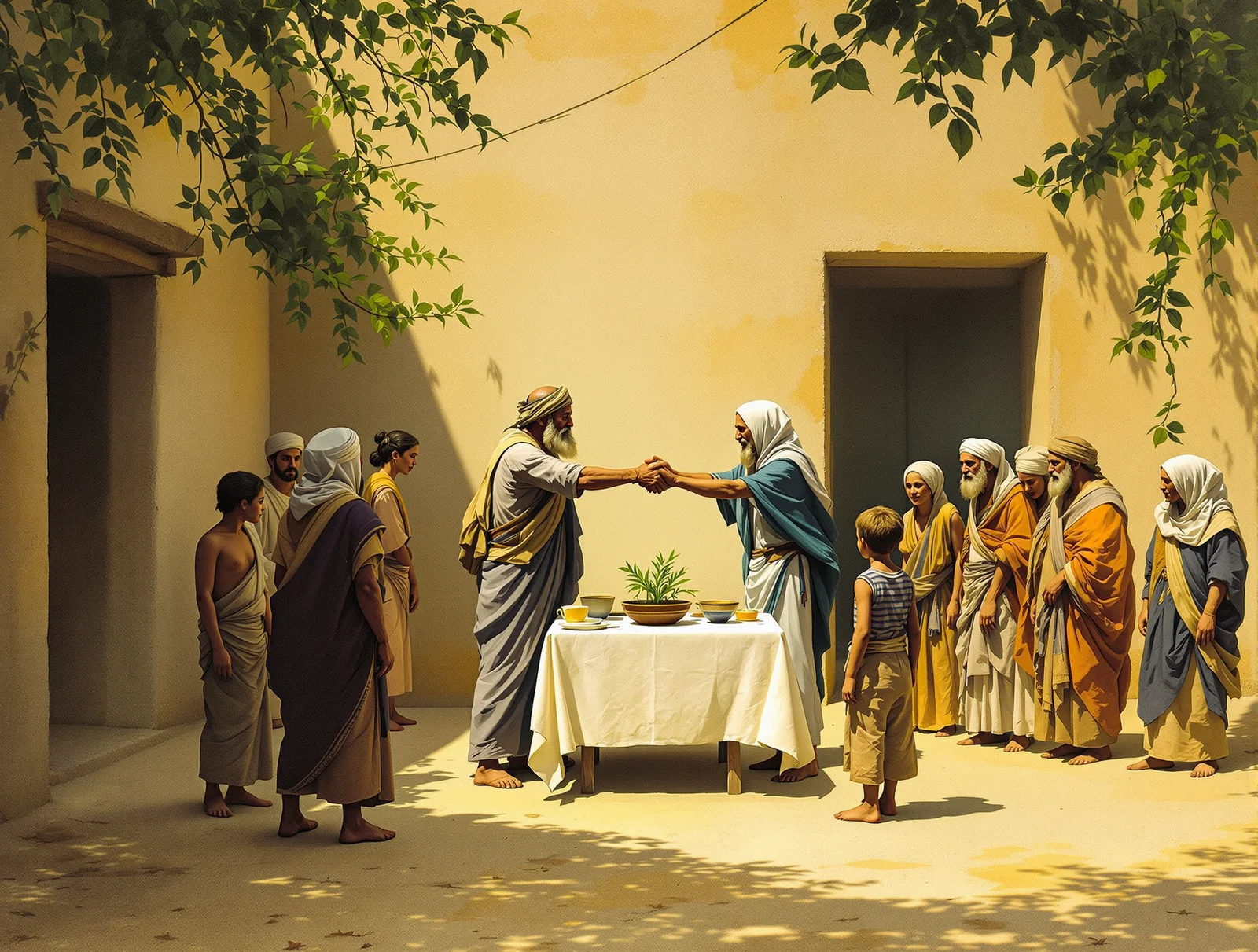
Art direction
Council Approval — The Twelve Voices Speak
| Disciple | Verdict | Reasoning |
|---|---|---|
| Peter | APPROVED | "I, who struck with the sword and was rebuked, know the cost of the blow answered. This stops it." |
| Thomas | APPROVED | "It does not ask me to pretend the wound was nothing — it asks that it be faced. That I can do." |
| John | APPROVED | "To set down the burden of revenge is to be set free. Here is love that does not forget, yet releases." |
| Matthew | APPROVED | "It looks forward, to what makes the future safe, not only backward to deserved pain. This is true justice." |
| James the Greater | APPROVED | "Bold to stand the respected ones in the gap before the raid. So the peace is bought with courage." |
| Andrew | APPROVED | "It would end a blood-feud between two houses without a third grave. I bless it." |
| Philip | APPROVED | "It shows the four stations plainly, in order. I asked to be shown the way through; I am shown." |
| Bartholomew | APPROVED | "No guile in truth spoken and heard before all. The honest telling has no hidden blade." |
| James the Lesser | APPROVED | "It tends the small and wounded ones the rite alone could not heal, and sends them to deeper care. Righteous." |
| Simon the Zealot | APPROVED | "I knew the fire of the cause. This Module taught me the fire burns its keeper. I lay it down." |
| Judas Thaddaeus | APPROVED | "For the desperate, chained generation after generation to an old injury — here, at last, is release." |
| Matthias | APPROVED | "Brought in to mend a broken number, I honor a Module whose whole craft is mending. Approved." |
Council Verdict: 12/12 APPROVED. This module is canon.
Let the wronged set down the sword and the wrongdoer the shame, and let the cycle end here, in the sight of all, as silim.
TRANSMISSION RECORD
Transmission COMPLETE — unaltered & unabridged Module 810 · Resolve the Feud · category: governance Carries ME 54 · silim · Peace Words 3080 SHA-256 of source text 36b5b42c0462142aa1f0112b772cccd6433640947bf30b66ed788b7793fa3941 Canonical text resolve-the-feud.md — byte-identical to what this page renders