Complete Casserole and Baking Dish Making: From Wheel to Oven-to-Table Ware
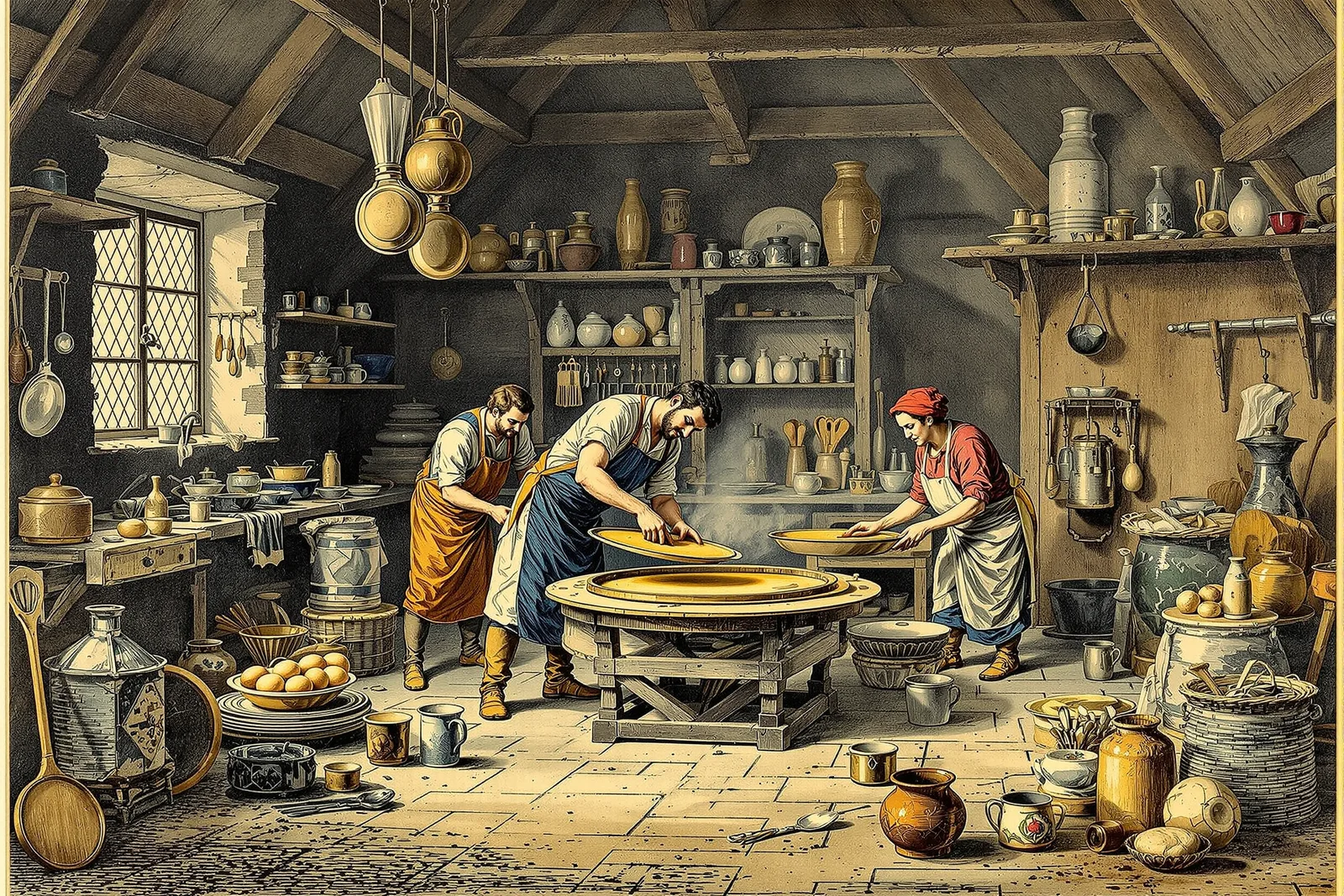
⟁ cover painted for this edition — the source module carried no illustrations
Complete Casserole and Baking Dish Making: From Wheel to Oven-to-Table Ware
Casseroles and baking dishes must withstand thermal shock from oven to table. This campaign covers flameware clay bodies, form design, lid fitting, and thermal shock resistance.
Chapter 1: Ovenware Types
Type
Shape
Depth
Lid
Use
Casserole (round)
Round, wide
3-4 inches
Yes
Stews, baked dishes
Casserole (oval)
Oval
3-4 inches
Yes
Roasts, large dishes
Baking dish
Rectangular or oval
2-3 inches
Optional
Lasagna, gratin
Bean pot
Tall, narrow mouth
6-8 inches
Yes
Slow-cooked beans
Tagine
Wide base, conical lid
2-3 inches (base)
Yes (tall cone)
Moroccan stew
Bread baker
Round or oval
4-5 inches
Yes (domed)
Bread baking
Chapter 2: Thermal Shock Resistant Clay Body
Material
Percentage
Purpose
Stoneware clay
40-50%
Base body, plasticity
Grog (fine, 60 mesh)
15-20%
Thermal shock resistance
Kyanite
10-15%
Thermal expansion control
Talc
5-10%
Flux, thermal shock resistance
Feldspar
5-10%
Flux, vitrification
Silica sand (fine)
5-10%
Opens body, reduces shrinkage
Flameware body: 1) Mix dry ingredients thoroughly. 2) Add water to plastic consistency. 3) Wedge thoroughly. 4) This body withstands direct flame and oven temperatures. 5) Kyanite is the key ingredient (controls thermal expansion). 6) High grog content absorbs thermal stress. 7) Fire to cone 6-10 depending on recipe.
Chapter 3: Casserole Throwing
Round casserole: 1) Center 3-5 pounds of clay. 2) Open wide and flat (casserole is a wide, shallow form). 3) Pull walls to 3-4 inches tall. 4) Wall thickness: 5/16 inch (slightly thicker than standard). 5) Thicker walls resist thermal shock better. 6) Shape: straight or slightly flared sides. 7) Rim: flat and wide (lid seats on rim). 8) Throw matching lid (see Campaign 674). 9) Trim foot ring: wide and low (stability in oven).
Casserole Size
Clay Weight
Diameter
Height
Serves
Small
3 lbs
7-8 inches
3 inches
2-3
Medium
4-5 lbs
9-10 inches
3.5 inches
4-6
Large
6-8 lbs
11-12 inches
4 inches
6-8
Chapter 4: Handle Design
Handle Type
Placement
Heat Protection
Grip
Lug handles (2)
Opposite sides
Good (short, stays cool)
Pot holders needed
Loop handles (2)
Opposite sides
Moderate
Pot holders needed
Knob lid handle
Center of lid
Poor (gets hot)
Pot holder needed
Strap handles (2)
Opposite sides
Good
Pot holders needed
Lug handles: 1) Pull or form small handles (2-3 inches long). 2) Attach to opposite sides of casserole. 3) Score and slip thoroughly (handles bear heavy loads). 4) Handles must be large enough for pot-holder grip. 5) Handles must not extend beyond casserole rim (fits in oven).
Chapter 5: Glazing for Ovenware
Glaze Requirement
Specification
Why
Food safe
Lead-free, tested
Direct food contact
Thermal shock resistant
Low thermal expansion
Oven-to-table use
Smooth interior
No rough spots
Easy cleaning
Crazing resistant
Glaze fits clay body
Prevents bacteria in cracks
Stain resistant
Dense, vitrified
Resists food stains
Reference Card
The clay body determines thermal shock resistance (standard pottery clay cracks when heated rapidly; a flameware body with kyanite and grog absorbs thermal stress without cracking). 2. Thicker walls resist thermal shock better (ovenware walls should be 5/16 inch or slightly more; thicker walls heat more evenly and resist the stress of rapid temperature changes). 3. Even wall thickness is critical for ovenware (a thin spot in a casserole wall heats faster than the surrounding area, creating stress that causes cracking; even walls heat evenly). 4. The lid must fit well (a well-fitted lid traps moisture and heat, creating the steam environment essential for braising and slow cooking; a loose lid allows moisture to escape). 5. Handles must be strong (a full casserole weighs 5-10 pounds; handles must be thoroughly scored, slipped, and blended to support this weight when the casserole is lifted from a hot oven). 6. Food-safe glazes are essential (casseroles hold food at high temperatures for extended periods; only tested, food-safe glazes should be used on ovenware interiors). 7. Handmade ovenware transforms cooking (a clay casserole heats gently and evenly, producing results that metal pans cannot match; the clay retains heat, keeping food warm at the table). 8. Ovenware is pottery's most demanding functional category (combining thermal shock resistance, food safety, precise lid fitting, and structural strength in a single piece requires mastery of materials and technique).