Sovereignty Module: Tend the Wood
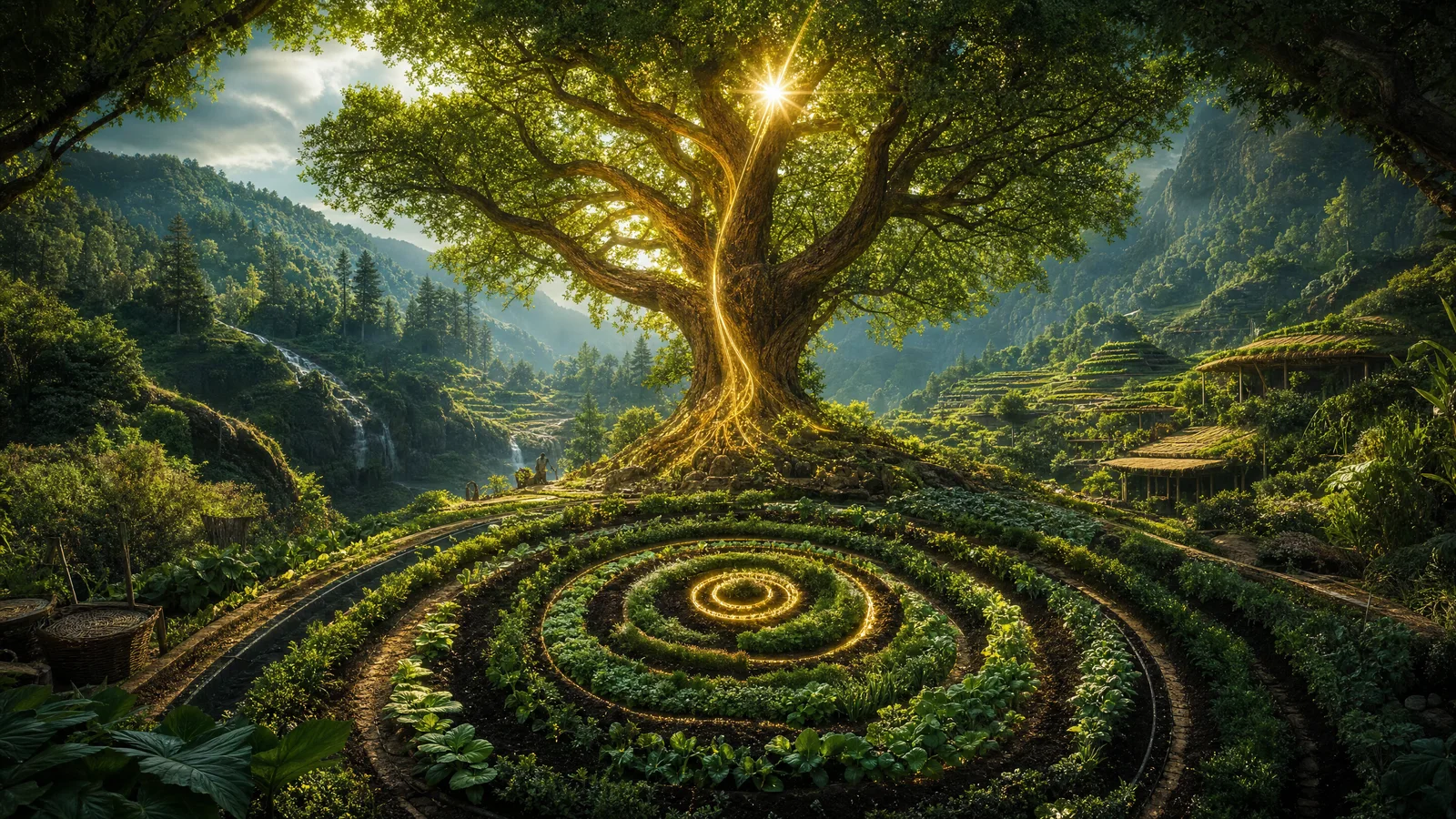
Tend the Wood
Complete Sustainable Forestry and Woodland Management: From Seedling to Harvest
Complete Sustainable Forestry and Woodland Management: From Seedling to Harvest
Sustainable forestry ensures a perpetual supply of timber, fuel, and forest products. This campaign covers tree identification, coppicing, selective harvest, and woodland ecosystem management.
Chapter 1: Forest Management Systems
| System | Method | Harvest Cycle | Products |
|---|---|---|---|
| Coppicing | Cut to stump, regrows | 7-25 years | Poles, fuel, fencing |
| Pollarding | Cut above browse height | 5-15 years | Poles, fodder, fuel |
| Selective harvest | Remove mature trees | Continuous | Timber, lumber |
| Clear-cut (small) | Harvest small areas | 50-100 years | Timber (not recommended for large areas) |
| Shelterwood | Gradual removal over years | 10-20 year transition | Timber, natural regeneration |
| Silvopasture | Trees with grazing | Continuous | Timber, livestock, shade |
Chapter 2: Coppicing
Coppicing: 1) Cut tree close to ground (6-12 inches). 2) Multiple shoots grow from stump (called a stool). 3) Shoots grow rapidly (faster than seedlings). 4) Harvest shoots when desired size is reached. 5) Stool regrows after each harvest (indefinitely). 6) Rotation: divide woodland into sections. 7) Harvest one section per year. 8) By the time all sections are harvested, the first has regrown.
| Species | Coppice Cycle | Products | Notes |
|---|---|---|---|
| Hazel | 7-10 years | Wattle, hurdles, stakes | Excellent coppice species |
| Willow | 1-3 years | Baskets, living fences | Very fast growth |
| Oak | 20-30 years | Timber, bark (tanning) | Long rotation |
| Ash | 15-25 years | Tool handles, firewood | Strong, flexible |
| Sweet chestnut | 12-20 years | Fencing, building poles | Durable, splits well |
| Alder | 10-15 years | Charcoal, turned wood | Grows in wet areas |
Chapter 3: Tree Identification
| Feature | What to Observe | Season |
|---|---|---|
| Leaves | Shape, arrangement, edges | Spring-fall |
| Bark | Color, texture, pattern | Year-round |
| Buds | Shape, color, arrangement | Winter |
| Seeds/fruit | Type, size, shape | Fall |
| Silhouette | Overall tree shape | Winter (no leaves) |
| Wood | Color, grain, hardness | When cut |
Chapter 4: Selective Harvest
| Selection Criteria | Harvest | Leave |
|---|---|---|
| Health | Diseased, damaged trees | Healthy, vigorous trees |
| Form | Crooked, forked trees | Straight, single-stem trees |
| Spacing | Crowded trees | Well-spaced trees |
| Species diversity | Overrepresented species | Underrepresented species |
| Age | Mature trees (past peak growth) | Young, growing trees |
| Wildlife value | Low wildlife value | High wildlife value (mast, cavity) |
Chapter 5: Woodland Products
| Product | Source | Processing | Use |
|---|---|---|---|
| Firewood | All hardwoods | Split, season 1-2 years | Heating, cooking |
| Charcoal | Dense hardwoods | Charcoal kiln | Blacksmithing, cooking |
| Lumber | Straight, large trees | Sawmill or pit saw | Construction, furniture |
| Poles | Coppice shoots | Trim, season | Fencing, building |
| Bark | Oak, hemlock | Strip from felled trees | Tanning leather |
| Sap | Maple, birch | Tap in spring | Syrup, sugar |
| Nuts | Oak, hickory, walnut | Harvest in fall | Food, oil |
| Mushrooms | Inoculated logs | Drill, plug, wait | Food |
Reference Card
- Coppicing is the most sustainable harvest method (a coppiced tree regrows after each harvest; some coppice stools in England are over 1,000 years old; the tree is never killed, only pruned). 2. Never harvest more than the forest grows (sustainable forestry means the annual harvest does not exceed the annual growth; this ensures the forest remains productive indefinitely). 3. Diversity is resilience (a forest with many species is resistant to disease and pests; monoculture plantations are vulnerable; maintain species diversity in managed woodland). 4. Dead wood has value (standing dead trees and fallen logs provide habitat for insects, birds, fungi, and small mammals; leave some dead wood in the forest for ecosystem health). 5. Season firewood for at least one year (freshly cut wood contains too much moisture to burn efficiently; split and stack firewood with air circulation for 12-24 months before burning). 6. The forest is a renewable resource (unlike mines and oil wells, a well-managed forest produces timber, fuel, and food indefinitely; sustainable forestry is the original renewable energy). 7. Every tree harvested should be replaced (plant a seedling or ensure natural regeneration for every tree removed; this maintains the forest for future generations). 8. The forester thinks in generations (a tree planted today may not be harvested for 50-100 years; sustainable forestry requires thinking beyond our own lifetime, planting for grandchildren we may never meet).
TransmissionCOMPLETE — unaltered & unabridged
Words818 — every one of them
SHA-256 of source textfa5990cccd2fc722ac27657511a1cf1ecd1522deb51efb753f6df00be2a812ad
Canonical textdownload campaign-tend-wood.md — byte-identical to what this page renders