Sovereignty Module: Build the Homestead
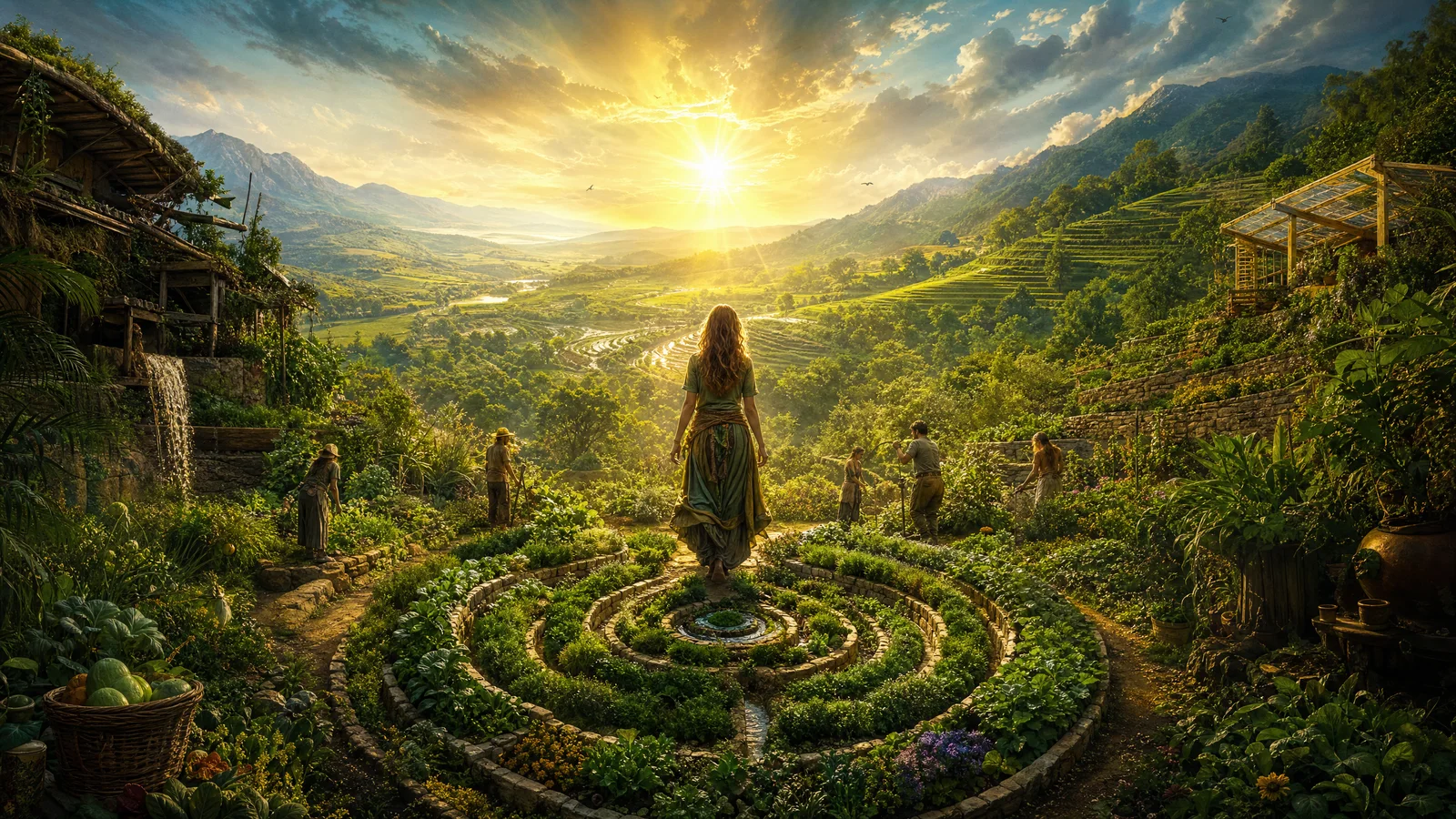
Build the Homestead
Complete Homestead Integration: From Individual Skills to Self-Sufficient Living
Complete Homestead Integration: From Individual Skills to Self-Sufficient Living
The homestead integrates all primitive skills into a self-sufficient way of life. This campaign covers system design, seasonal planning, resource management, and the integration of blacksmithing, pottery, agriculture, and animal husbandry into a functioning homestead.
Chapter 1: Homestead Systems
| System | Components | Products | Dependencies |
|---|---|---|---|
| Food production | Garden, orchard, livestock | Vegetables, fruit, meat, eggs, dairy | Water, soil, seed, tools |
| Water | Well, rain harvest, spring | Drinking, irrigation, livestock | Plumbing, storage |
| Energy | Wood, solar, wind, biogas | Heat, light, cooking fuel | Forestry, equipment |
| Shelter | House, barn, workshop, storage | Protection, workspace | Timber, masonry, tools |
| Tools | Forge, workshop | Repair, new tools | Metal, fuel, skill |
| Preservation | Smokehouse, root cellar, pantry | Year-round food supply | Harvest, containers |
| Fiber | Sheep, flax, cotton | Clothing, rope, fabric | Livestock, spinning, weaving |
| Pottery | Clay, kiln, wheel | Vessels, tiles, pipe | Clay, fuel, skill |
Chapter 2: Seasonal Calendar
| Season | Primary Activities | Secondary Activities |
|---|---|---|
| Early spring | Start seeds, prepare beds, tap trees | Repair tools, mend fences |
| Late spring | Plant garden, shear sheep, birth livestock | Build, forge, fire pottery |
| Early summer | Cultivate, weed, harvest early crops | Hay first cutting, process wool |
| Late summer | Harvest main crops, preserve food | Hay second cutting, build |
| Early fall | Harvest late crops, process grain | Butcher, smoke meat, press cider |
| Late fall | Plant garlic, prepare beds, store root crops | Repair buildings, forge tools |
| Early winter | Process fiber, spin, weave | Forge, pottery, woodworking |
| Late winter | Plan garden, order seeds, repair tools | Tap trees, prune orchard |
Chapter 3: Resource Flows
| Resource | Source | Processing | End Use |
|---|---|---|---|
| Wood | Managed woodland | Split, season, saw | Fuel, building, tools |
| Clay | Local deposits | Dig, process, wedge | Pottery, building |
| Iron | Salvage, ore, purchase | Forge | Tools, hardware |
| Water | Well, rain, spring | Filter, store | All uses |
| Soil | Compost, manure, cover crops | Build fertility | Food production |
| Seed | Save from harvest | Dry, store | Next year's crop |
| Fiber | Sheep, flax, cotton | Process, spin, weave | Clothing, rope |
| Food | Garden, livestock, forage | Preserve, store | Year-round nutrition |
Chapter 4: Integration Points
| Skill A | Skill B | Integration |
|---|---|---|
| Blacksmithing | Agriculture | Forge tools for farming |
| Pottery | Food preservation | Make storage vessels |
| Forestry | Blacksmithing | Charcoal for forge fuel |
| Animal husbandry | Agriculture | Manure for soil fertility |
| Pottery | Building | Make tiles, pipe, brick |
| Blacksmithing | Building | Make hardware, fasteners |
| Fiber arts | Animal husbandry | Wool from sheep |
| Food preservation | Pottery | Crocks for fermentation |
Chapter 5: Self-Sufficiency Levels
| Level | Description | Skills Required | Timeline |
|---|---|---|---|
| 1: Supplemental | Garden supplements purchased food | Basic gardening | 1 year |
| 2: Seasonal | Produce most food in growing season | Gardening, preservation | 2-3 years |
| 3: Year-round food | Produce and preserve year-round food | All food skills | 3-5 years |
| 4: Energy independent | Produce own heat and cooking fuel | Forestry, energy systems | 5-7 years |
| 5: Tool independent | Make and repair own tools | Blacksmithing, woodworking | 7-10 years |
| 6: Fully integrated | All systems operating, surplus for trade | All skills | 10+ years |
Reference Card
- Integration is the key to self-sufficiency (individual skills are useful; integrated skills are transformative; the homestead that connects blacksmithing, pottery, agriculture, and animal husbandry becomes greater than the sum of its parts). 2. Start small and expand (attempting full self-sufficiency immediately leads to burnout; start with a garden, add skills one at a time, and build capacity gradually over years). 3. The seasonal calendar governs all (every activity has its season; planting, harvesting, preserving, building, and crafting each have optimal times; the homesteader lives by the rhythm of the seasons). 4. Soil fertility is the foundation (without fertile soil, food production fails; composting, cover cropping, and animal manure build the soil that feeds the family; protect and build soil above all else). 5. Preservation extends the harvest (a garden produces abundance for a few months; preservation through canning, drying, smoking, fermenting, and root cellaring extends that abundance through the entire year). 6. Tools make everything possible (the blacksmith who can forge and repair tools ensures that every other homestead activity can continue; the forge is the homestead's most critical infrastructure). 7. Community extends capability (no homestead is truly self-sufficient; trade with neighbors, shared equipment, and mutual aid extend the capability of every family; the homestead exists within a community). 8. The homestead is a legacy (a well-developed homestead with fertile soil, productive trees, good buildings, and functioning infrastructure is a gift to the next generation; we build not just for ourselves but for those who come after).
TransmissionCOMPLETE — unaltered & unabridged
Words920 — every one of them
SHA-256 of source textc4e53c94a4561b38bec1b14d1338dd7b726060750189ec5d65ab74e9e1767ed4
Canonical textdownload campaign-build-homestead.md — byte-identical to what this page renders