Sovereignty Module: Boil the Bond
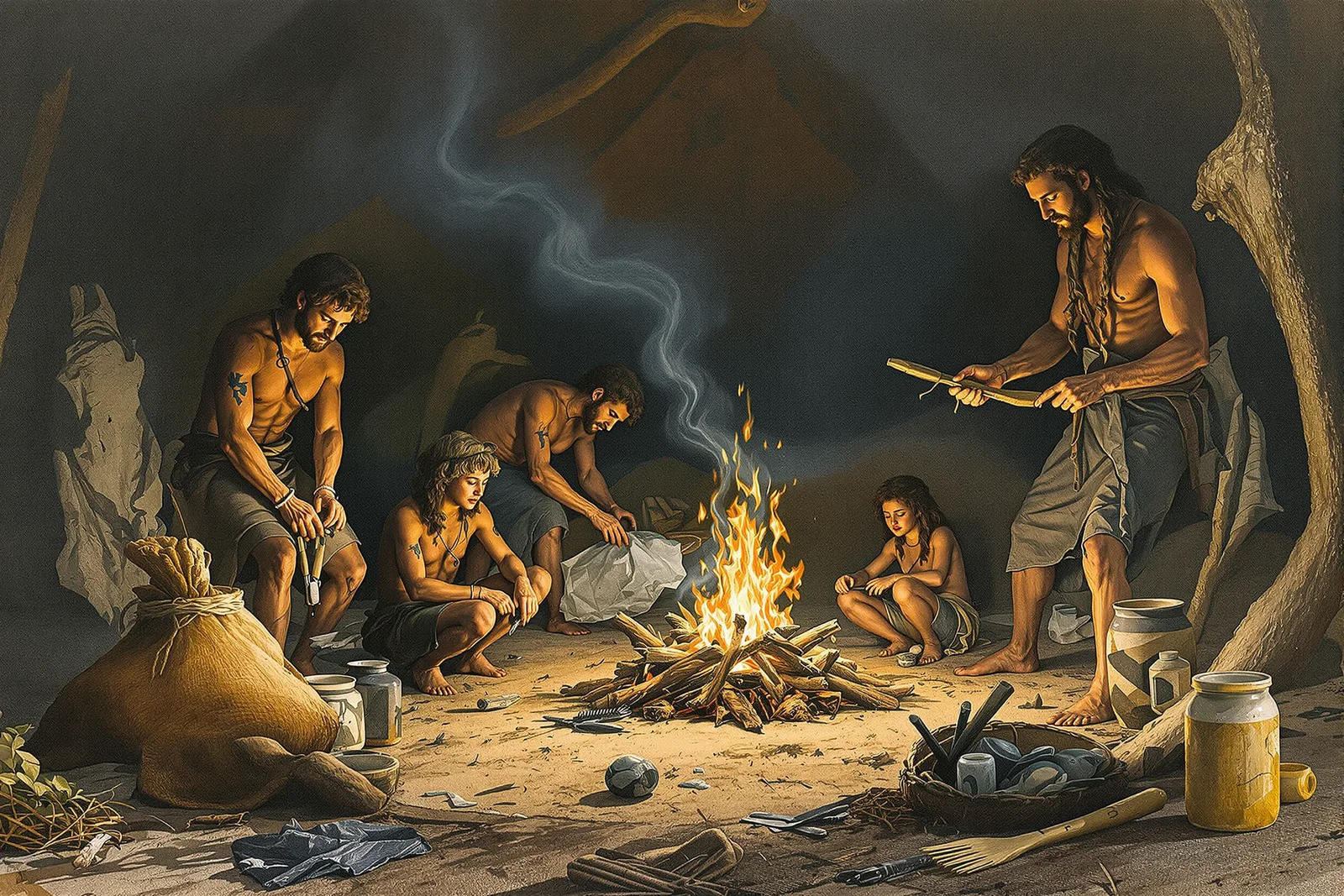
Complete Hide Glue and Natural Adhesives: From Scrap to Stick
Adhesives are essential for woodworking, fletching, tool making, and repair. This campaign covers hide glue, pine pitch, birch tar, flour paste, and casein glue.
Chapter 1: Adhesive Overview
| Adhesive | Strength | Water Resistance | Difficulty | Shelf Life | Best For |
|---|---|---|---|---|---|
| Hide glue | Excellent | Low (reversible with water) | Moderate | Months (dry), days (liquid) | Woodworking, bookbinding |
| Pine pitch glue | Good | Very good | Low | Indefinite (solid) | Hafting, waterproofing |
| Birch bark tar | Very good | Excellent | Moderate-high | Indefinite (solid) | Primitive tool hafting |
| Flour paste | Moderate | Very low | Very low | Days (fresh) | Paper, bookbinding |
| Casein glue (milk) | Very good | Moderate | Low | Hours (fresh) | Woodworking, labeling |
| Egg white | Moderate | Low | Very low | Hours (fresh) | Gilding, paper |
| Blood glue | Good | Moderate | Low | Hours (fresh) | Plywood (historical) |
Chapter 2: Hide Glue
| Source Material | Quality | Availability | Preparation |
|---|---|---|---|
| Rawhide scraps | Excellent | Tanning byproduct | Cut small, soak, cook |
| Sinew scraps | Very good | Butchering byproduct | Soak, cook |
| Hooves | Good | Butchering byproduct | Clean, crush, cook |
| Bones | Moderate | Butchering byproduct | Crush, cook longer |
| Fish skins | Good (flexible) | Fishing byproduct | Clean, cook |
| Rabbit skin | Excellent | Hunting/farming | Soak, cook |
Hide glue production: 1) Collect rawhide scraps, sinew, or skin trimmings. 2) Cut into small pieces (1-inch squares). 3) Soak in water for 12-24 hours (softens material). 4) Place in pot with enough water to cover. 5) Heat gently (do not boil; 140-160°F). 6) Maintain temperature for 4-12 hours. 7) Collagen dissolves into water (liquid becomes thick and syrupy). 8) Strain through cloth (remove solid scraps). 9) Pour liquid into flat mold. 10) Let cool and dry (becomes hard, amber-colored sheet). 11) Break dried glue into pieces for storage. 12) To use: soak pieces in water, heat gently until liquid.
Chapter 3: Pine Pitch Glue
Pine pitch glue recipe: 1) Collect pine resin (sap) from wounded pine trees. 2) Melt resin in metal container over low heat. 3) Strain through cloth to remove bark and debris. 4) Add ground charcoal (1 part charcoal to 3 parts resin). 5) Charcoal adds body and prevents brittleness. 6) Optional: add beeswax (10-20%) for flexibility. 7) Optional: add dried plant fiber for reinforcement. 8) Mix thoroughly while hot. 9) Pour onto stick or into mold for storage. 10) To use: reheat with flame until soft and workable. 11) Apply to surfaces while hot. 12) Hardens as it cools.
| Additive | Proportion | Effect | When to Use |
|---|---|---|---|
| Charcoal (ground fine) | 25-33% | Adds body, reduces brittleness | Always |
| Beeswax | 10-20% | Adds flexibility | Cold weather use |
| Plant fiber (ground) | 5-10% | Reinforcement | Structural joints |
| Fat/tallow | 5-10% | Flexibility, waterproofing | Waterproof applications |
Chapter 4: Birch Bark Tar
Birch bark tar production: 1) Collect birch bark (white/paper birch). 2) Pack bark tightly into metal can with small hole in bottom. 3) Invert can over collection container (another can buried in ground). 4) Build fire around and over the top can. 5) Heat drives tar out of bark (destructive distillation). 6) Tar drips through hole into collection container. 7) Process takes 2-4 hours. 8) Result: thick, black, waterproof adhesive. 9) Birch tar is the oldest known adhesive (Neanderthals used it 200,000+ years ago). 10) Apply while warm; hardens when cool.
Chapter 5: Other Natural Adhesives
Flour paste: 1) Mix 1 part flour with 4 parts water. 2) Cook over low heat, stirring constantly. 3) Cook until thick and translucent. 4) Let cool. 5) Use for paper, bookbinding, papier-mache. 6) Add clove oil or salt to extend shelf life. 7) Not waterproof; for indoor use only.
Casein glue: 1) Heat skim milk to 100°F. 2) Add vinegar (1 tablespoon per cup) until curds form. 3) Strain curds through cloth. 4) Rinse curds with water. 5) Mix curds with baking soda (1/4 teaspoon per tablespoon of curd). 6) Mixture foams, then becomes smooth glue. 7) Use immediately (sets in 1-2 hours). 8) Very strong for wood-to-wood joints. 9) Moderately water-resistant when dry.
Reference Card
- Hide glue is reversible (unlike modern glues, hide glue can be softened with water and heat; this makes repair and disassembly possible). 2. Never boil hide glue (boiling destroys the collagen proteins that give hide glue its strength; keep temperature below 160°F). 3. Pine pitch plus charcoal equals primitive superglue (pine resin alone is brittle; adding ground charcoal creates a tough, waterproof adhesive). 4. Birch tar is the oldest adhesive (Neanderthals used birch bark tar over 200,000 years ago; it is waterproof, strong, and made from a common tree). 5. Casein glue is surprisingly strong (milk-based casein glue was used in aircraft construction; it bonds wood powerfully and is moderately water-resistant). 6. Flour paste is the simplest adhesive (flour and water cooked together; it has been used for bookbinding and paper crafts for centuries). 7. All natural adhesives have trade-offs (hide glue is strong but not waterproof; pine pitch is waterproof but brittle; choose the right adhesive for the application). 8. Store dry glue indefinitely (dried hide glue, solid pine pitch, and birch tar all store indefinitely; reconstitute with heat when needed).