Sovereignty Module: Dig the Privy
Complete Sanitation and Waste Management: From Pit to Public Health
Sanitation prevents more deaths than any other single technology. This campaign covers pit latrines, composting toilets, greywater systems, and disease prevention.
Chapter 1: Sanitation Fundamentals
| Disease | Transmission Route | Prevention | Mortality Without Treatment |
|---|---|---|---|
| Cholera | Fecal-oral (water) | Proper sanitation, water treatment | 25-50% |
| Typhoid | Fecal-oral (water/food) | Proper sanitation, hygiene | 10-30% |
| Dysentery | Fecal-oral (water/food) | Proper sanitation, hygiene | 5-15% (higher in children) |
| Hepatitis A | Fecal-oral | Proper sanitation, hygiene | 1-2% (higher in adults) |
| Hookworm | Skin contact with contaminated soil | Proper sanitation, footwear | Chronic debilitation |
| Ascariasis (roundworm) | Fecal-oral (soil) | Proper sanitation, hygiene | Chronic, occasionally fatal |
The F-diagram: Feces to fingers, flies, fields, fluids, food, and then to a new host. Every sanitation intervention breaks one or more of these transmission pathways.
Chapter 2: Pit Latrine Construction
| Type | Difficulty | Cost | Lifespan | Capacity | Odor Control |
|---|---|---|---|---|---|
| Simple pit | Very low | Very low | 3-5 years | Family | Poor |
| VIP latrine (ventilated improved pit) | Low | Low | 5-10 years | Family | Good |
| Pour-flush latrine | Moderate | Moderate | 10-20 years | Family | Very good |
| Composting toilet | Moderate | Low-moderate | Indefinite | Family | Good |
| Twin-pit alternating | Moderate | Moderate | Indefinite | Family | Good |
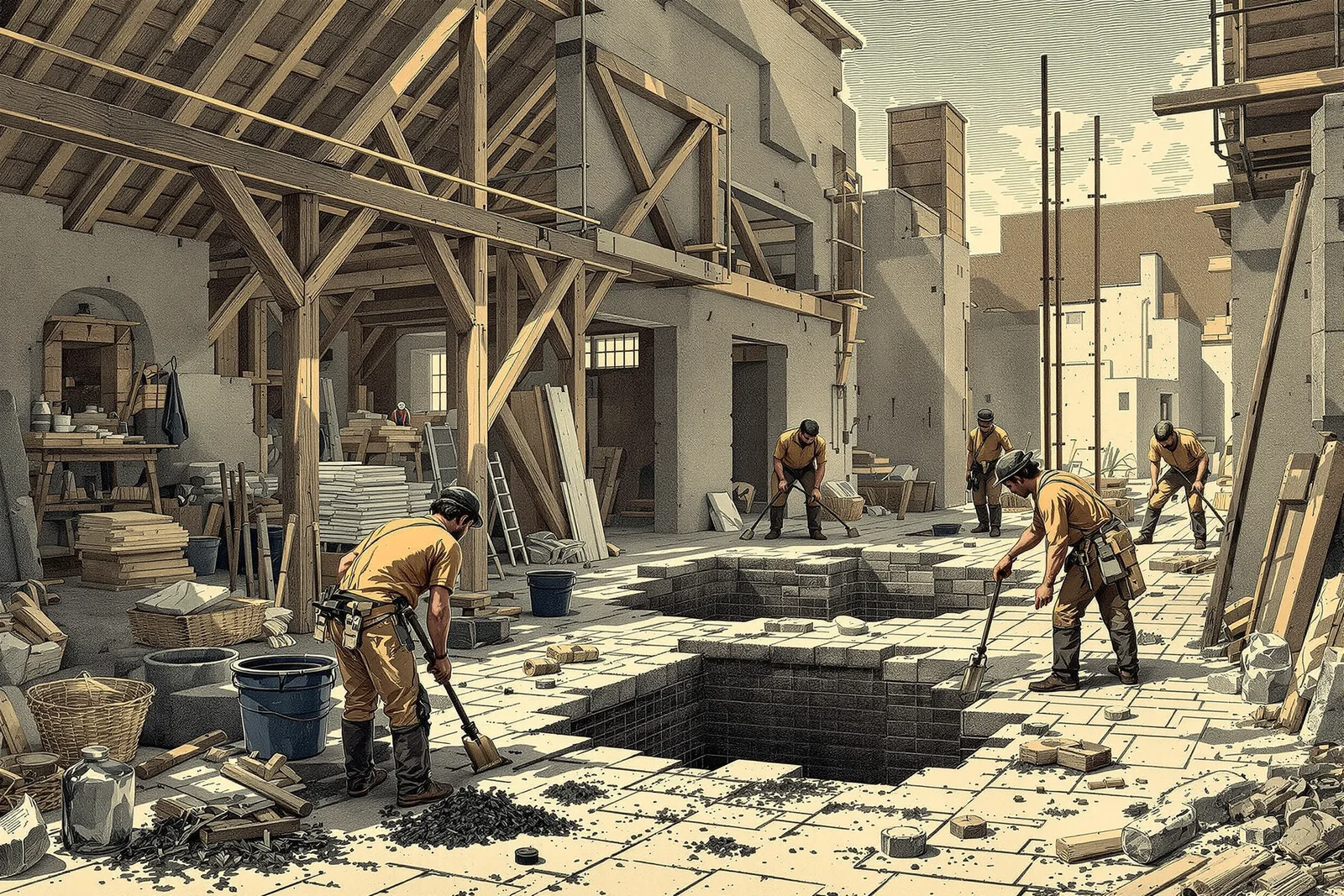
VIP latrine construction: 1) Site at least 30 meters from water source. 2) Site downhill from water source (never uphill). 3) Dig pit: 3 feet wide, 6 feet long, 6-10 feet deep. 4) Line upper portion with brick, stone, or concrete (prevents collapse). 5) Build concrete or timber slab over pit. 6) Cut hole in slab (squat plate or seat). 7) Build superstructure (walls and roof) for privacy. 8) Install vent pipe: 4-inch PVC, painted black, extending above roof. 9) Screen top of vent pipe with fly screen. 10) Keep interior dark (flies attracted to light in vent pipe, not latrine). 11) Add tight-fitting lid to seat/hole. 12) Handwashing station at entrance (soap and water).
Chapter 3: Composting Toilet
| Component | Material | Purpose | Specification |
|---|---|---|---|
| Collection chamber | Wood, concrete, or plastic | Contains waste | 2 chambers, alternating |
| Cover material | Sawdust, wood chips, dry leaves | Absorbs moisture, controls odor | Add after each use |
| Ventilation | Pipe, 4-inch | Removes moisture and odor | Extends above roof |
| Urine diverter | Funnel, pipe | Separates urine from solids | Reduces moisture |
| Access door | Hinged panel | Remove finished compost | Rear of unit |
Composting process: 1) Use one chamber at a time. 2) After each use, add handful of cover material (sawdust, leaves). 3) Urine diversion reduces moisture and odor. 4) When chamber is full, switch to second chamber. 5) Let first chamber compost for 6-12 months (undisturbed). 6) Thermophilic composting kills pathogens (above 131°F for 3+ days). 7) Finished compost is safe for non-food gardens. 8) For food gardens: compost for 12+ months or apply only to fruit trees. 9) Never apply fresh humanure to food crops.
Chapter 4: Greywater Management
| Source | Volume (per person/day) | Contaminants | Treatment Needed |
|---|---|---|---|
| Kitchen sink | 5-10 gallons | Grease, food particles, soap | Grease trap, filtration |
| Laundry | 10-15 gallons | Soap, lint, dirt | Filtration |
| Bathing/shower | 10-20 gallons | Soap, skin cells | Minimal filtration |
| Handwashing | 1-3 gallons | Soap | Minimal |
Greywater system: 1) Never mix greywater with blackwater (toilet waste). 2) Grease trap for kitchen water (box with baffles; grease floats, clean water exits). 3) Simple filtration: gravel, sand, charcoal layers. 4) Direct to subsurface irrigation (mulch basin or infiltration trench). 5) Do not store greywater more than 24 hours (bacteria multiply). 6) Do not apply greywater to root vegetables or leafy greens. 7) Greywater is safe for fruit trees, ornamentals, and non-food plants.
Chapter 5: Handwashing and Hygiene
| Handwashing Trigger | Reason | Method |
|---|---|---|
| After using latrine | Prevent fecal-oral transmission | Soap and water, 20 seconds |
| Before preparing food | Prevent food contamination | Soap and water, 20 seconds |
| Before eating | Prevent ingestion of pathogens | Soap and water, 20 seconds |
| After handling animals | Prevent zoonotic disease | Soap and water, 20 seconds |
| After handling waste | Prevent pathogen spread | Soap and water, 20 seconds |
Tippy-tap (handwashing station): 1) Hang water container (jug with small hole or spigot) from frame. 2) Foot-operated lever tips container to pour water. 3) Soap on a rope or soap dish nearby. 4) Drainage to gravel pit or garden. 5) No hand contact with container (prevents recontamination). 6) Place at latrine entrance and kitchen area. 7) Refill daily.
Reference Card
- Sanitation saves more lives than medicine (proper sanitation prevents cholera, typhoid, dysentery, and parasites; it is the single most important public health intervention). 2. 30 meters from water, downhill (the latrine must be at least 30 meters from any water source and downhill to prevent groundwater contamination). 3. The VIP latrine is the gold standard (a ventilated improved pit latrine with a screened vent pipe controls odor and flies effectively). 4. Cover material controls odor (a handful of sawdust, dry leaves, or wood chips after each use absorbs moisture and eliminates odor). 5. Composting takes time (humanure must compost for 6-12 months minimum before use; thermophilic temperatures kill pathogens). 6. Separate greywater from blackwater (kitchen and bath water can be safely reused for irrigation; toilet waste requires separate treatment). 7. Handwashing is the simplest lifesaver (washing hands with soap after using the latrine and before handling food prevents most fecal-oral disease transmission). 8. A tippy-tap costs nothing (a jug, some string, and a stick create a foot-operated handwashing station that prevents recontamination).