Complete Masonry Heater and Tile Stove Construction: From Brick to Warmth
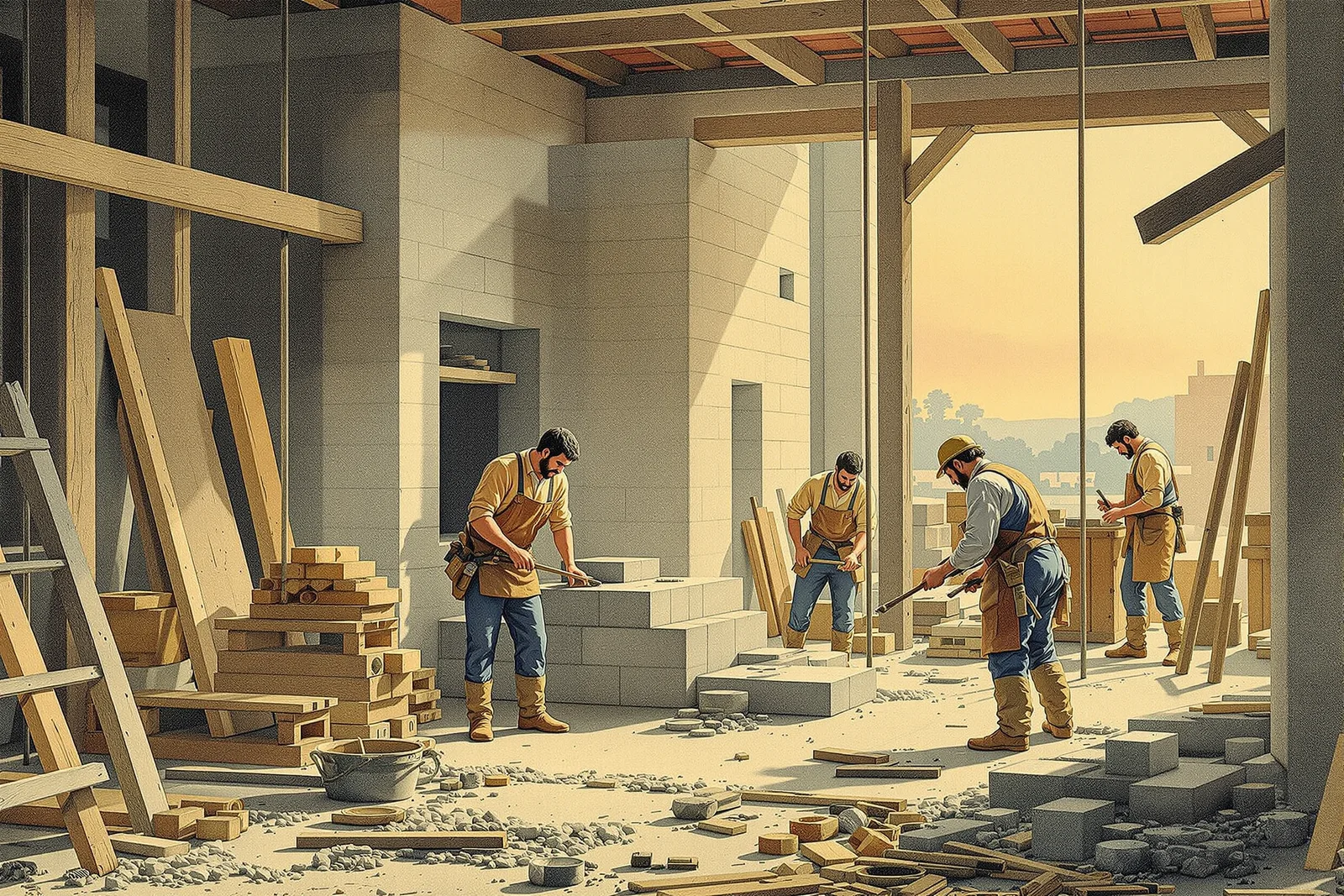
⟁ cover painted for this edition — the source module carried no illustrations
Complete Masonry Heater and Tile Stove Construction: From Brick to Warmth
A masonry heater burns a small, hot fire and stores heat in massive brick or stone, radiating warmth for 12-24 hours from a single firing. This campaign covers design, construction, flue routing, and operation.
Chapter 1: Masonry Heater Types
Type
Origin
Mass (lbs)
Efficiency
Heat Duration
Difficulty
Russian stove (pechka)
Russia
3,000-8,000
80-90%
12-24 hours
High
Finnish contraflow
Finland
2,000-4,000
85-90%
12-18 hours
High
Kachelofen (tile stove)
Germany/Austria
2,000-6,000
80-90%
12-24 hours
Very high
Rocket mass heater
Modern
1,000-3,000
80-90%
8-16 hours
Moderate
Grundofen (base stove)
Austria
3,000-6,000
85-92%
18-24 hours
Very high
Chapter 2: Operating Principles
Principle
Explanation
Benefit
Hot, fast fire
Burn a full load of wood quickly (1-2 hours)
Complete combustion, minimal pollution
Long flue path
Exhaust gases travel through channels in the mass
Heat transfers from gas to masonry
Thermal mass
Heavy brick/stone absorbs and stores heat
Radiates warmth for 12-24 hours
Radiant heat
Heat radiates from warm surfaces
Comfortable, even warmth
High efficiency
80-90% of heat captured
Very little heat lost up chimney
How it works: 1) Load firebox with dry wood. 2) Light fire and burn hot and fast (1-2 hours). 3) Hot exhaust gases (1500-2000°F) enter flue channels. 4) Gases travel through channels in the masonry mass. 5) Heat transfers from gases to brick (gases cool from 2000°F to 300°F). 6) Cooled gases exit through chimney. 7) Heated masonry radiates warmth into room. 8) Surface temperature: 150-200°F (warm to touch, not burning). 9) One firing heats for 12-24 hours. 10) Fire once or twice per day in cold weather.
Chapter 3: Basic Construction
Component
Material
Purpose
Specification
Foundation
Concrete or stone
Support mass (2-4 tons)
Sized for full heater footprint
Firebox
Firebrick (refractory)
Withstand flame
2,600°F rated firebrick
Flue channels
Firebrick or common brick
Route exhaust, absorb heat
6-8 inch square channels
Outer shell
Common brick, stone, or tile
Radiate heat, appearance
4 inch minimum thickness
Chimney connection
Firebrick to metal flue
Exhaust to outdoors
6-8 inch diameter
Cleanout doors
Cast iron
Access for cleaning soot
At each channel turn
Bypass damper
Cast iron
Direct exhaust to chimney (startup)
At firebox exit
Finnish contraflow (simplest effective design): 1) Build firebox (firebrick, 12x18x24 inches minimum). 2) Exhaust exits top of firebox, rises through center channel. 3) At top of heater, gases split and descend through side channels. 4) At bottom of side channels, gases enter chimney connection. 5) This up-center, down-sides path is the contraflow pattern. 6) Total flue path: 8-12 feet (within a 4-foot tall heater). 7) Outer shell: common brick, 4 inches thick around channels. 8) Total mass: 2,000-4,000 pounds.
Chapter 4: Flue Channel Routing
Pattern
Path
Efficiency
Complexity
Best For
Contraflow (up-down)
Up center, down sides
Very high
Moderate
Most applications
Bell (free gas movement)
Open chamber, gas stratifies
High
Low
Simple construction
Horizontal channels
Side to side, multiple passes
High
Moderate
Wide, low heaters
Vertical channels
Up and down, multiple passes
Very high
High
Tall, narrow heaters
Chapter 5: Operation and Maintenance
Task
Frequency
Method
Purpose
Fire (cold weather)
1-2 times per day
Full load, burn hot and fast
Heat the mass
Fire (mild weather)
Once per day or less
Smaller load
Maintain comfort
Clean flue channels
Annually
Open cleanout doors, brush soot
Maintain efficiency
Inspect firebox
Annually
Check for cracked firebrick
Prevent gas leaks
Check chimney
Annually
Inspect for creosote, damage
Fire safety
Replace firebrick
Every 10-20 years
Remove and replace cracked bricks
Maintain firebox integrity
Reference Card
Burn hot and fast (a masonry heater works by burning a full load of wood quickly at high temperature; this produces complete combustion, minimal smoke, and maximum heat transfer to the masonry). 2. The mass stores the heat (2,000-4,000 pounds of brick absorbs heat during the 1-2 hour fire and radiates it back into the room for 12-24 hours; this is the fundamental advantage over a metal stove). 3. One firing per day in most climates (a single hot fire in the morning heats the home all day; in very cold weather, a second evening fire may be needed). 4. The flue path is the key (exhaust gases must travel 8-12 feet through channels in the masonry; this long path allows the brick to absorb most of the heat before gases reach the chimney). 5. Surface temperature is safe (the outer surface of a masonry heater reaches 150-200°F, which is warm to the touch but will not burn skin or ignite nearby materials). 6. Use only dry wood (wet wood produces steam, creosote, and incomplete combustion; the firebox temperature drops, efficiency falls, and flue channels clog with soot). 7. The foundation must support the weight (a masonry heater weighs 2-4 tons; the floor and foundation must be designed for this concentrated load). 8. A masonry heater is the most efficient wood heating system (at 80-90% efficiency, a masonry heater extracts more heat from wood than any other wood-burning device; it uses less wood and produces less pollution than a conventional wood stove).