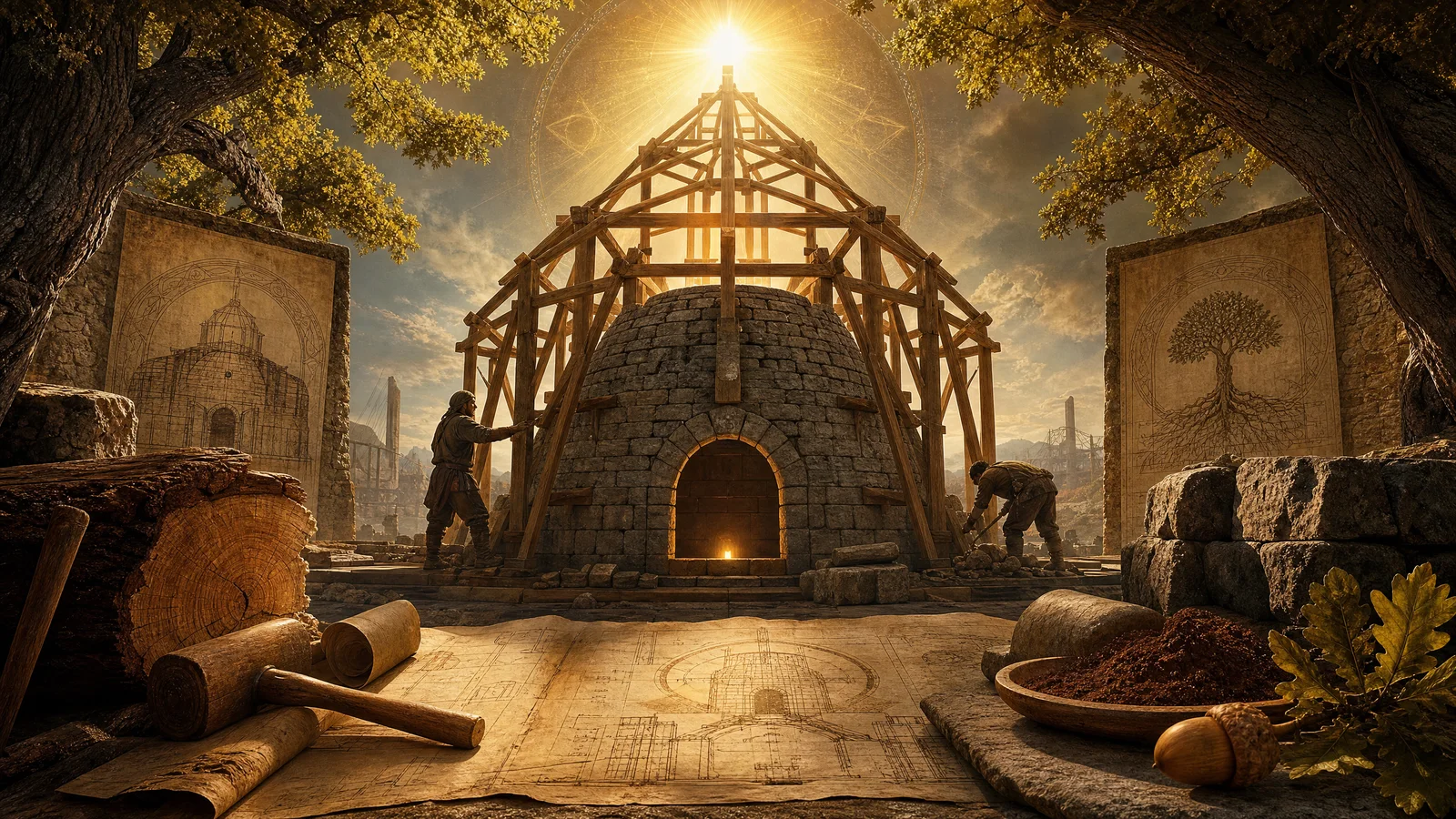
Complete Kiln Design and Construction: From Bricks to Firing Chamber
Building your own kiln is the potter's ultimate infrastructure project. This campaign covers kiln types, firebox design, flue systems, and construction from firebrick.
Chapter 1: Kiln Types
Type
Fuel
Max Temp
Complexity
Cost
Pit kiln
Wood
Cone 010 (1650°F)
Very low
Minimal
Barrel kiln
Wood
Cone 06 (1828°F)
Low
Low
Catenary arch
Wood or gas
Cone 10 (2345°F)
Moderate
Moderate
Sprung arch
Wood or gas
Cone 10 (2345°F)
Moderate
Moderate
Downdraft
Wood or gas
Cone 10 (2345°F)
High
Moderate
Cross-draft
Wood
Cone 10 (2345°F)
Moderate
Low-moderate
Anagama
Wood
Cone 10+
High
Moderate
Chapter 2: Catenary Arch Kiln
Catenary arch: 1) The catenary curve is the natural shape of a hanging chain. 2) An arch in this shape supports itself without internal stress. 3) No steel reinforcement needed (the shape handles all forces). 4) Determine kiln size: interior width and height. 5) Create catenary template: hang chain between two points. 6) Trace chain curve onto plywood (this is your arch template). 7) Build form from plywood templates and cross-braces. 8) Lay firebrick over form. 9) Remove form after mortar sets.
Kiln Size
Interior Width
Interior Height
Interior Depth
Cubic Feet
Small
24 inches
24 inches
30 inches
10 cu ft
Medium
30 inches
30 inches
36 inches
18 cu ft
Large
36 inches
36 inches
48 inches
36 cu ft
Chapter 3: Materials
Material
Use
Quantity (Medium Kiln)
Hard firebrick (K-23)
Hot face (interior)
200-300 bricks
Soft firebrick (K-26)
Insulation layer
100-150 bricks
Ceramic fiber blanket
Outer insulation
50-75 sq ft
Fireclay mortar
Brick joints
100-150 lbs
Angle iron
Door frame, supports
20-30 linear feet
Kiln shelves
Ware support
6-10 shelves
Kiln posts
Shelf support
12-20 posts
Chapter 4: Firebox and Flue
Firebox (wood-fired): 1) Located below or beside the kiln chamber. 2) Size: 1/3 to 1/2 of chamber volume. 3) Grate: steel bars for air flow under fuel. 4) Ash pit: below grate, allows ash removal. 5) Stoking port: large enough for wood loading. 6) Primary air: enters below grate (combustion air). 7) Secondary air: enters above fuel (completes combustion).
Flue System
Type
Draft
Even Heating
Updraft
Hot air rises through ware, exits top
Natural
Fair (hot at top)
Downdraft
Hot air pulled down through ware, exits bottom
Forced or chimney
Good
Cross-draft
Hot air moves horizontally through ware
Natural
Fair (hot near firebox)
Bourry box
Separate firebox, flame enters chamber side
Natural
Good
Chapter 5: Construction Sequence
Step
Task
Duration
1
Foundation: level concrete pad
1-2 days
2
Floor: lay firebrick floor on sand bed
1 day
3
Walls: lay firebrick walls to spring line
2-3 days
4
Arch form: build plywood catenary form
1 day
5
Arch: lay firebrick over form
1-2 days
6
Insulation: apply soft brick and fiber
1-2 days
7
Door: build removable brick door
1 day
8
Chimney: build chimney and damper
1-2 days
9
Curing fires: series of small fires
3-5 days
10
First firing: test fire with test pieces
1 day
Reference Card
The catenary arch is self-supporting (the catenary curve distributes weight so that every brick is in pure compression; no brick is under tension; this makes the arch incredibly strong without reinforcement). 2. Insulation saves fuel (a well-insulated kiln reaches temperature faster and uses less fuel; the investment in insulation pays for itself in fuel savings within a few firings). 3. The flue system determines even heating (the path that hot gases take through the kiln determines which areas are hotter and which are cooler; a well-designed flue system minimizes temperature variation). 4. Cure the kiln slowly (a new kiln contains moisture in the mortar and bricks; firing too hot too fast creates steam that can crack the structure; cure with a series of progressively hotter fires). 5. The firebox size determines maximum temperature (a firebox that is too small cannot generate enough heat to reach high temperatures; size the firebox at 1/3 to 1/2 of the chamber volume). 6. The chimney creates draft (the chimney draws hot air through the kiln; a taller chimney creates more draft; the damper controls the draft and therefore the atmosphere). 7. Building a kiln is the potter's declaration of commitment (a kiln is a permanent structure that says the potter is serious about the craft; it transforms a hobby into a practice). 8. Every kiln has a personality (no two kilns fire exactly the same; the potter must learn their kiln's hot spots, cold spots, and quirks through experience; this relationship between potter and kiln is part of the craft's magic).