Sovereignty Module: Raise the Walls
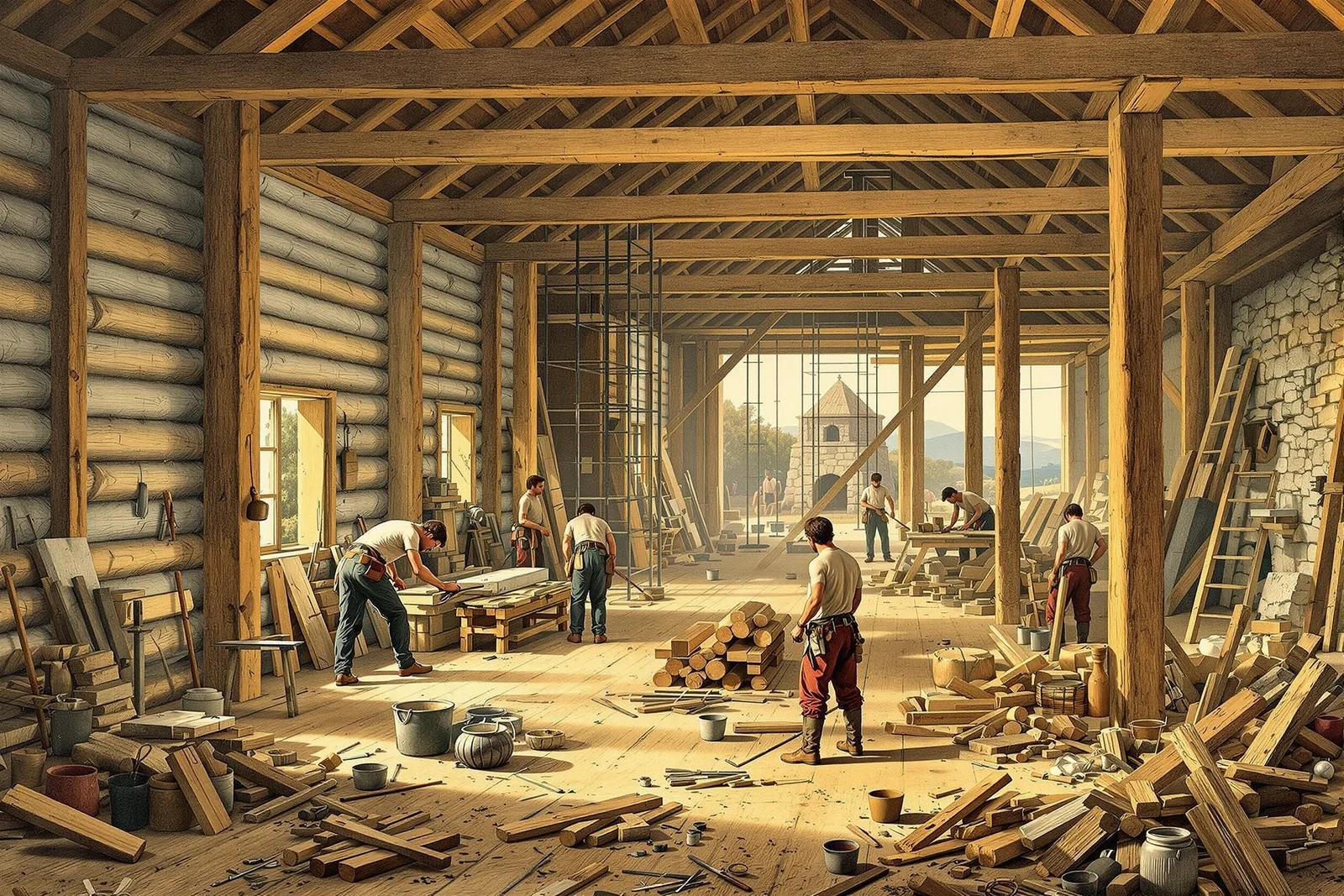
Raise the Walls
Complete Log Cabin, Timber Frame, and Permanent Shelter Construction Guide
Complete Log Cabin, Timber Frame, and Permanent Shelter Construction Guide
A permanent shelter is the foundation of civilization. Protection from weather, predators, and exposure determines survival. This campaign covers building a complete dwelling from standing timber with hand tools only.
Chapter 1: Shelter Types by Effort
| Type | Build Time (1 person) | Lifespan | Warmth | Tools Needed | Skill |
|---|---|---|---|---|---|
| Debris hut | 2-4 hours | Days-weeks | Good (insulation) | None | Very low |
| Lean-to | 2-6 hours | Weeks-months | Poor (one side open) | Knife/axe | Low |
| Wickiup/wigwam | 1-3 days | Months-years | Moderate | Knife, cordage | Low |
| Sod house | 1-2 weeks | 5-20 years | Excellent | Shovel, knife | Low-moderate |
| Log cabin (round log) | 2-6 weeks | 50-100+ years | Excellent | Axe, saw | Moderate |
| Timber frame | 4-12 weeks | 100-300+ years | Excellent (with infill) | Axe, saw, chisel, mallet | High |
| Stone house | 2-6 months | 200-500+ years | Excellent | Hammer, chisel, mortar tools | High |
Chapter 2: Log Cabin Construction
| Step | Action | Time | Details |
|---|---|---|---|
| 1 | Select site (high ground, south-facing, near water, good drainage) | Day 1 | Avoid flood zones, dead trees overhead |
| 2 | Clear and level foundation area (add 4 feet beyond walls) | Day 1-2 | Remove stumps, rocks, level ground |
| 3 | Lay foundation (stone piers, gravel pad, or sill logs on rocks) | Day 2-3 | Keep wood off ground (rot prevention) |
| 4 | Select and fell trees (straight, 8-12 inch diameter, same species) | Days 3-7 | Need 40-60 logs for small cabin (12x16 feet) |
| 5 | Peel bark (prevents insect damage, speeds drying) | As felled | Draw knife or spud |
| 6 | Notch and stack walls (saddle notch, dovetail, or Scandinavian) | Days 7-21 | Alternate butt/tip ends for level walls |
| 7 | Cut door and window openings (after walls are up) | Day 21-22 | Brace above opening (lintel log) |
| 8 | Build roof structure (ridge pole + purlins or rafters) | Days 22-25 | Pitch: 6/12 minimum for rain shedding |
| 9 | Install roofing (shakes, thatch, sod, or metal) | Days 25-30 | Overlap shingles/shakes for waterproofing |
| 10 | Chink gaps between logs (moss, clay, mortar, or oakum) | Days 30-35 | Keeps wind and rain out |
| 11 | Build fireplace/chimney or install stove | Days 35-42 | Stone/brick chimney or metal stovepipe |
| 12 | Install door and window (frames, hinges, shutters or glass) | Days 42-45 | Weathertight |
Chapter 3: Log Notching Methods
| Notch Type | Difficulty | Weather Seal | Strength | Best For |
|---|---|---|---|---|
| Saddle notch (round) | Low | Moderate (needs chinking) | Good | Quick construction, round logs |
| V-notch | Low | Moderate | Moderate | Quick, simple tools |
| Dovetail | High | Excellent (self-sealing) | Excellent | Permanent, hewn logs |
| Scandinavian (cope and saddle) | Moderate-high | Excellent (no chinking needed) | Excellent | Permanent, round logs |
| Square notch | Moderate | Good | Good | Hewn (squared) logs |
| Butt and pass | Very low | Poor (needs heavy chinking) | Low | Emergency, speed |
Chapter 4: Roof Construction
| Roof Type | Lifespan | Difficulty | Materials | Weight |
|---|---|---|---|---|
| Wood shakes/shingles | 20-40 years | Moderate | Cedar, oak, or pine split | Light |
| Thatch (reed/straw) | 15-30 years | Moderate | Reeds, straw, grass | Moderate |
| Sod (living roof) | 20-40 years | Low-moderate | Sod strips on birch bark or boards | Very heavy |
| Metal (tin/steel) | 40-80+ years | Low (if available) | Sheet metal, nails | Light |
| Bark (birch or elm) | 5-15 years | Low | Large bark sheets, weighted | Light |
| Slate/stone | 100+ years | High | Split stone, heavy structure needed | Very heavy |
Roof pitch minimum: 4/12 for metal, 6/12 for shakes, 8/12 for thatch (steeper = better water shedding). Overhang: 12-18 inches minimum to protect walls from rain.
Chapter 5: Insulation and Weatherproofing
| Material | R-value per inch | Availability | Fire Risk | Durability |
|---|---|---|---|---|
| Moss (dried, packed) | R-2 to R-3 | Forest floors | Moderate | Good (if dry) |
| Straw/hay (packed) | R-1.5 to R-2 | Agricultural | High | Moderate (rodents) |
| Sawdust | R-2 to R-3 | Sawmill waste | High | Moderate |
| Wool (sheep) | R-3.5 to R-4 | Sheep | Low | Excellent |
| Cattail fluff | R-3 to R-4 | Wetlands | Moderate | Good |
| Wood shavings | R-2 to R-3 | Woodworking | High | Moderate |
| Clay-straw (light clay) | R-1.5 to R-2 | Anywhere | Very low | Excellent |
| Double wall (dead air space) | R-1 per inch of air | Construction method | None | Excellent |
Chinking recipe: 2 parts clay + 1 part sand + chopped straw or grass. Mix to thick paste. Press into gaps between logs. Let dry. Apply second coat if cracks appear. Lime-wash exterior for weather protection.
Chapter 6: Fireplace and Heating
| Heating Type | Efficiency | Complexity | Safety | Heat Output |
|---|---|---|---|---|
| Open fireplace | 10-15% | High (masonry) | Moderate (sparks) | Low (most heat up chimney) |
| Rumford fireplace (tall, shallow) | 20-30% | High | Good | Moderate (radiates more) |
| Cast iron stove | 40-60% | Low (install only) | Good (contained) | High |
| Rocket mass heater | 80-90% | Moderate-high | Excellent | Very high (stores heat in mass) |
| Masonry heater (Russian/Finnish) | 80-90% | Very high | Excellent | Very high (radiates for 12-24 hours) |
| Kang/ondol (heated floor) | 70-80% | Moderate | Good | High (radiant floor) |
Reference Card
- Keep wood off ground: stone piers or gravel pad prevents rot (most common cabin failure)
- Peel bark immediately after felling: prevents insect infestation
- Alternate butt and tip ends when stacking: keeps walls level (logs taper)
- Chink with clay + sand + straw mixture: press firmly into all gaps
- Roof overhang 12-18 inches minimum: protects walls from rain
- Roof pitch: steeper is better (6/12 minimum for shakes, 8/12 for thatch)
- Small cabin (12x16 feet) requires 40-60 logs of 8-12 inch diameter
- South-facing windows maximize winter solar gain (passive heating)
TransmissionCOMPLETE — unaltered & unabridged
Words1,143 — every one of them
SHA-256 of source text7946ff7a6e44ae38fc317d5e062db95fde0e11fa3822482fb754c51ac2017fe4
Canonical textdownload campaign-cabin.md — byte-identical to what this page renders