Sovereignty Module: Clothe the Body
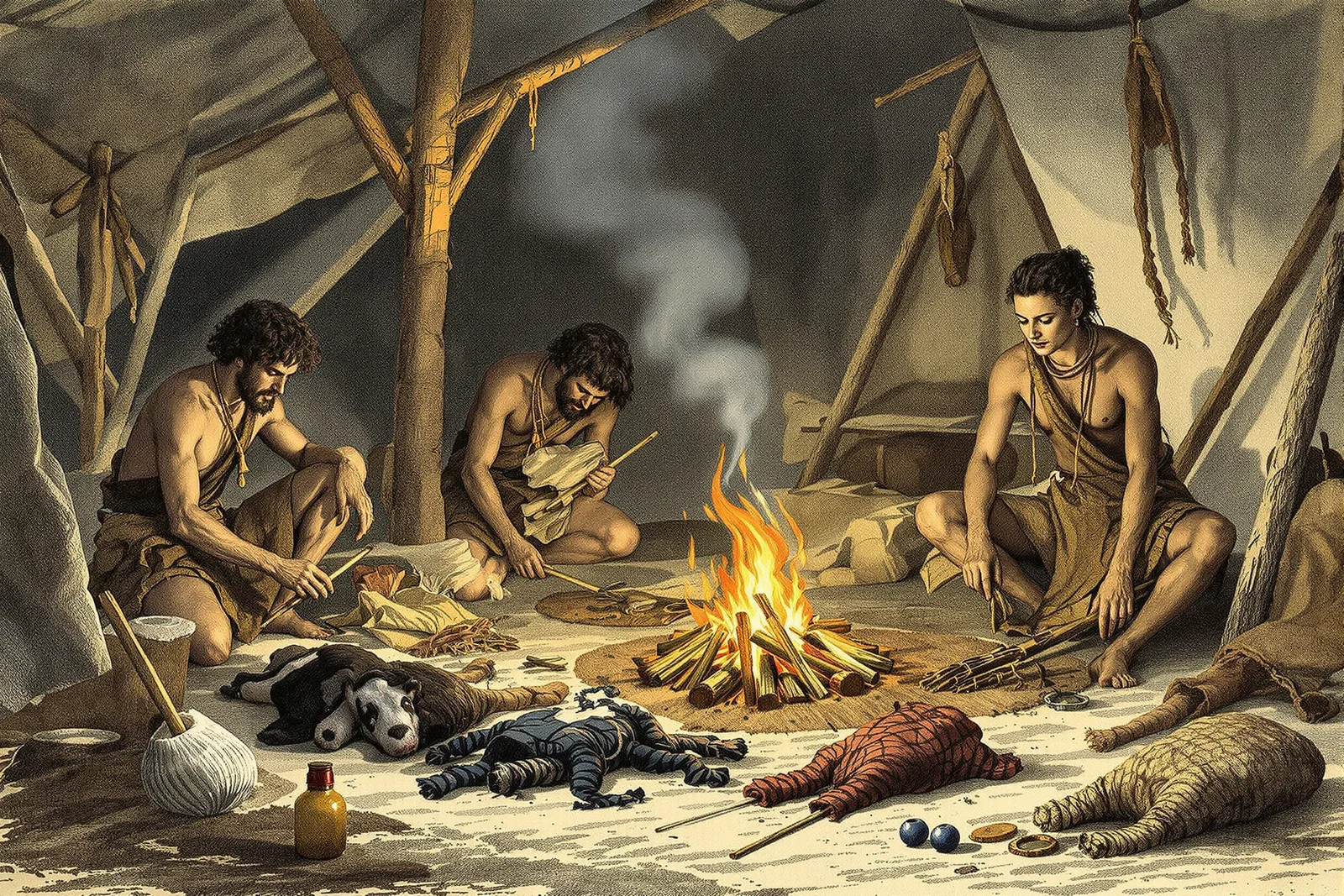
Complete Primitive Clothing: From Animal Hides to Woven Garments
Clothing is the portable shelter — protecting from cold, sun, rain, thorns, and insects. This campaign covers every method of making clothing without industrial materials.
Chapter 1: Clothing Materials
| Material | Warmth | Durability | Water Resistance | Availability | Processing |
|---|---|---|---|---|---|
| Brain-tanned buckskin | Excellent | Very good | Poor (unless smoked) | Hunting | High (days of work) |
| Rawhide | Low (stiff) | Excellent | Good | Hunting | Low (just dry) |
| Fur (with hair on) | Excellent | Good | Moderate | Hunting/trapping | Moderate |
| Wool (woven/felted) | Excellent (wet or dry) | Very good | Good (lanolin) | Sheep | High (shear, spin, weave) |
| Linen (flax fiber) | Low (cool) | Excellent | Poor | Flax cultivation | Very high (months) |
| Cotton (woven) | Low | Moderate | Poor | Cotton cultivation | Very high |
| Bark cloth (tapa) | Low | Low-moderate | Poor | Tropical trees | Moderate (pound bark) |
| Felted wool | Good-excellent | Good | Good | Sheep | Moderate (no weaving needed) |
| Nettle/hemp cloth | Moderate | Excellent | Poor | Wild/cultivated | High (ret, spin, weave) |
Chapter 2: Brain Tanning (Buckskin)
| Step | Action | Time | Details |
|---|---|---|---|
| 1 | Flesh hide (remove all meat, fat, membrane) | 1-2 hours | Beam or flat surface. Scrape with dull blade. |
| 2 | Soak in wood ash solution (lye) or lime | 2-7 days | Loosens hair. Check daily. Hair slips easily = ready. |
| 3 | De-hair (scrape off all hair and grain layer) | 2-4 hours | Beam + scraper. Remove ALL grain (shiny layer). |
| 4 | Rinse thoroughly (remove all alkali) | Several rinses | Squeeze, rinse, repeat until no slippery feeling |
| 5 | Wring out excess water | - | Twist around pole or wring by hand |
| 6 | Apply brain solution (1 brain per hide, mashed in warm water) | Soak 4-24 hours | Brain oils penetrate and lubricate fibers |
| 7 | Wring out brain solution | - | Squeeze out as much liquid as possible |
| 8 | Stretch and work hide as it dries (CRITICAL) | 4-8 hours | Pull, stretch, work over cable/stake continuously |
| 9 | If hide dries stiff, re-brain and re-work | Repeat as needed | May take 2-3 brain applications for thick hides |
| 10 | Smoke hide (preserves, waterproofs, colors) | 30-60 minutes per side | Rotten wood smoke (not heat). Golden-brown color. |
Critical rule: Step 8 is where most people fail. You MUST work the hide continuously as it dries. If any section dries without being stretched, it becomes stiff rawhide. The stretching keeps fibers separated while brain oils lock them open.
Chapter 3: Garment Patterns (No-Waste Designs)
| Garment | Hides Needed | Pattern | Sewing | Notes |
|---|---|---|---|---|
| Shirt/tunic | 2 deer hides | Two rectangles + sleeves | Sinew or thread, running stitch | Simplest garment. Belted at waist. |
| Pants/leggings | 2 deer hides | Two tubes, tied to belt | Sinew, whip stitch seams | Each leg = separate piece tied to waist belt |
| Moccasins (center-seam) | 1/2 hide | Foot tracing + 2 inches all around | Sinew, awl + whip stitch | One-piece wrap, seam up center of foot |
| Moccasins (pucker-toe) | 1/2 hide | Oval sole + rectangular upper | Sinew, gathered/puckered at toe | Woodland style, very comfortable |
| Mittens | Scraps | Hand tracing + 1 inch | Sinew | Two pieces per mitten (palm + back) |
| Hat/hood | Scraps or 1/2 hide | Skull cap or full hood pattern | Sinew | Critical for cold (40% heat loss from head) |
| Cloak/cape | 1-2 large hides or woven blanket | Full rectangle, draped | Tie or pin at neck | Outermost layer, rain/wind protection |
Chapter 4: Sewing with Sinew
| Step | Action | Details |
|---|---|---|
| 1 | Prepare sinew (dry leg/back tendon, pound, separate into threads) | Threads should be 12-18 inches long, thin |
| 2 | Moisten sinew thread (saliva or water) | Becomes pliable and sticky when wet |
| 3 | Twist/roll to point one end | Creates "needle" end for threading through holes |
| 4 | Punch holes with awl (bone, antler, or metal) | Evenly spaced, 1/8-1/4 inch from edge |
| 5 | Push sinew through hole, pull tight | Sinew shrinks as it dries (self-tightening) |
| 6 | Running stitch or whip stitch along seam | Running = in/out. Whip = over edge. |
Sinew advantages: shrinks when drying (tightens seams), extremely strong, self-adhesive when wet, available from any large animal (deer, elk, cow back strap or Achilles tendon).
Chapter 5: Felting (Clothing Without Weaving)
| Step | Action | Details | Time |
|---|---|---|---|
| 1 | Lay out wool in thin layers (alternating direction) | 3-4 layers, each perpendicular to last | 30 minutes |
| 2 | Wet thoroughly with hot soapy water | Soap helps fibers grab each other | - |
| 3 | Press and rub gently (don't move wool, just compress) | Flat hands, gentle pressure | 15-30 minutes |
| 4 | Increase pressure and agitation gradually | Roll in bamboo mat, or rub harder | 30-60 minutes |
| 5 | Full (harden) by rolling, throwing, kneading | Vigorous treatment shrinks and hardens | 15-30 minutes |
| 6 | Rinse, shape, dry | Felt is now permanent — won't come apart | - |
Felt advantages: no spinning, no weaving, no loom required. Just raw wool + hot water + soap + labor. Makes: hats, boots, blankets, yurt walls, insulation, saddle pads. Warm when wet (unlike cotton).
Chapter 6: Footwear Priorities
| Climate | Best Footwear | Construction | Insulation | Waterproofing |
|---|---|---|---|---|
| Temperate/dry | Center-seam moccasin | One-piece buckskin wrap | None needed | Smoke-tanned helps |
| Cold/dry | Mukluk (soft sole + high top) | Moose/elk hide, fur-lined | Grass or wool insole, fur lining | Seal seams with fat |
| Cold/wet | Boot (hard sole + waterproof upper) | Rawhide sole + oil-tanned upper | Wool felt insole, wool socks | Oil/wax treatment |
| Hot/dry | Sandal (rawhide sole + cord) | Cut sole from rawhide, cord ties | None | None needed |
| Wet/tropical | Elevated sandal or bare foot | Wooden sole + cord | None | Elevation keeps foot above water |
Reference Card
- Brain tanning: flesh → de-hair → brain → WORK CONTINUOUSLY AS IT DRIES → smoke. Working while drying = soft leather.
- One brain per hide (any animal brain works). Mash in warm water, soak hide 4-24 hours. May need 2-3 applications.
- Smoking: preserves brain-tanned hide (won't re-stiffen when wet). Rotten wood, low heat, 30-60 min per side.
- Sinew: strongest natural thread. Shrinks when drying (self-tightening seams). Wet to use, dries rock-hard.
- Felting: wool + hot soapy water + agitation = solid fabric. No spinning or weaving needed. Warm when wet.
- Moccasin: one-piece buckskin, foot tracing + 2 inches. Center-seam or pucker-toe. Awl + sinew to sew.
- Wool is the only natural fiber that insulates when wet. Cotton kills in cold/wet conditions. Always choose wool.
- Layer system: base layer (wicks moisture) + insulation (traps air) + outer shell (blocks wind/rain). Same as modern.