Sovereignty Module: Shelter Beneath the Earth
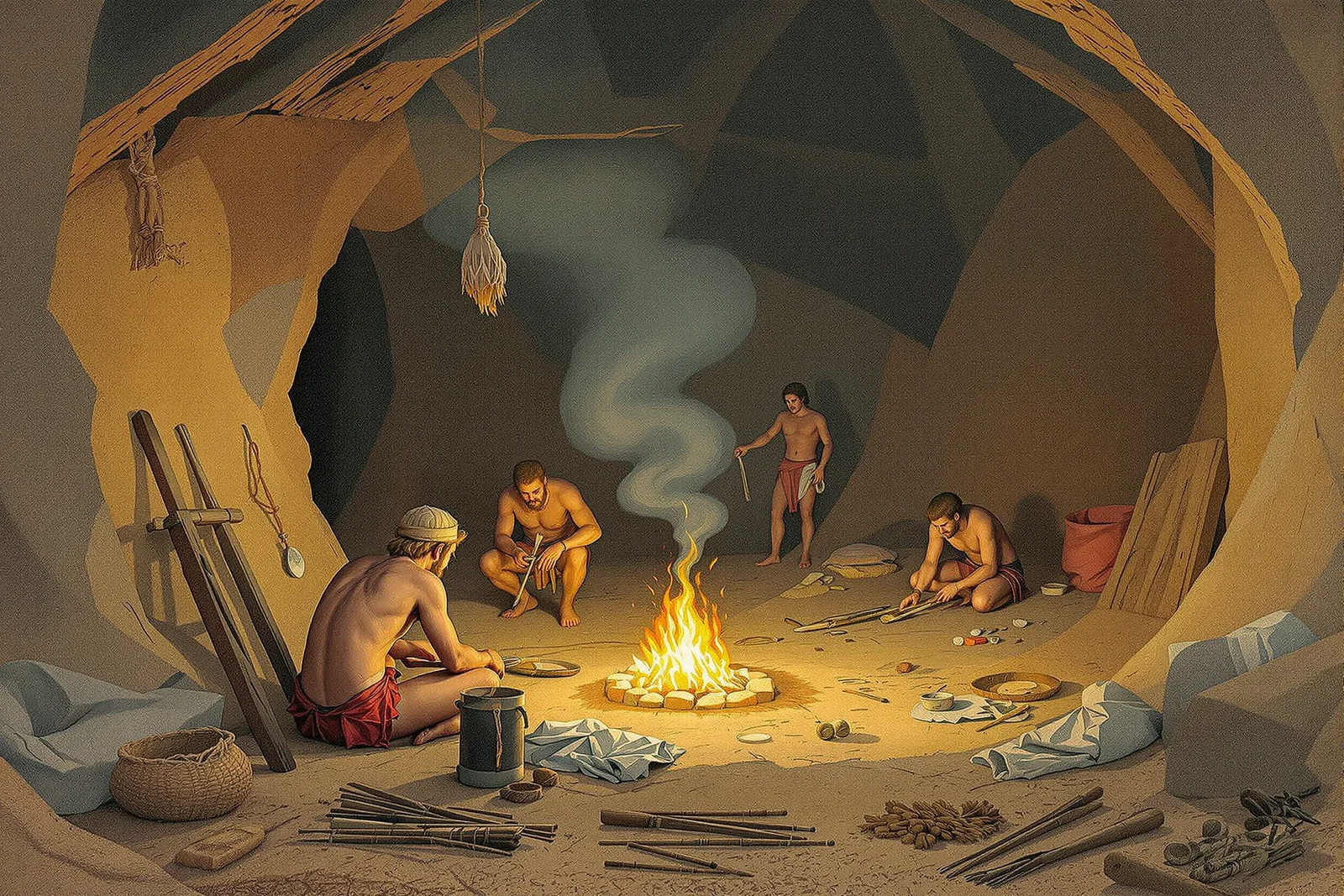
Shelter Beneath the Earth
Complete Earth-Sheltered Construction: Dugouts, Pit Houses, and Underground Living
Complete Earth-Sheltered Construction: Dugouts, Pit Houses, and Underground Living
Earth-sheltered homes maintain 50-60°F year-round without heating or cooling. They are invisible from a distance, fireproof, windproof, and require minimal materials beyond labor.
Chapter 1: Earth-Sheltered Types
| Type | Depth | Effort | Insulation Value | Visibility | Best Climate |
|---|---|---|---|---|---|
| Full dugout (underground) | 6-8 feet below grade | Very high | Excellent (constant 50-60°F) | Invisible | Any (especially extreme) |
| Pit house (semi-subterranean) | 3-4 feet below grade | High | Very good | Low profile | Cold/temperate |
| Earth-bermed (hillside) | Into hillside | Moderate-high | Very good (3 sides earth) | Low profile | Hilly terrain |
| Sod house (above-ground earth walls) | At grade | Moderate | Good | Visible but blends | Prairie/grassland |
| Wofati (earth-sheltered with living roof) | 2-4 feet below + earth roof | High | Excellent | Nearly invisible | Temperate/cold |
| Root cellar (storage only) | 4-8 feet below | Moderate | Excellent | Invisible | Any |
Chapter 2: Site Selection
| Factor | Requirement | Reason | How to Assess |
|---|---|---|---|
| Drainage | Well-drained soil, NOT in low spot | Flooding = disaster | Observe after rain. No pooling. |
| Water table | Minimum 3 feet below floor level | Seepage = perpetual dampness | Dig test hole in wet season |
| Soil type | Clay-loam ideal (holds shape, not too wet) | Pure sand collapses. Pure clay = wet. | Dig test, observe stability |
| Slope | Slight slope (2-5%) for drainage away | Water must flow AWAY from structure | South-facing slope ideal (solar gain) |
| Trees | Avoid large tree roots | Roots penetrate waterproofing | Clear zone around structure |
| Aspect | South-facing entrance (northern hemisphere) | Maximum solar gain in winter | Compass or sun observation |
| Wind | Protected from prevailing wind | Entrance away from dominant wind | Observe wind patterns |
Chapter 3: Full Dugout Construction
| Step | Action | Dimensions | Details |
|---|---|---|---|
| 1 | Excavate main room | 12×16 feet, 7 feet deep | Vertical walls if clay. Sloped if sandy. |
| 2 | Create entrance ramp or stairs | 3 feet wide, gradual slope | Covered entrance prevents rain entry |
| 3 | Install roof support (posts and beams) | 6-8 inch diameter logs | Center posts + ridge beam + rafters |
| 4 | Lay roof deck (poles/planks tight together) | 3-4 inch poles side by side | No gaps (prevents soil falling through) |
| 5 | Waterproof layer (bark, plastic, clay slip) | Continuous, overlapping | CRITICAL: water must not penetrate |
| 6 | Insulation layer (straw, leaves, or rigid foam) | 6-12 inches | Above waterproofing |
| 7 | Soil layer (18-24 inches minimum) | Mounded slightly for drainage | Grows grass/plants (living roof) |
| 8 | Install drainage (French drain around perimeter) | Gravel-filled trench, slopes away | Intercepts water before it reaches walls |
| 9 | Ventilation (intake low, exhaust high) | Two 4-6 inch pipes minimum | Prevents moisture buildup and CO2 |
| 10 | Interior finish (lime plaster or clay plaster on walls) | 1-2 inch coat | Brightens interior, controls moisture |
Chapter 4: Waterproofing Methods
| Method | Durability | Cost | Availability | Application |
|---|---|---|---|---|
| Birch bark (overlapping like shingles) | 20-50 years | Free | Birch forests | Layer 3-4 deep, overlap downhill |
| Clay slip (thick clay layer) | 10-20 years | Free | Clay soil areas | 2-4 inch layer, compacted |
| Tar/pitch (pine tar or birch tar) | 15-30 years | Low (if pine available) | Pine forests | Paint on hot, multiple coats |
| Polyethylene sheeting (modern) | 20-50 years | Low | Hardware store | Single continuous sheet, overlap seams |
| Bentonite clay (swelling clay) | 50+ years | Moderate | Specialty supplier | Swells when wet, self-sealing |
| Sod layer (living grass) | Indefinite (self-renewing) | Free | Grassland | Roots bind soil, shed water naturally |
Layering principle (outside to inside): Soil (protection + insulation) → Drainage layer (gravel) → Waterproof membrane → Insulation → Structural roof deck → Interior finish. Water must NEVER reach the structural layer.
Chapter 5: Ventilation and Moisture Control
| System | Function | Specification | Placement |
|---|---|---|---|
| Fresh air intake | Brings in outside air | 4-6 inch pipe, screened | Low on wall (opposite from exhaust) |
| Exhaust vent | Removes stale/moist air | 4-6 inch pipe, extends above roof | High point of ceiling (heat rises) |
| Thermal chimney | Passive ventilation (no fan) | Dark-painted pipe in sun | Solar-heated air rises, pulls fresh air in |
| Moisture barrier (floor) | Prevents ground moisture rising | Gravel + vapor barrier + floor | Under entire floor surface |
| Lime plaster walls | Absorbs/releases moisture (breathes) | 1-2 inch coat on all walls | Regulates humidity naturally |
| Dehumidification (passive) | Calcium chloride or charcoal | Containers of desiccant | Replace/regenerate monthly |
Target interior humidity: 40-60% relative humidity. Below 40% = too dry (cracking, discomfort). Above 60% = mold risk. Ventilation is the primary control. Earth-sheltered homes naturally tend toward 50-60% (ideal).
Chapter 6: Advantages and Limitations
| Advantage | Details |
|---|---|
| Constant temperature (50-60°F year-round) | Minimal heating/cooling needed |
| Fireproof (earth doesn't burn) | Safe from wildfire |
| Windproof (no wind load on structure) | Survives any storm |
| Invisible (camouflaged) | Security through obscurity |
| Quiet (earth absorbs sound) | Peaceful interior |
| Long-lasting (earth protects structure) | Centuries if properly built |
| Low material cost (mostly labor) | Earth is free |
| Limitation | Mitigation |
|---|---|
| Moisture/humidity | Proper waterproofing + ventilation |
| Darkness (no windows possible underground) | Light wells, south-facing glass, mirrors |
| Flooding risk | Site selection + drainage system |
| Excavation labor (enormous) | Plan for weeks/months of digging |
| Radon (in some areas) | Ventilation system handles this |
| Claustrophobia (some people) | Larger rooms, light wells, open entrance |
Reference Card
- Earth-sheltered = constant 50-60°F year-round. No heating needed in moderate climates. Minimal in extreme cold.
- WATERPROOFING IS EVERYTHING. If water penetrates, structure fails. Multiple redundant layers. Test before burying.
- Ventilation: minimum two vents (low intake, high exhaust). Prevents moisture, CO2 buildup, and radon.
- Drainage: French drain around entire perimeter. Grade soil AWAY from structure. Water is the enemy.
- Roof load: 18-24 inches of soil = 150-200 lbs per square foot. Structural beams must handle this. Oversize everything.
- South-facing entrance + light wells = natural lighting without compromising earth shelter benefits.
- Floor: gravel base (drainage) + vapor barrier + packed earth or concrete. Prevents rising damp.
- Site: well-drained, above water table, slight slope, south-facing. Dig test hole in wet season before committing.
TransmissionCOMPLETE — unaltered & unabridged
Words1,204 — every one of them
SHA-256 of source texta0a8517342501cbf34013f836a5a34367d990836776e31b3e2ea7fa03360473a
Canonical textdownload campaign-earth-shelter.md — byte-identical to what this page renders