Sovereignty Module: Raise the Walls
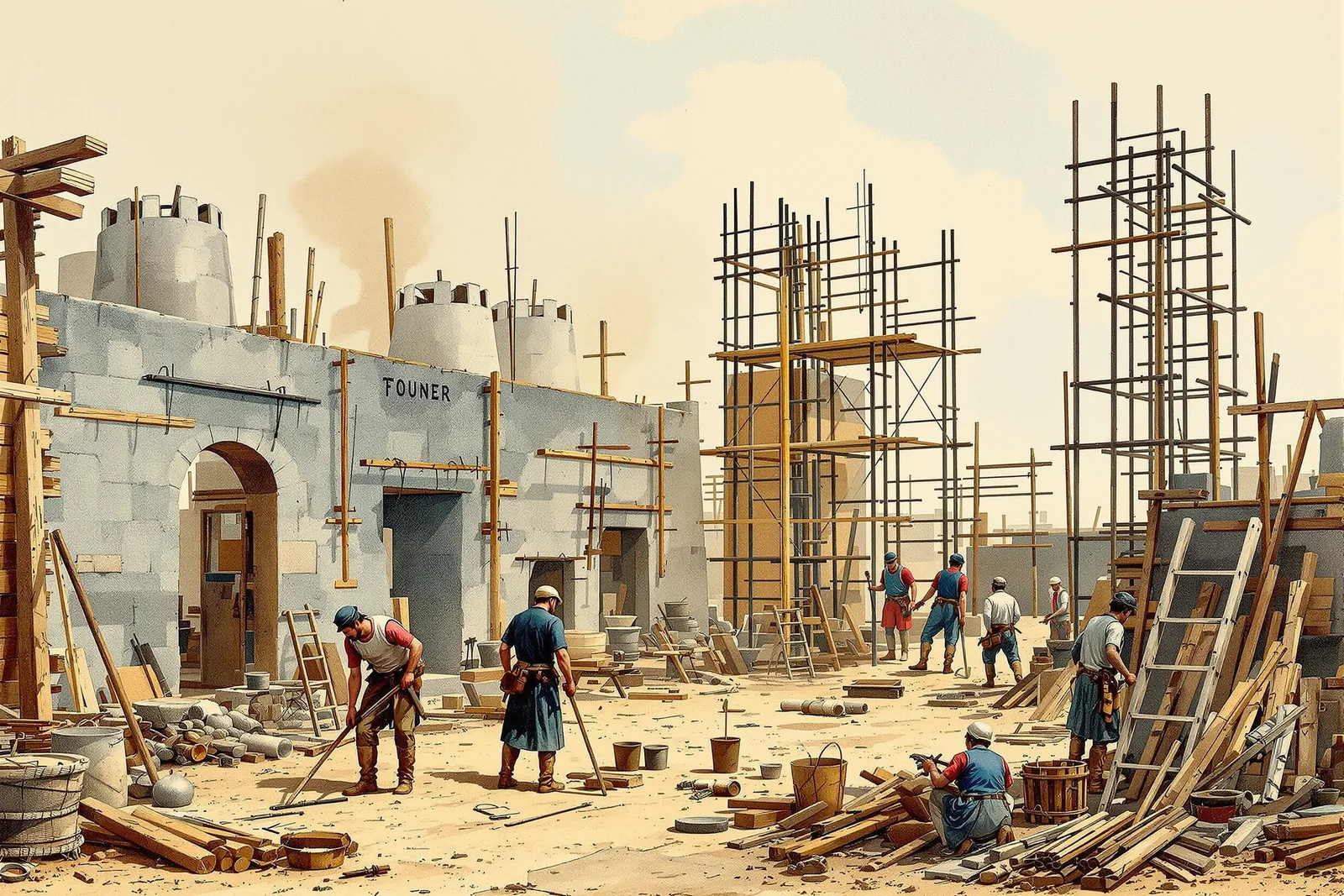
Complete Fortification, Defensive Architecture, and Community Security Guide
The Philosophy of Defense
A community that cannot defend itself will not survive. History teaches that every prosperous settlement eventually attracts those who would take rather than build. Fortification is not aggression; it is the physical manifestation of the right to exist in peace. Walls buy time. Time allows response. Response determines survival. This campaign covers defensive architecture from simple barriers to complete fortified compounds, drawing on 5,000 years of military engineering.
Chapter 1: Defensive Principles
The Five Principles of Fortification:
| Principle | Meaning | Application |
|---|---|---|
| Obstacle | Slow the attacker's approach | Walls, ditches, abatis, wire |
| Observation | See the enemy before they reach you | Towers, cleared fields of fire, sentries |
| Fields of fire | Ability to engage attackers from protected positions | Arrow slits, firing positions, overlapping coverage |
| Depth | Multiple layers of defense (if one fails, another holds) | Outer wall, inner wall, keep/strongpoint |
| Mutual support | Each position can support adjacent positions | Flanking towers, crossfire zones |
Defense in Depth (layered approach):
| Layer | Distance | Purpose | Elements |
|---|---|---|---|
| Outer perimeter | 200-500 yards | Early warning, delay | Trip wires, noise makers, observation posts |
| Cleared zone | 50-200 yards | Deny cover to attackers | Cleared vegetation, open ground |
| Obstacle belt | 10-50 yards | Channel and slow attackers | Ditch, wall, abatis, wire |
| Main wall/barrier | 0 yards | Primary defense line | Wall, palisade, earthwork |
| Interior positions | Behind wall | Fighting positions | Towers, platforms, covered positions |
| Strongpoint/keep | Center | Last stand, command, storage | Strongest structure, supplies, water |
Chapter 2: Site Selection
Ideal Defensive Site Characteristics:
| Feature | Advantage | Priority |
|---|---|---|
| Elevated ground | Attackers must fight uphill; defenders see further | High |
| Water source inside perimeter | Cannot be besieged into thirst | Critical |
| Limited approaches | Fewer directions to defend | High |
| Natural obstacles on flanks | River, cliff, marsh reduce attackable frontage | High |
| Good drainage | Prevents flooding of defenses | Moderate |
| Building materials nearby | Stone, timber, earth for construction | Moderate |
| Agricultural land within reach | Food production near safety | Moderate |
| Communication lines | Can signal/receive from allies | Moderate |
Terrain to Avoid:
| Feature | Danger |
|---|---|
| Low ground dominated by surrounding heights | Enemy fires down into your position |
| Dense forest up to walls | Provides cover for attackers to approach unseen |
| Single water source outside walls | Can be poisoned or cut off |
| Flood plain | Seasonal flooding destroys earthworks |
| Sandy soil | Difficult to dig stable ditches; walls undermine easily |
Chapter 3: Earthwork Fortifications
The Simplest Effective Defense: Ditch and Bank
Dig a ditch; pile the earth on the defender's side to create a bank (rampart). The attacker must descend into the ditch (exposed) and climb the bank (exhausting) while defenders stand on top.
Effective Dimensions:
| Component | Minimum | Ideal | Notes |
|---|---|---|---|
| Ditch depth | 4 feet | 8-12 feet | Deeper = more obstacle value |
| Ditch width | 6 feet | 12-20 feet | Wider = harder to cross |
| Bank height (above ground) | 4 feet | 6-8 feet | Higher = better cover and observation |
| Bank width (top) | 3 feet | 6-8 feet | Wide enough to stand and fight from |
| Slope (outer face) | As steep as soil allows | Near vertical (revetted) | Steeper = harder to climb |
Revetment (preventing bank collapse):
| Material | Lifespan | Effectiveness | Availability |
|---|---|---|---|
| Timber (logs, planks) | 5-15 years | Excellent | Forest |
| Wattle (woven branches) | 2-5 years | Good | Any woodland |
| Stone facing | 100+ years | Excellent | Quarry or fieldstone |
| Sandbags | 1-3 years (bags rot) | Good | Sand + burlap/poly bags |
| Gabions (wire baskets filled with rock) | 20-50 years | Excellent | Wire + rock |
| Turf/sod facing | 5-20 years | Good | Grassland |
Chapter 4: Palisade (Wooden Wall)
Construction:
- Dig a trench 3-4 feet deep along the defense line
- Set logs (8-12 inches diameter, 10-14 feet long) vertically in the trench, touching each other
- Pack earth firmly around bases
- Sharpen tops to points (or leave flat and add a fighting platform behind)
- Add a catwalk/platform 4-5 feet below the top (defenders stand here to fight over the wall)
- Add loopholes (gaps between logs at fighting platform height) for shooting through
Specifications:
| Feature | Dimension | Purpose |
|---|---|---|
| Log diameter | 8-12 inches | Resists chopping, battering |
| Height above ground | 8-10 feet | Cannot be climbed without ladder |
| Depth buried | 3-4 feet | Prevents pushing over |
| Fighting platform height | 5-6 feet above ground | Defenders can see and shoot over top |
| Loopholes | 4 inches wide, 12 inches tall | Shoot through while protected |
Palisade Weaknesses and Countermeasures:
| Weakness | Countermeasure |
|---|---|
| Burns | Plaster with mud/clay; keep water ready; build stone base |
| Chopped through | Use hardwood; double-wall with earth fill between |
| Pushed over | Bury deep; add diagonal braces on defender's side |
| Climbed | Sharpen tops; add overhang; keep defenders on platform |
| Rotting at ground level | Char the buried portion; set in gravel for drainage |
Chapter 5: Stone Walls (Permanent Fortification)
Curtain Wall (main defensive wall):
| Specification | Minimum | Ideal | Notes |
|---|---|---|---|
| Height | 12 feet | 20-30 feet | Higher = harder to scale |
| Thickness | 3 feet | 6-10 feet | Thicker = resists battering |
| Foundation depth | Below frost line | 4-6 feet on bedrock | Prevents undermining |
| Batter (inward lean) | 1:12 | 1:8 to 1:6 | Deflects projectiles, adds stability |
| Parapet (top wall for defenders) | 3 feet tall | 4-5 feet | Protects defenders on wall-walk |
| Merlons (solid sections of parapet) | 3 feet wide | 4-5 feet | Shelter between shooting positions |
| Crenels (gaps in parapet) | 2 feet wide | 2-3 feet | Shooting/observation positions |
| Wall-walk width | 4 feet | 6-8 feet | Space for defenders to move and fight |
Towers (force multipliers):
Towers project outward from the wall, allowing defenders to shoot along the wall face (enfilade fire). Attackers at the base of the wall between towers are exposed to fire from both flanking towers.
| Tower Specification | Dimension | Purpose |
|---|---|---|
| Spacing | 60-100 feet apart (bow range) | Every point on wall covered by tower fire |
| Projection | 10-15 feet beyond wall face | Enables flanking fire along wall |
| Height | 10-20 feet above wall-walk | Observation and plunging fire |
| Shape | Square (simpler) or round (stronger, no corners to undermine) | Structural and tactical |
| Access | Only from wall-walk (no ground-level door) | If wall is taken, towers can hold independently |
Chapter 6: Gates and Entrances
The Gate is the Weakest Point:
| Defense | Purpose | Construction |
|---|---|---|
| Thick doors (double) | Physical barrier | Oak, 4-6 inches thick, iron-bound |
| Drawbar | Locks doors from inside | Heavy timber beam in brackets |
| Portcullis | Secondary barrier (iron/wood grid that drops) | Counterweighted, raised by winch |
| Murder holes (machicolations) | Drop projectiles on attackers in gate passage | Holes in ceiling of gate passage |
| Bent entrance (L-shaped) | Forces attackers to turn (cannot charge straight through) | Architectural layout |
| Barbican (outer gatehouse) | Additional defense layer before main gate | Separate fortified structure |
| Flanking towers | Crossfire on anyone approaching gate | Towers on both sides of gate |
| Ditch + drawbridge | Obstacle before gate; removable crossing | Ditch with hinged bridge |
Chapter 7: Passive Obstacles
Obstacles that slow attackers without requiring defenders:
| Obstacle | Construction | Effectiveness | Duration |
|---|---|---|---|
| Abatis | Felled trees with branches pointing outward, interlocked | Excellent (slows, channels) | 1-5 years |
| Chevaux-de-frise | Logs with sharpened stakes projecting in all directions | Excellent (anti-cavalry, anti-vehicle) | 2-10 years |
| Wire entanglement | Barbed or concertina wire in multiple rows | Excellent | 10-20+ years |
| Punji stakes | Sharpened stakes in concealed pits | Good (anti-personnel) | 1-3 years |
| Caltrops | Four-pointed metal spikes (one always points up) | Good (anti-foot, anti-tire) | Indefinite (metal) |
| Thorn hedge (living) | Dense thorny plants (osage orange, hawthorn, blackthorn) | Excellent when mature | Permanent (living) |
| Flooded ditch/moat | Water-filled ditch | Excellent (cannot be crossed without boat/bridge) | Permanent if water supply exists |
Thorn Hedge (Boma/Hedgerow):
Osage orange, hawthorn, or blackthorn planted densely and laid (partially cut and bent horizontally, interwoven). After 3-5 years of growth, produces an impenetrable living barrier with thorns that puncture leather and tires. Self-maintaining, self-repairing, and permanent. The best long-term perimeter barrier.
Chapter 8: Fighting Positions
Individual Fighting Position (foxhole):
| Feature | Dimension | Purpose |
|---|---|---|
| Depth | 4-5 feet (standing, head below ground level) | Protection from direct fire |
| Width | 2-3 feet | Minimal target |
| Length | 6 feet (for two people) | Room to move, buddy system |
| Parapet (spoil in front) | 18 inches high, 3 feet thick | Additional protection, rest for weapon |
| Grenade sump | 1 foot deep hole in bottom corner | Thrown grenades roll into sump, blast directed up |
| Overhead cover | Logs + 18 inches of earth | Protection from indirect fire (mortars, falling debris) |
| Drainage | Slight slope to one end with sump | Prevents flooding |
Bunker/Strongpoint:
| Feature | Specification | Purpose |
|---|---|---|
| Walls | 3+ feet of earth, or 12+ inches of reinforced concrete, or 24+ inches of stone | Stops rifle fire and fragments |
| Roof | 2+ feet of earth over logs or concrete | Stops indirect fire |
| Firing ports | 4-6 inches tall, 12-18 inches wide, splayed outward | Shoot out while minimizing target |
| Entrance | Offset (not visible from enemy direction), with blast wall | Prevents direct fire into interior |
| Ventilation | Pipe or shaft (not facing enemy) | Prevents suffocation |
| Emergency exit | Concealed rear exit | Escape if position overrun |
Chapter 9: Early Warning Systems
| System | Range | Detection Type | Power Required |
|---|---|---|---|
| Sentries/observation posts | Visual range (1-5 miles) | Human observation | None (human) |
| Dogs | 200-500 yards (scent/hearing) | Scent, sound | None (animal) |
| Trip wires + noise makers | 10-50 yards | Physical contact | None (mechanical) |
| Geese (guard animals) | 50-200 yards | Sound, territorial aggression | None (animal) |
| Motion-activated lights | 30-100 feet | Infrared motion | Battery/solar |
| Trail cameras | 30-100 feet | Motion + photo | Battery |
| Radio-linked sensors | Variable | Various (IR, seismic, magnetic) | Battery/solar |
| Cleared lanes with raked earth | Visual (tracks visible) | Physical evidence of passage | None |
Observation Post (OP) Design:
| Feature | Requirement | Notes |
|---|---|---|
| Location | Elevated, with clear view of approaches | Hilltop, tree, tower |
| Concealment | Not visible to approaching enemy | Camouflage, natural cover |
| Communication | Can signal main position quickly | Radio, wire, visual signal |
| Protection | Some cover from fire | Sandbags, earth, stone |
| Rotation | Manned 24/7 in shifts | 2-4 hour shifts to maintain alertness |
| Escape route | Can withdraw to main position if threatened | Pre-planned route |
Chapter 10: Community Defense Organization
Defense Roles (for a community of 50):
| Role | Number | Responsibility |
|---|---|---|
| Defense coordinator | 1 | Overall planning, training, resource allocation |
| Watch commander (per shift) | 3 (8-hour shifts) | Manages sentries, makes immediate decisions |
| Sentries | 6-8 (2-3 per shift) | Observation posts, perimeter patrol |
| Quick reaction force | 8-12 | Armed response to any threat |
| Reserve/general defense | All able-bodied | Man walls if full alarm |
| Medical | 2-3 | Treat casualties |
| Communications | 2-3 | Maintain radio/signal contact with allies |
| Non-combatants | Variable | Children, elderly, injured: shelter in strongpoint |
Alert Levels:
| Level | Condition | Actions |
|---|---|---|
| Green (normal) | No known threat | Normal sentries, routine patrols |
| Yellow (elevated) | Possible threat detected | Double sentries, ready reaction force, prepare positions |
| Orange (high) | Threat confirmed, approaching | All fighters to positions, non-combatants to shelter, allies notified |
| Red (attack) | Under attack | Full defense, all positions manned, request assistance |
Reference Card
FORTIFICATION ESSENTIALS:
- Obstacle + Observation + Fields of Fire + Depth + Mutual Support = effective defense
- Clear vegetation 50-200 yards from walls (deny cover to attackers)
- The gate is always the weakest point (reinforce heavily)
- Towers every 60-100 feet enable flanking fire along the wall
- A ditch in front of a wall doubles its effective height
- Living thorn hedges (osage orange, hawthorn) are permanent, self-repairing barriers
- Defense in depth: multiple layers mean one failure does not equal defeat
- 24/7 observation is non-negotiable (you cannot defend what you cannot see coming)
This campaign provides the complete knowledge to design and build defensive structures that protect a community from armed threats. A fortified community can deter aggression, survive attacks, and provide the security necessary for all other activities (agriculture, trade, education, worship) to continue. Walls do not make warriors, but they give peaceful people the time to respond to violence with organized strength.