Sovereignty Module: Lay the Floor
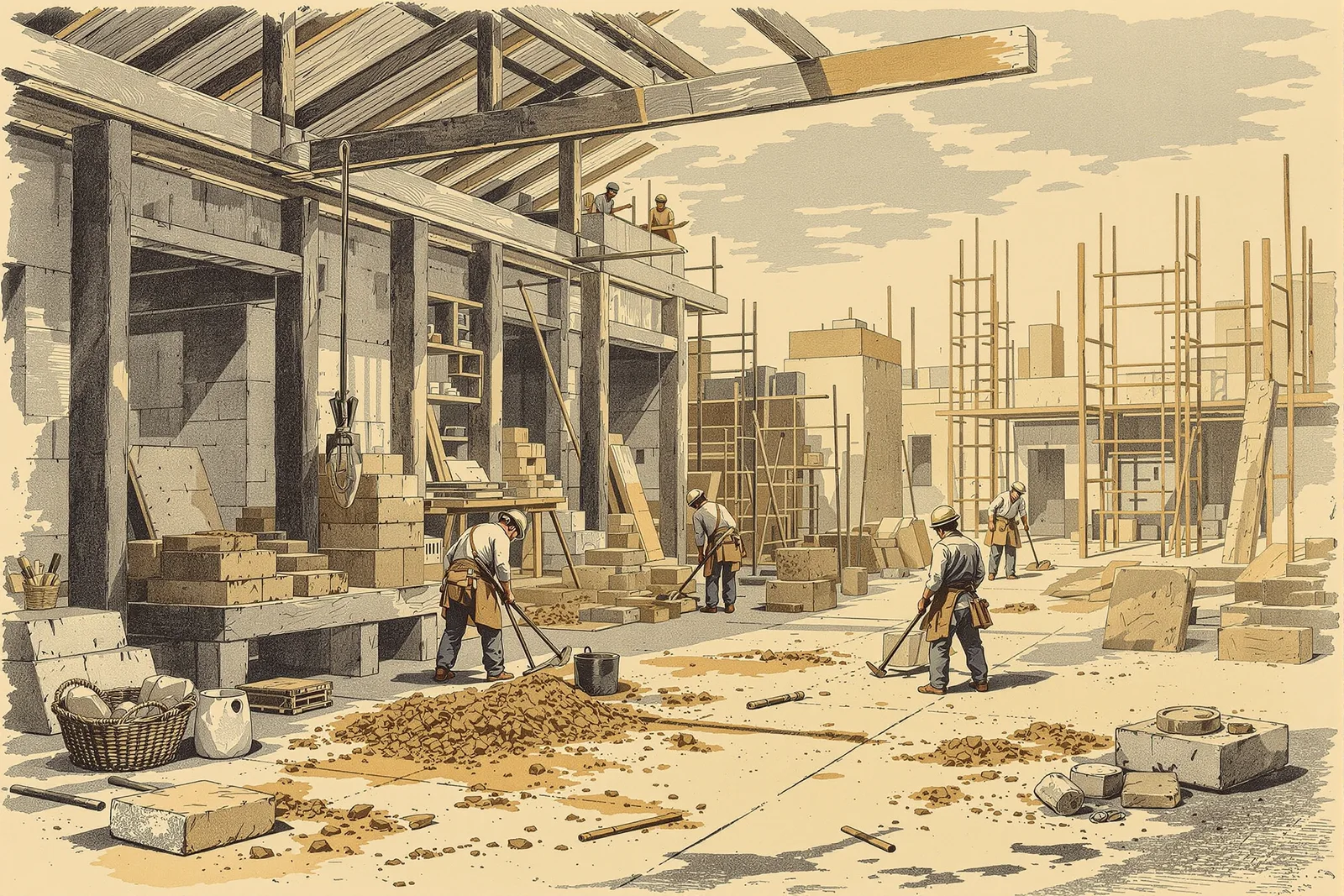
Complete Earthen Floor Construction: From Dirt to Polished Surface
Earthen floors are durable, beautiful, and made from free materials. This campaign covers subfloor preparation, clay-sand mixing, application, and finishing with oil and wax.
Chapter 1: Earthen Floor Types
| Type | Layers | Hardness | Appearance | Difficulty |
|---|---|---|---|---|
| Tamped earth (simplest) | 1 (compacted subsoil) | Moderate | Rustic, natural | Very low |
| Adobe floor (clay-sand) | 2-3 | Good | Smooth, warm | Low-moderate |
| Polished earthen (linseed oil) | 3-4 | Very good | Polished, rich color | Moderate |
| Lime-stabilized | 2-3 | Very good | Light colored | Moderate |
| Ox-blood floor (traditional) | 3-4 | Excellent | Deep red-brown | Moderate |
Chapter 2: Subfloor Preparation
| Step | Action | Purpose | Specification |
|---|---|---|---|
| Excavate | Remove topsoil and organic matter | Prevent settling, rot | 6-8 inches below finished floor level |
| Gravel base | Lay 4 inches of compacted gravel | Drainage, capillary break | 3/4 inch crushed gravel, compacted |
| Vapor barrier (optional) | Lay plastic sheeting or tar paper | Prevent moisture rising | Overlap seams 12 inches |
| Insulation (optional) | Lay rigid foam or straw bales | Thermal comfort | 2-4 inches |
| Base coat | Rough clay-sand-straw mix | Level surface, bulk | 2-4 inches thick |
Chapter 3: Floor Mix Recipes
| Layer | Clay | Sand | Straw/Fiber | Water | Purpose |
|---|---|---|---|---|---|
| Base coat | 30% | 60% | 10% (chopped straw) | As needed | Bulk, leveling |
| Finish coat | 25% | 70% | 5% (fine fiber, manure) | As needed | Smooth surface |
| Polish coat | 20% | 75% | 5% (fine fiber) | Minimal | Final surface |
Mixing process: 1) Soak clay in water overnight (breaks down lumps). 2) Screen sand (remove stones larger than 1/4 inch). 3) Mix clay slurry with sand (use hoe, feet, or mixer). 4) Add chopped straw or fiber. 5) Mix thoroughly (consistency of thick cookie dough). 6) Let mix rest 24 hours (clay hydrates fully). 7) Test: make a small patty, dry it; if it cracks, add more sand; if it crumbles, add more clay.
Chapter 4: Application
Base coat application: 1) Dampen subfloor/gravel base. 2) Apply base coat mix 2-4 inches thick. 3) Spread with trowel or hands. 4) Level with straight board (screed). 5) Tamp firmly with flat tamper. 6) Allow to dry slowly (cover with plastic if drying too fast). 7) Drying time: 1-3 weeks depending on thickness and climate. 8) Cracks are normal in base coat (will be covered by finish coat).
Finish coat application: 1) Dampen base coat surface. 2) Apply finish coat 1/2-1 inch thick. 3) Spread with steel trowel. 4) Work surface smooth with trowel (multiple passes as it stiffens). 5) Final troweling when surface is leather-hard (produces smooth, compressed surface). 6) Allow to dry completely (1-2 weeks). 7) Minor cracks: fill with thin slurry of finish mix. 8) Sand smooth with fine sandpaper if needed.
Chapter 5: Sealing and Finishing
| Sealant | Coats | Drying Time | Durability | Appearance |
|---|---|---|---|---|
| Boiled linseed oil | 4-6 coats | 24-48 hours between coats | Very good | Rich, warm, darkens clay |
| Tung oil | 3-4 coats | 24-48 hours between coats | Excellent | Clear, natural |
| Beeswax (melted in turpentine) | 2-3 coats | 12-24 hours between coats | Good | Soft sheen, pleasant smell |
| Ox blood (traditional) | 3-4 coats | 24 hours between coats | Excellent | Deep red-brown |
| Linseed oil + beeswax (combination) | Oil first, then wax | As above | Excellent | Best of both |
Linseed oil sealing: 1) Ensure floor is completely dry. 2) Apply first coat of boiled linseed oil (thin, generous). 3) Work oil into surface with rag or brush. 4) Allow to soak in and dry (24-48 hours). 5) Apply second coat (thinner than first). 6) Repeat for 4-6 coats total. 7) Each coat soaks in less (surface becomes saturated). 8) Final coat: mix linseed oil with beeswax (1:1 by volume, melted together). 9) Apply wax coat, buff with cloth. 10) Result: hard, waterproof, polished surface.
Reference Card
- The gravel base prevents moisture (a 4-inch gravel layer breaks capillary action and prevents ground moisture from rising into the floor; without it, the floor stays damp). 2. More sand prevents cracking (the most common problem with earthen floors is cracking; adding more sand to the mix reduces shrinkage and cracking). 3. Test before applying (make a small test patty and dry it; if it cracks, add sand; if it crumbles, add clay; testing saves the effort of redoing an entire floor). 4. Tamp the base coat firmly (compacting the base coat with a flat tamper increases density and strength; a loose base coat settles and cracks). 5. Trowel the finish coat smooth (multiple passes with a steel trowel as the surface stiffens compresses and polishes the surface; this is where the quality shows). 6. Linseed oil transforms the floor (4-6 coats of boiled linseed oil penetrate the clay, harden, and create a waterproof, durable surface; the floor changes from fragile clay to a surface as hard as soft wood). 7. Beeswax adds the final polish (a beeswax topcoat over linseed oil creates a soft, warm sheen and pleasant smell; it is the traditional finish for the finest earthen floors). 8. An earthen floor is free (the materials are clay, sand, straw, and linseed oil; the labor is the only cost; a polished earthen floor is beautiful, warm underfoot, and costs almost nothing).