Complete Distillation and Chemical Processing: From Crude to Pure
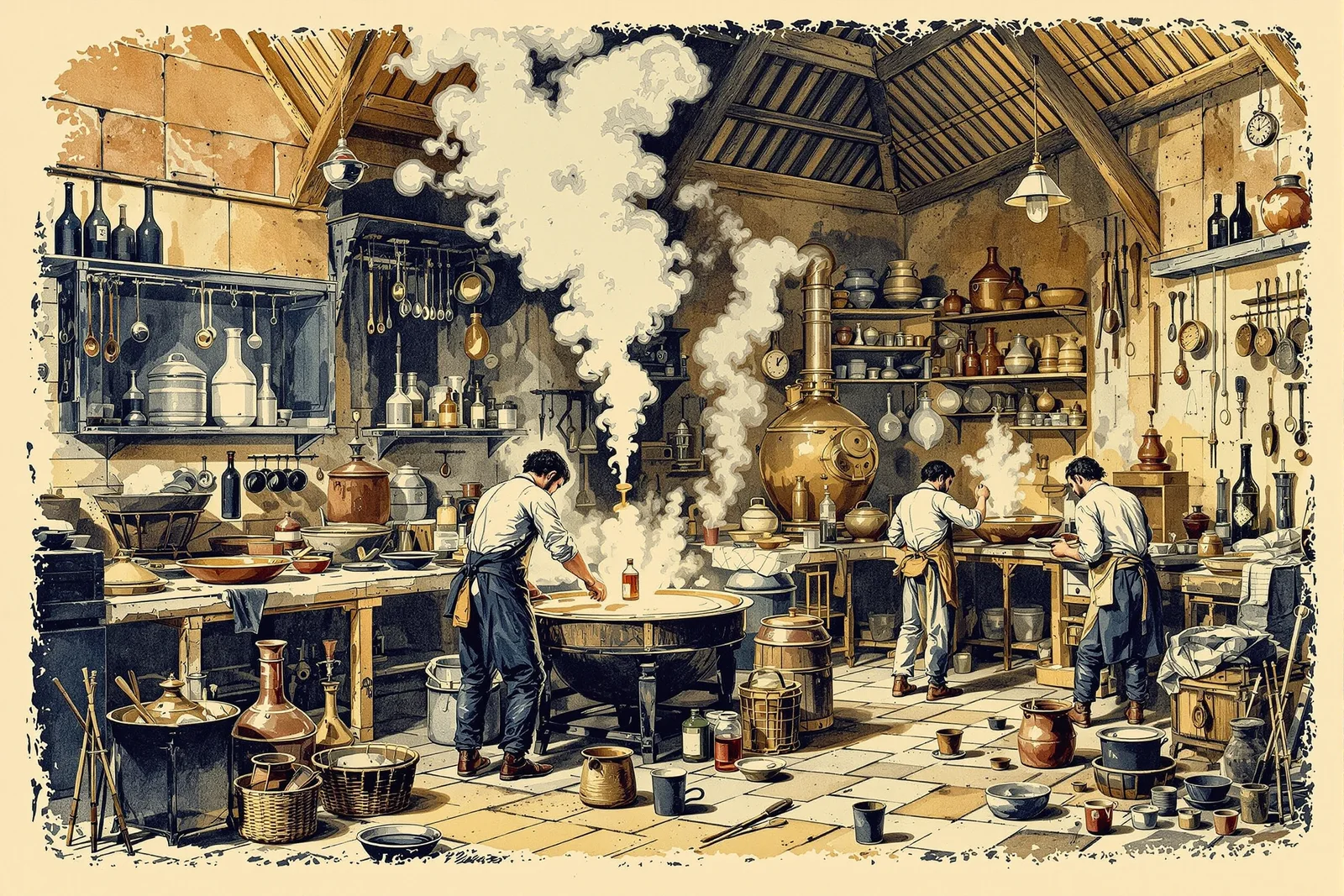
⟁ cover painted for this edition — the source module carried no illustrations
Complete Distillation and Chemical Processing: From Crude to Pure
Distillation separates, purifies, and concentrates. This campaign covers still construction, water purification, alcohol production, essential oil extraction, and basic chemical processing.
Chapter 1: Distillation Theory
Concept
Definition
Application
Example
Boiling point
Temperature at which liquid becomes gas
Separating liquids by temperature
Water: 212°F, Ethanol: 173°F
Condensation
Gas cooling back to liquid
Collecting distilled product
Steam → water in condenser
Fractional distillation
Separating multiple liquids by BP
Refining complex mixtures
Alcohol from fermented wash
Steam distillation
Steam carries volatile compounds
Extracting essential oils
Lavender oil from flowers
Reflux
Vapor condenses and returns to boiler
Increasing purity
Higher-proof alcohol
Foreshots/heads
First distillate (low BP compounds)
Discard (contains methanol)
First 1-2% of run
Hearts
Middle distillate (desired product)
Collect (pure product)
Main alcohol collection
Tails
Late distillate (high BP compounds)
Discard or redistill
Last portion, harsh flavors
Chapter 2: Still Construction
Still Type
Complexity
Output Quality
Capacity
Best For
Difficulty
Pot still (simple)
Low
Moderate (60-70% max)
1-20 gallons
Whiskey, brandy, essential oils
Low-moderate
Pot still with thumper
Moderate
Good (70-80%)
1-20 gallons
Higher proof spirits
Moderate
Reflux/column still
High
Very high (90-95%)
1-10 gallons
Neutral spirits, fuel alcohol
High
Solar still
Very low
Pure water (not alcohol)
Pints/day
Water purification
Very low
Steam distillation rig
Moderate
N/A (essential oils)
Variable
Essential oils
Moderate
Simple pot still: 1) Boiler: large copper or stainless pot with sealed lid (5-20 gallon). 2) Lyne arm: copper tube from top of lid, angled downward. 3) Condenser: coiled copper tube inside bucket of cold water. 4) Collection vessel: jar or bottle at condenser outlet. 5) Seal all joints (flour paste, Teflon tape, or silicone). 6) Heat source: controlled flame or electric element. 7) Operation: heat wash slowly, vapor rises, travels through lyne arm, condenses in coil, drips out as distillate.
Chapter 3: Water Purification by Distillation
Contaminant
Removed by Distillation
Notes
Alternative Method
Bacteria/viruses
Yes (killed by boiling)
Effective
Boiling alone works
Dissolved salts
Yes
Desalination
Reverse osmosis
Heavy metals
Mostly yes
Some volatile metals may carry over
Filtration + chemical treatment
Organic chemicals
Partially
Some have lower BP than water
Activated carbon filtration
Sediment
Yes
Left behind in boiler
Simple filtration
Radioactive particles
Yes (most)
Dissolved particles stay in boiler
Ion exchange
Solar still (emergency water): 1) Dig hole 2-3 feet deep, 3 feet wide. 2) Place container in center of hole. 3) Surround container with wet vegetation, contaminated water, or moist soil. 4) Cover hole with clear plastic sheet. 5) Seal edges with soil/rocks. 6) Place small stone on plastic directly over container (creates low point). 7) Sun heats ground, moisture evaporates, condenses on plastic, drips into container. 8) Output: 1-3 pints per day (survival quantity). 9) Works with saltwater, contaminated water, or even urine.
Chapter 4: Alcohol Distillation
Spirit
Base Material
Fermentation
Distillation
Aging
Proof
Whiskey
Grain (corn, barley, rye)
5-7 days
Pot still (2 runs)
Oak barrel (years)
80-120
Brandy
Fruit (grapes, apples)
7-14 days
Pot still (2 runs)
Oak barrel (years)
80-100
Rum
Sugarcane/molasses
5-10 days
Pot or column
Optional aging
80-151
Vodka
Grain or potato
5-7 days
Column still (multiple passes)
None
80-100
Moonshine
Corn + sugar
5-7 days
Pot still (1-2 runs)
None
80-160
Fuel alcohol
Any fermentable sugar
3-7 days
Column still
None
150-190
Distillation procedure: 1) Fill still with fermented wash (no more than 2/3 full). 2) Heat slowly (patience — rushing causes puking/boil-over). 3) Discard foreshots (first 100ml per 5 gallons — contains methanol). 4) Collect heads (next 10% — harsh, set aside). 5) Collect hearts (main run — smooth, clean taste). 6) Stop collecting when temperature rises above 205°F or taste becomes harsh (tails). 7) Tails can be added back to next run for redistillation. 8) NEVER drink foreshots (methanol causes blindness and death).
Chapter 5: Essential Oil Extraction
Plant
Oil Yield
Method
Distillation Time
Uses
Lavender
1-3%
Steam distillation
1-2 hours
Aromatherapy, medicine, cleaning
Peppermint
0.5-1%
Steam distillation
1-2 hours
Medicine, flavoring, pest repellent
Eucalyptus
1-3%
Steam distillation
2-3 hours
Medicine, cleaning
Tea tree
1-2%
Steam distillation
2-3 hours
Antiseptic, medicine
Rosemary
0.5-1%
Steam distillation
2-3 hours
Medicine, cooking, preservation
Citrus peel
0.5-2%
Cold press or steam
1-2 hours
Flavoring, cleaning, fragrance
Pine/spruce
0.5-1%
Steam distillation
3-4 hours
Cleaning, fragrance, medicine
Steam distillation: 1) Place plant material in still (packed loosely). 2) Add water below plant material (or inject steam from separate boiler). 3) Heat to produce steam. 4) Steam passes through plant material, carrying volatile oils. 5) Steam + oil vapor travels to condenser. 6) Condensed liquid collects in separator (oil floats on water). 7) Skim or drain off essential oil. 8) Remaining water = hydrosol (floral water — useful product itself).
Chapter 6: Basic Chemical Products
Product
Ingredients
Process
Uses
Difficulty
Lye (NaOH/KOH)
Wood ash + water
Leaching
Soap, cleaning, food processing
Low
Vinegar
Alcohol + air + time
Acetous fermentation
Cooking, cleaning, preserving
Low
Charcoal
Wood + limited oxygen
Pyrolysis (charcoal kiln)
Fuel, filtration, medicine
Low-moderate
Activated charcoal
Charcoal + steam treatment
High-temp steam activation
Water filtration, poison treatment
Moderate
Saltpeter (KNO3)
Manure + soil + time
Niter bed composting
Gunpowder, food preservation
Moderate
Turpentine
Pine resin
Distillation
Solvent, paint thinner
Moderate
Pine tar
Pine wood
Destructive distillation
Wood preservation, waterproofing
Moderate
Calcium oxide (quicklime)
Limestone
Calcination (high heat)
Mortar, water treatment, tanning
Moderate
Reference Card
Discard foreshots always (first distillate contains methanol — it causes blindness and death). 2. Low and slow (rushing distillation causes boil-over and poor separation — patience = quality). 3. Copper is ideal (copper catalyzes sulfur removal — copper stills produce cleaner spirits). 4. Solar stills need no fuel (sun + plastic + hole = pure water from anything — essential survival skill). 5. Steam carries oil (essential oils ride steam out of plant material — no solvents needed). 6. Oil floats on water (after condensing, essential oil separates naturally — skim off the top). 7. Temperature tells the story (monitor still temperature — it reveals what's coming out at each stage). 8. Charcoal filters everything (activated charcoal removes chemicals, odors, and toxins from water and air).