Sovereignty Module: Set the Wheel
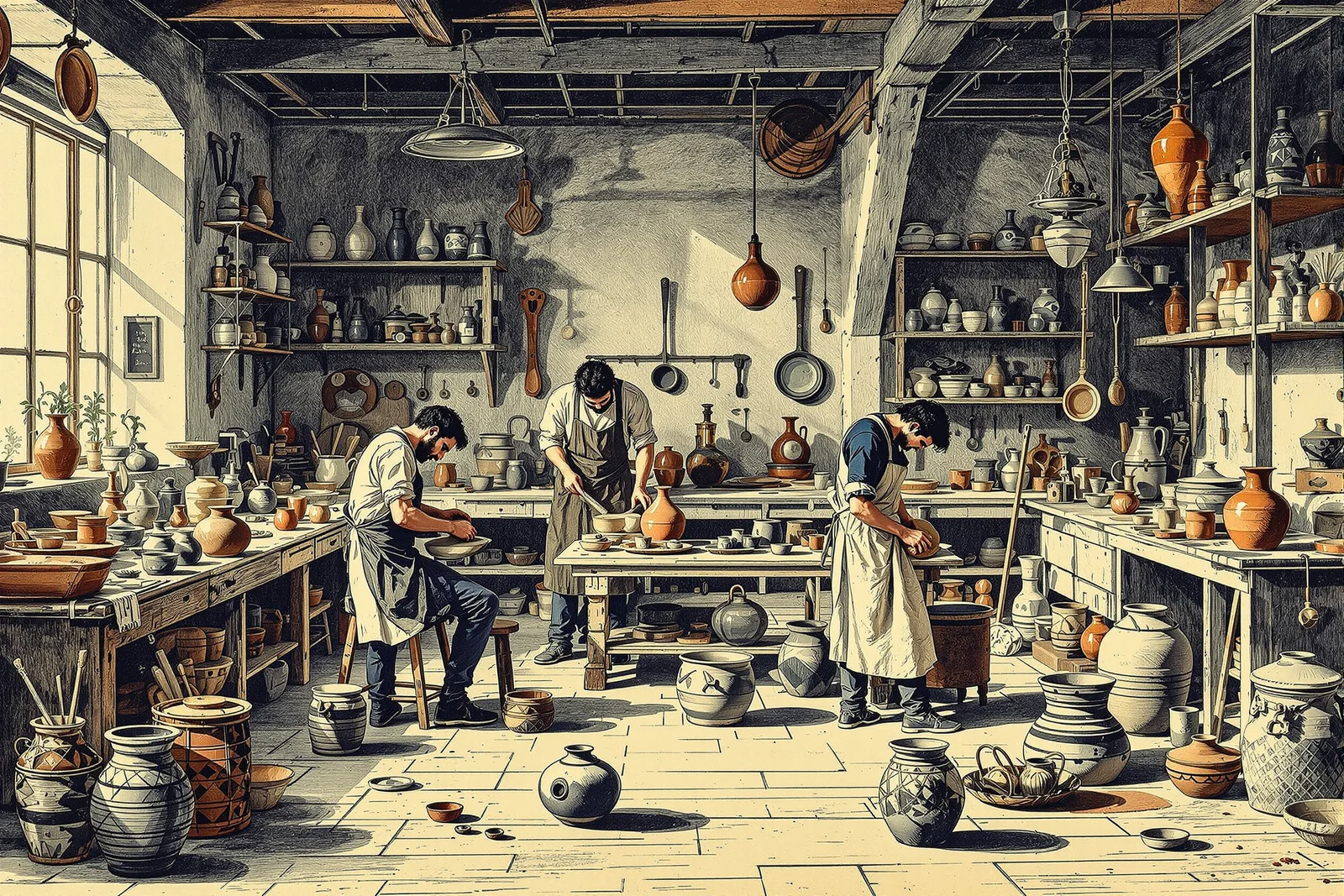
Set the Wheel
Complete Pottery Studio Setup: From Empty Room to Working Ceramic Workshop
Complete Pottery Studio Setup: From Empty Room to Working Ceramic Workshop
A well-organized studio makes pottery production efficient and enjoyable. This campaign covers wheel placement, wedging table construction, glaze area setup, and workflow design.
Chapter 1: Studio Zones
| Zone | Function | Floor | Ventilation |
|---|---|---|---|
| Throwing area | Wheel work | Sealed concrete | Standard |
| Wedging area | Clay preparation | Sealed concrete | Standard |
| Drying area | Greenware drying | Shelving, controlled air | Low airflow |
| Glazing area | Glaze application | Sealed concrete, drain | Good (spray booth if spraying) |
| Kiln area | Firing | Heat-resistant floor | Excellent (kiln ventilation) |
| Storage area | Clay, materials, finished work | Any | Standard |
Chapter 2: Wheel Placement
| Factor | Specification | Why |
|---|---|---|
| Floor | Level, sealed concrete | Stability, easy cleanup |
| Spacing | 4-5 feet between wheels | Elbow room, splash zone |
| Light | Natural light from left (right-handed) | No shadow on work |
| Water access | Bucket or plumbed water nearby | Constant need during throwing |
| Bat storage | Rack near wheel | Quick bat changes |
| Tool shelf | Within arm's reach | No interrupting throwing |
Chapter 3: Wedging Table
Wedging table construction: 1) Height: 2-3 inches below waist height. 2) Surface: plaster slab (absorbs moisture) or canvas over plywood. 3) Plaster slab: 2-3 inches thick, set in wooden frame. 4) Table must be extremely sturdy (wedging involves full body weight). 5) Legs: 4x4 lumber or steel. 6) Size: 24x36 inches minimum. 7) Wire cutter mounted at one end (for cutting clay blocks).
Chapter 4: Glaze Area
| Equipment | Purpose | Placement |
|---|---|---|
| Glaze buckets | Store mixed glazes | Shelves, labeled |
| Mixing station | Weigh and mix glazes | Counter with scale |
| Spray booth | Spray application | Ventilated enclosure |
| Dipping area | Dip glazing | Near glaze buckets |
| Wax station | Apply wax resist | Near glazing area |
| Cleanup sink | Wash tools, clean work | Plumbed with sediment trap |
Chapter 5: Kiln Area
| Requirement | Specification | Why |
|---|---|---|
| Clearance | 18 inches from walls minimum | Fire code, heat dissipation |
| Floor | Concrete or brick | Heat resistance |
| Ventilation | Kiln vent or hood | Remove fumes |
| Electrical | Dedicated circuit (if electric kiln) | Adequate amperage |
| Fire extinguisher | Class ABC, within reach | Emergency |
| Kiln furniture storage | Shelving near kiln | Easy loading access |
Reference Card
- The studio layout determines workflow efficiency (clay moves through the studio in stages: storage, wedging, throwing, drying, trimming, bisque firing, glazing, glaze firing; the layout should follow this flow). 2. Water management is essential (pottery generates clay-laden water that clogs drains; all sinks need sediment traps; never pour clay water directly into plumbing). 3. Dust control protects health (dry clay dust contains silica, which causes silicosis; keep floors damp-mopped, use wet cleanup methods, and never sweep dry clay dust). 4. The wedging table must be rock-solid (wedging involves repeatedly slamming clay with full body weight; a wobbly table wastes energy and makes wedging ineffective). 5. Drying must be controlled (greenware dries from the outside in; drafts cause uneven drying that warps and cracks pottery; the drying area should have minimal airflow). 6. The kiln needs its own ventilation (firing produces fumes from clay, glaze, and organic materials; a kiln vent or hood removes these fumes and protects the potter's health). 7. Organization saves time and prevents mistakes (labeled glaze buckets, organized tool storage, and a clean workspace prevent the errors that waste hours of work). 8. The pottery studio is a place of transformation (raw earth enters as clay and leaves as permanent ceramic; the studio is where the potter's skill, knowledge, and creativity combine to create objects of beauty and function).
TransmissionCOMPLETE — unaltered & unabridged
Words689 — every one of them
SHA-256 of source textdfd010db346a87b896425c6ab3aa803286a4f41b3c788fa2885ac966970cae04
Canonical textdownload campaign-set-wheel.md — byte-identical to what this page renders