Complete Vinegar and Acid Production: From Alcohol to Acetic Acid
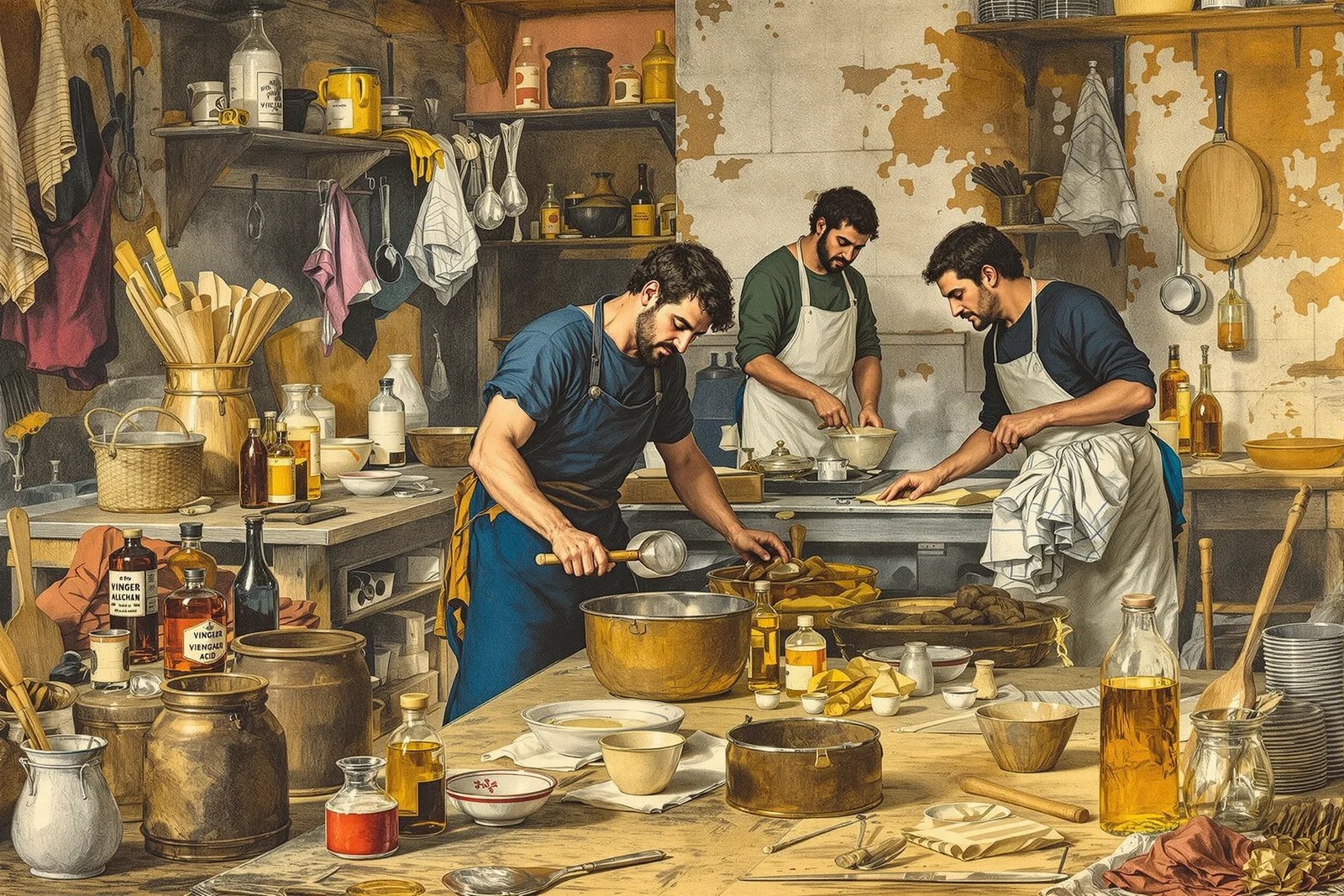
⟁ cover painted for this edition — the source module carried no illustrations
Complete Vinegar and Acid Production: From Alcohol to Acetic Acid
Vinegar is one of humanity's oldest and most versatile chemical products. This campaign covers vinegar making, acid types, production methods, and applications in food preservation, cleaning, and medicine.
Chapter 1: Vinegar Fundamentals
Factor
Detail
Importance
Process
Alcohol + oxygen + bacteria → acetic acid
Two-stage fermentation
Bacteria
Acetobacter (acetic acid bacteria)
Converts ethanol to acetic acid
Oxygen requirement
Must have air exposure
Acetobacter is aerobic
Starting material
Any alcoholic liquid (wine, cider, beer, mead)
Determines vinegar flavor
Acidity
4-8% acetic acid (typical)
Must be 4%+ for safe preservation
Time
2-12 weeks (slow method)
Patience required
Mother of vinegar
Cellulose mat produced by bacteria
Living culture (like sourdough starter)
Vinegar Type
Starting Material
Flavor
Acidity
Best For
Apple cider vinegar
Hard cider (apple wine)
Fruity, mild
5-6%
Cooking, preserving, health
Wine vinegar (red/white)
Wine
Complex, wine-like
6-7%
Cooking, salad dressing
Malt vinegar
Beer (malt ale)
Rich, malty
5-6%
Fish and chips, pickling
Rice vinegar
Rice wine (sake)
Mild, slightly sweet
4-5%
Asian cooking, sushi
White distilled vinegar
Distilled alcohol
Sharp, clean, neutral
5-7%
Cleaning, pickling
Balsamic vinegar
Grape must (cooked)
Sweet, complex
6%
Finishing, dressing
Coconut vinegar
Coconut water/toddy
Mild, slightly sweet
4-5%
Southeast Asian cooking
Chapter 2: Making Vinegar
Method
Time
Equipment
Quality
Difficulty
Slow (Orleans)
4-12 weeks
Crock/jar, cheesecloth
Excellent
Very low
Quick (packed generator)
1-3 days
Column with packing, pump
Good
Moderate
Submerged fermentation
1-3 days
Aerated tank
Good
High (commercial)
Slow method (Orleans): 1) Start with alcoholic liquid (5-10% alcohol). 2) Wine, hard cider, or beer all work. 3) Pour into wide-mouth container (crock, jar, or barrel). 4) Add mother of vinegar or unpasteurized vinegar (1/4 volume). 5) Cover with cheesecloth (allows air, keeps out flies). 6) Place in warm location (70-85°F ideal). 7) Wait 4-12 weeks (taste periodically). 8) A gelatinous mat (mother) forms on surface (this is normal and desirable). 9) When sufficiently sour (taste test), strain and bottle. 10) Pasteurize (heat to 140°F for 30 minutes) to stop fermentation. 11) Or leave unpasteurized (living vinegar, continues to develop). 12) Save the mother for your next batch.
Chapter 3: Testing and Standardizing
Test
Method
Equipment
Accuracy
Taste test
Taste for sourness
Tongue
Rough (experienced tasters only)
pH test
pH strips or meter
pH strips/meter
Moderate (pH 2.4-3.4 typical)
Titration
Neutralize with known base
Sodium hydroxide, phenolphthalein
Very accurate
Simple titration: 1) Measure 10 mL vinegar into cup. 2) Add 2-3 drops phenolphthalein indicator (or red cabbage juice). 3) Slowly add baking soda solution (known concentration) until color changes. 4) Calculate acidity from amount of base needed. 5) For food preservation: vinegar must be at least 4% acetic acid. 6) Commercial vinegar is standardized to 5% (white) or 6-7% (wine). 7) Homemade vinegar varies; test before using for preservation.
Chapter 4: Other Useful Acids
Acid
Source
Strength
Use
Safety
Acetic acid (vinegar)
Fermentation
Weak
Food, cleaning, preservation
Safe at food concentrations
Citric acid
Citrus fruits
Weak
Food, cleaning, water treatment
Safe
Lactic acid
Fermentation (sauerkraut, yogurt)
Weak
Food preservation, probiotics
Safe
Tartaric acid
Grape wine (cream of tartar)
Weak
Baking, food
Safe
Oxalic acid
Wood sorrel, rhubarb leaves
Moderate
Rust removal, bleaching
Toxic in quantity
Tannic acid
Oak bark, tea, acorns
Weak
Leather tanning, ink making
Low toxicity
Hydrochloric acid (muriatic)
Salt + sulfuric acid
Strong
Metalwork, cleaning
Dangerous (corrosive, fumes)
Sulfuric acid
Roasting sulfur minerals
Very strong
Battery acid, chemical processes
Very dangerous
Chapter 5: Vinegar Applications
Application
Concentration
Method
Effectiveness
Pickling (food preservation)
5%+ acetic acid
Submerge food in vinegar brine
Excellent (months-years)
Cleaning (general)
5% (full strength or diluted)
Spray or wipe
Good (grease, mineral deposits)
Weed killer
10-20% (horticultural vinegar)
Spray on leaves
Good (contact kill, not systemic)
Disinfectant
5%
Spray, let sit 10 minutes
Moderate (kills many bacteria)
Fabric softener
5% (1/2 cup per load)
Add to rinse cycle
Good
Wound wash
1-2% (diluted)
Irrigate wound
Moderate (antimicrobial)
Sunburn relief
50% diluted
Apply with cloth
Moderate (soothing)
Hair rinse
1 tbsp per cup water
After shampooing
Good (removes buildup)
Deodorizer
Full strength
Bowl in room, or spray
Good (neutralizes odors)
Reference Card
Alcohol plus air equals vinegar (acetic acid bacteria convert alcohol to vinegar; all you need is time and air exposure). 2. The mother is alive (the gelatinous mat on vinegar is a living culture; save it to start new batches). 3. Cover with cloth, not a lid (acetobacter needs oxygen; seal the container and fermentation stops). 4. Test before preserving (homemade vinegar must be at least 4% acetic acid for safe food preservation; test it). 5. Warm is faster (70-85°F is ideal; cold temperatures slow the bacteria; too hot kills them). 6. Any alcohol works (wine, cider, beer, mead; the starting alcohol determines the vinegar's flavor). 7. Pasteurize to stabilize (heat to 140°F for 30 minutes to stop fermentation; unpasteurized vinegar continues to change). 8. Vinegar is universal (food preservation, cleaning, medicine, weed control, hair care; one of the most versatile substances you can make).