Sovereignty Module: Spark the Flame
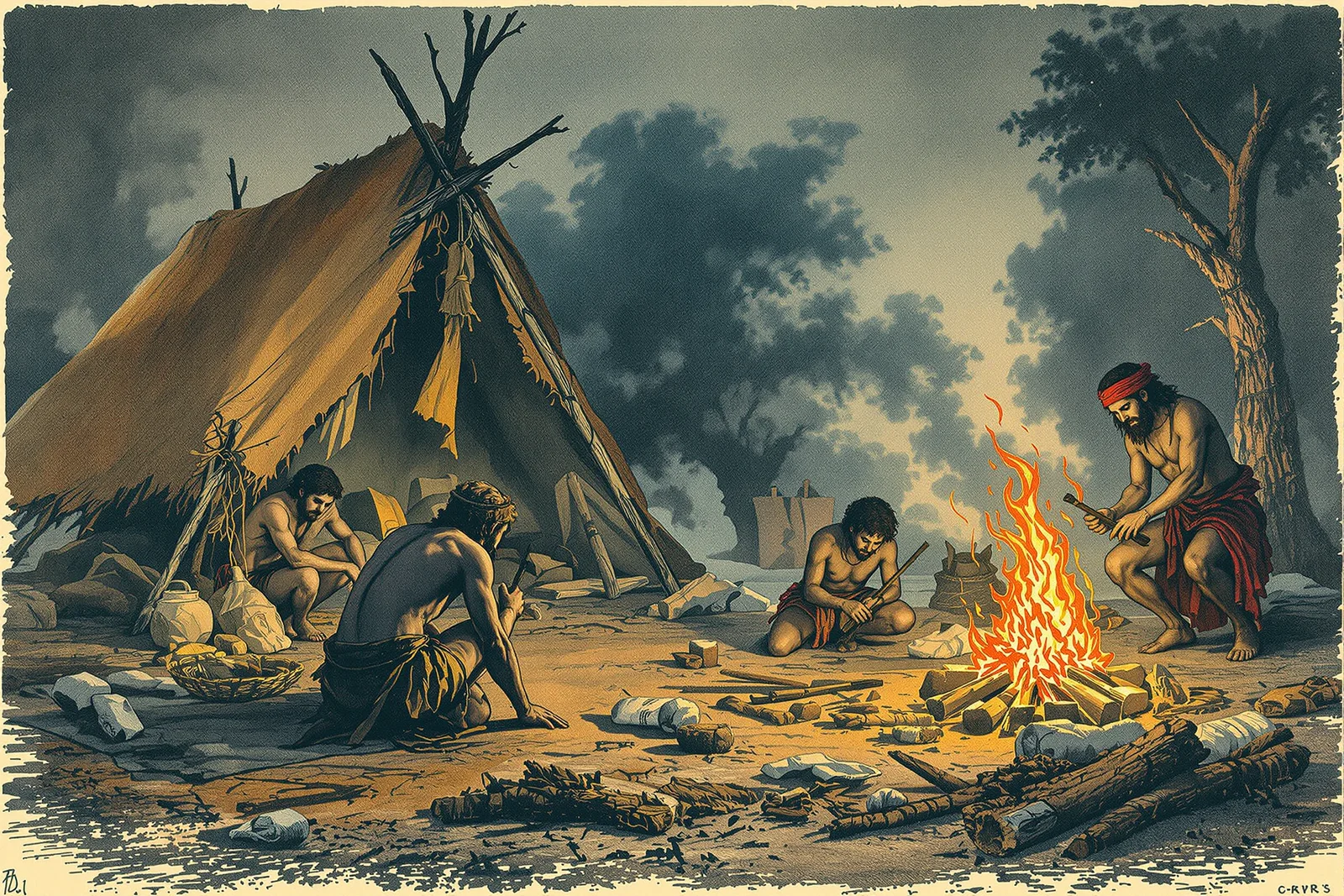
Complete Primitive Fire Starting: From Friction to Flame
Fire is the foundation of all survival. This campaign covers friction fire methods, fire-starting materials, fire lays, and fire management.
Chapter 1: Fire-Starting Methods
| Method | Difficulty | Speed | Materials | Reliability | Conditions |
|---|---|---|---|---|---|
| Ferro rod (modern) | Very low | Very fast | Ferrocerium rod, striker | Very high | Any weather |
| Flint and steel | Low | Fast | Flint, carbon steel, char cloth | High | Most conditions |
| Bow drill | Moderate-high | Moderate (2-5 min) | Spindle, fireboard, bow, cord | Moderate | Dry materials needed |
| Hand drill | High | Slow (5-15 min) | Spindle, fireboard | Low-moderate | Very dry, practiced |
| Fire plow | High | Slow | Hardwood stick, softwood board | Low | Very dry |
| Fire saw | High | Slow | Bamboo or wood | Low | Dry materials |
| Pump drill | Moderate | Moderate | Spindle, flywheel, cord, crossbar | Moderate | Dry materials |
| Magnifying lens | Very low | Very fast | Lens, sun | Very high | Sunny day only |
| Matches | Very low | Instant | Matches | High | Dry conditions |
| Lighter | Very low | Instant | Lighter | Very high | Most conditions |
Chapter 2: Bow Drill Fire
| Component | Material | Specifications | Function |
|---|---|---|---|
| Spindle | Dry softwood (cedar, willow, cottonwood, basswood) | 8-12 inches long, 3/4 inch diameter, straight | Rotating friction element |
| Fireboard | Same wood as spindle (or softer) | Flat board, 1/2-3/4 inch thick | Stationary friction surface |
| Bow | Slightly curved stick | 24-30 inches, strong but flexible | Drives spindle rotation |
| Cord | Paracord, rawhide, plant fiber | Strong, slightly rough | Wraps spindle, transfers motion |
| Handhold | Hardwood, stone, bone, shell | Fits in palm, socket for spindle top | Bears down on spindle |
| Notch | V-shaped cut in fireboard | 1/8 of circle, reaches center of burn hole | Collects hot dust (coal) |
| Coal catcher | Bark, leaf, thin wood | Flat, placed under notch | Catches ember |
Bow drill procedure: 1) Carve spindle: straight, smooth, pointed at top, rounded at bottom. 2) Prepare fireboard: flat, stable, with small starter hole. 3) Burn in: spin spindle in starter hole until black circle forms. 4) Cut notch: V-shape from edge to center of burn hole. 5) Place coal catcher under notch. 6) Wrap cord around spindle once. 7) Place spindle in fireboard hole, handhold on top. 8) Kneel: one foot on fireboard near hole. 9) Lock wrist against shin (stability). 10) Bow back and forth: full strokes, moderate speed. 11) Increase speed and pressure when smoke appears. 12) Continue until thick smoke pours from notch (coal forming). 13) Stop. Carefully lift spindle and fireboard. 14) Fan coal gently (or leave it; it will grow). 15) Transfer coal to tinder bundle. 16) Blow gently, increasing as smoke increases. 17) Flame erupts from tinder bundle.
Chapter 3: Tinder, Kindling, and Fuel
| Material | Category | Quality | Availability | Preparation |
|---|---|---|---|---|
| Char cloth | Tinder | Excellent (catches spark) | Make from cotton cloth | Char in tin without air |
| Birch bark | Tinder | Excellent | Birch trees | Peel thin layers |
| Cedar bark (shredded) | Tinder | Very good | Cedar trees | Shred into fine fibers |
| Cattail fluff | Tinder | Very good | Wetlands | Collect seed heads |
| Dry grass | Tinder | Good | Fields | Bundle loosely |
| Fatwood (resinous pine) | Kindling/tinder | Excellent | Dead pine stumps | Split into thin sticks |
| Small twigs (pencil-thin) | Kindling | Good | Everywhere | Snap to test dryness |
| Finger-thick sticks | Small fuel | Good | Everywhere | Dead and dry |
| Wrist-thick wood | Medium fuel | Good | Everywhere | Split if needed |
| Arm-thick logs | Main fuel | Good | Everywhere | Split for faster burning |
Tinder bundle construction: 1) Gather fine, dry material (shredded bark, dry grass, cattail fluff). 2) Form into bird's-nest shape (loose ball, hollow center). 3) Size: softball to grapefruit. 4) Must be very dry and very fine. 5) Place coal in center of bundle. 6) Fold bundle gently around coal (don't smother). 7) Blow steadily into bundle (aim at coal). 8) Smoke increases, then flame erupts. 9) Place flaming bundle into prepared fire lay. 10) Add kindling immediately.
Chapter 4: Fire Lays
| Fire Lay | Shape | Purpose | Difficulty | Burn Character |
|---|---|---|---|---|
| Teepee | Cone of sticks over tinder | Quick start, boiling water | Very low | Hot, fast, tall flame |
| Log cabin | Square stack around tinder | Cooking coals, long burn | Low | Even, moderate, good coals |
| Lean-to | Sticks leaning against log | Windy conditions, one-sided heat | Very low | Directional heat |
| Star (Indian) | Logs radiating from center | Long burn, minimal fuel | Very low | Slow, steady, efficient |
| Platform | Flat base of logs, fire on top | Wet/snowy ground | Low | Keeps fire off wet ground |
| Dakota hole | Underground pit with air tunnel | Concealed, wind-resistant, efficient | Moderate | Very efficient, low profile |
| Reflector | Fire with log wall behind | Directing heat (toward shelter) | Low | Radiates heat one direction |
Chapter 5: Fire Management
| Principle | Application | Why |
|---|---|---|
| Start small | Tinder → kindling → small fuel → large fuel | Each stage ignites the next |
| Feed gradually | Add fuel one piece at a time | Smothering kills fire |
| Air flow | Leave gaps between fuel | Fire needs oxygen |
| Dry fuel only | Wet wood steams, doesn't burn | Moisture absorbs heat |
| Bank for overnight | Cover coals with ash | Preserves coals until morning |
| Extinguish completely | Drown, stir, feel for heat | Prevents wildfire |
Reference Card
- Tinder is everything (without proper tinder, no fire-starting method works; prepare tinder first, always). 2. Dry materials only (moisture is the enemy of fire; if materials aren't bone dry, friction methods won't work). 3. Same wood for spindle and fireboard (matching woods create the right friction; spindle can be slightly harder). 4. Full bow strokes (short, fast strokes don't generate enough heat; use the full length of the bow). 5. Downward pressure matters (press down on the handhold; friction between spindle bottom and fireboard creates the coal). 6. The coal is fragile (a bow drill coal is a tiny, glowing ember; handle gently, protect from wind, transfer carefully). 7. Blow steadily, not hard (gentle, steady breath grows the coal; blasting air scatters it and cools it). 8. Fire is a relationship (fire needs fuel, heat, and oxygen in the right balance; learn to read what your fire needs).