Sovereignty Module: Shelter from the Storm
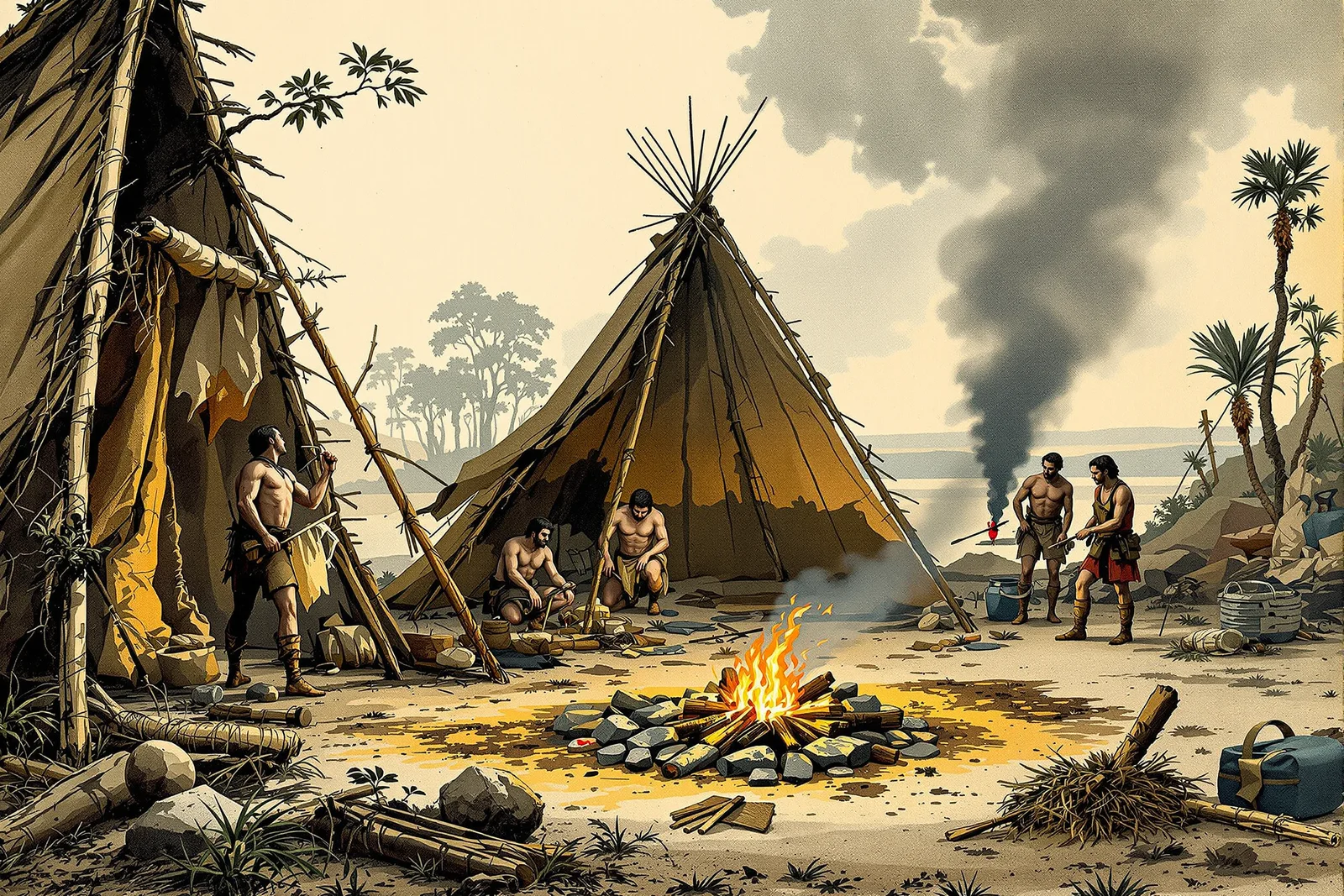
Shelter from the Storm
Complete Primitive Shelter Construction: Emergency, Temporary, and Permanent Survival Structures
Complete Primitive Shelter Construction: Emergency, Temporary, and Permanent Survival Structures
Shelter is the #1 survival priority after immediate safety. Exposure kills faster than dehydration or starvation. This campaign covers every shelter type from emergency to permanent.
Chapter 1: Shelter Priority by Climate
| Climate | Primary Threat | Key Design Principle | Critical Feature |
|---|---|---|---|
| Cold/winter | Hypothermia (wind + cold) | Insulation + small space + heat retention | Thick walls, small interior, fire-compatible |
| Hot/arid | Hyperthermia (heat + sun) | Shade + airflow + thermal mass | Shade roof, open sides, thick walls (cool interior) |
| Wet/tropical | Rain + humidity + insects | Waterproofing + elevation + ventilation | Raised floor, steep roof, mosquito protection |
| Temperate | Variable (rain, cold, heat) | Versatility + weatherproofing | Good roof, moderate insulation, ventilation |
| Alpine/exposed | Wind + cold + snow load | Wind resistance + snow shedding + insulation | Low profile, aerodynamic, strong structure |
Chapter 2: Emergency Shelters (Built in 1-4 Hours)
| Shelter | Time to Build | Materials | Capacity | Temperature Gain | Best Climate |
|---|---|---|---|---|---|
| Debris hut | 1-3 hours | Sticks, leaves, forest debris | 1 person | +30-40°F | Cold/temperate forest |
| Snow cave | 2-4 hours | Packed snow (4+ feet deep) | 1-3 people | Stable 32°F inside | Winter/snow |
| Quinzhee (snow mound) | 3-4 hours | Any snow (pile + hollow) | 1-3 people | Stable 32°F inside | Winter (any snow type) |
| Lean-to | 1-2 hours | Poles + covering (bark, tarps, leaves) | 1-4 people | +10-15°F (with fire) | Temperate, mild weather |
| Tarp shelter (A-frame) | 15-30 minutes | Tarp/poncho + cord | 1-2 people | Wind/rain protection | Any (requires tarp) |
| Fallen tree shelter | 30-60 minutes | Fallen tree + debris | 1-2 people | +15-25°F | Forest (after storms) |
| Rock overhang | 0-30 minutes (improve existing) | Natural formation + wall | 1-4 people | Variable | Rocky terrain |
Chapter 3: Debris Hut Construction
| Step | Action | Specification | Details |
|---|---|---|---|
| 1 | Find/place ridgepole | 9-12 feet long, wrist-thick | One end on ground, other elevated 3 feet (on stump/rock/fork) |
| 2 | Add ribbing (angled sticks along both sides) | Every 6-8 inches, touching ground | Creates A-frame shape. Steep angle sheds rain. |
| 3 | Add lattice (small sticks across ribs) | Horizontal, every 4-6 inches | Holds debris in place |
| 4 | Pile debris 3-4 feet thick (leaves, grass, pine needles) | Minimum 3 feet on all sides | This is your insulation. More = warmer. |
| 5 | Add final layer of sticks on top | Prevents wind from blowing debris off | Weight holds insulation in place |
| 6 | Fill interior with dry leaves/grass (bedding) | 6-12 inches thick on floor | Insulates from ground (ground steals heat fast) |
| 7 | Create door plug (stuff bag or pile of debris) | Blocks entrance when inside | Seal entrance to retain body heat |
Critical rule: Interior should be just large enough to fit your body. Smaller = warmer (body heats less air). You should not be able to sit up inside — crawl in, lie down.
Chapter 4: Semi-Permanent Shelters (Built in 1-7 Days)
| Shelter | Time | Materials | Lifespan | Capacity | Best For |
|---|---|---|---|---|---|
| Wikiup (pole frame + thatch) | 2-4 days | Poles, grass/bark/thatch | 6-12 months | 2-6 people | Temperate/warm, base camp |
| Pit house (dugout) | 3-7 days | Excavation + poles + earth roof | 1-5 years | 2-6 people | Cold climates, long-term |
| Log lean-to (permanent) | 3-5 days | Logs, poles, bark/thatch roof | 1-3 years | 2-4 people | Forest, moderate climate |
| Sod house | 5-7 days | Cut sod blocks + pole roof | 2-10 years | 4-8 people | Prairie/grassland, no trees |
| Bamboo hut | 2-4 days | Bamboo + palm/thatch | 2-5 years | 2-6 people | Tropical, bamboo available |
| Stone shelter | 5-7 days | Stacked stone + earth mortar | 10+ years | 2-6 people | Rocky terrain, permanent |
Chapter 5: Insulation Values
| Material | R-Value per Inch | Availability | Notes |
|---|---|---|---|
| Dry leaves (loose) | R-1 per inch | Forest floor | Need 12-24 inches for good insulation |
| Dry grass/straw | R-1.5 per inch | Fields, meadows | Better than leaves, compresses less |
| Pine needles | R-1 per inch | Pine forests | Good drainage, insect-resistant |
| Cattail fluff | R-2 per inch | Wetlands | Excellent insulator, water-resistant |
| Moss (dry) | R-1.5 per inch | Forest, rocks | Also good for chinking gaps |
| Animal fur/hides | R-3-5 per inch | Hunting | Best natural insulator |
| Snow (packed) | R-1 per inch | Winter | Paradoxically insulating (traps air) |
| Earth (dry) | R-0.5 per inch | Everywhere | Heavy but effective in mass (2-3 feet thick) |
| Bark (thick slabs) | R-1-2 per inch | Trees | Waterproof + insulating |
Chapter 6: Fire Integration with Shelter
| Configuration | Heat Efficiency | Safety | Best For |
|---|---|---|---|
| Fire in front of lean-to | 30-40% (radiates toward you) | Moderate (sparks) | Open shelters, mild cold |
| Fire with reflector wall | 50-60% (reflects heat back) | Good | Lean-to + log wall behind fire |
| Dakota fire hole (underground) | 70-80% (concentrated, hidden) | Very good | Windy conditions, concealment |
| Long fire (parallel logs) | 40-50% (even heat along body) | Moderate | Sleeping beside fire |
| Heated rocks (in shelter) | 80-90% (stored heat, no smoke) | Very good | Enclosed shelters (heat rocks outside, bring in) |
| Smoke hole/chimney | 60-70% (fire inside shelter) | Good (with proper ventilation) | Permanent shelters, tipis, pit houses |
Heated rock method: 1. Heat fist-sized rocks in fire for 1-2 hours. 2. Use sticks to roll rocks into shelter (or carry with green wood tongs). 3. Place on flat stone or in pit inside shelter. 4. Radiates heat for 2-4 hours. 5. NO WET ROCKS (can explode when heated). NO RIVER ROCKS (often contain moisture).
Reference Card
- Shelter is #1 survival priority. Hypothermia kills in 3 hours. Build shelter BEFORE dark.
- Debris hut: ridgepole + ribs + 3 feet of leaves on all sides. Interior just big enough to lie in.
- Ground insulation is critical: 6-12 inches of dry material between you and ground. Ground steals heat 25× faster than air.
- Smaller interior = warmer. Your body is the heater. Less air to warm = more effective.
- Steep roof angle (45°+) sheds rain. Shallow angle = leaks. Thatch/debris from bottom up (like shingles).
- Heated rocks: heat in fire 1-2 hours, bring inside. NO wet rocks, NO river rocks (explosion risk).
- Dakota fire hole: dig fire pit + air intake tunnel. Burns hot, uses less wood, minimal smoke, wind-resistant.
- Snow = insulation (R-1/inch). Snow cave interior stays 32°F regardless of outside temperature. Poke ventilation hole.
TransmissionCOMPLETE — unaltered & unabridged
Words1,243 — every one of them
SHA-256 of source text8525db70ea2d0f9a23b60ddffd216516ae52c87664ed6ce8ff52abe887debcb6
Canonical textdownload campaign-survival-shelter.md — byte-identical to what this page renders