Sovereignty Module: Preserve the Skin
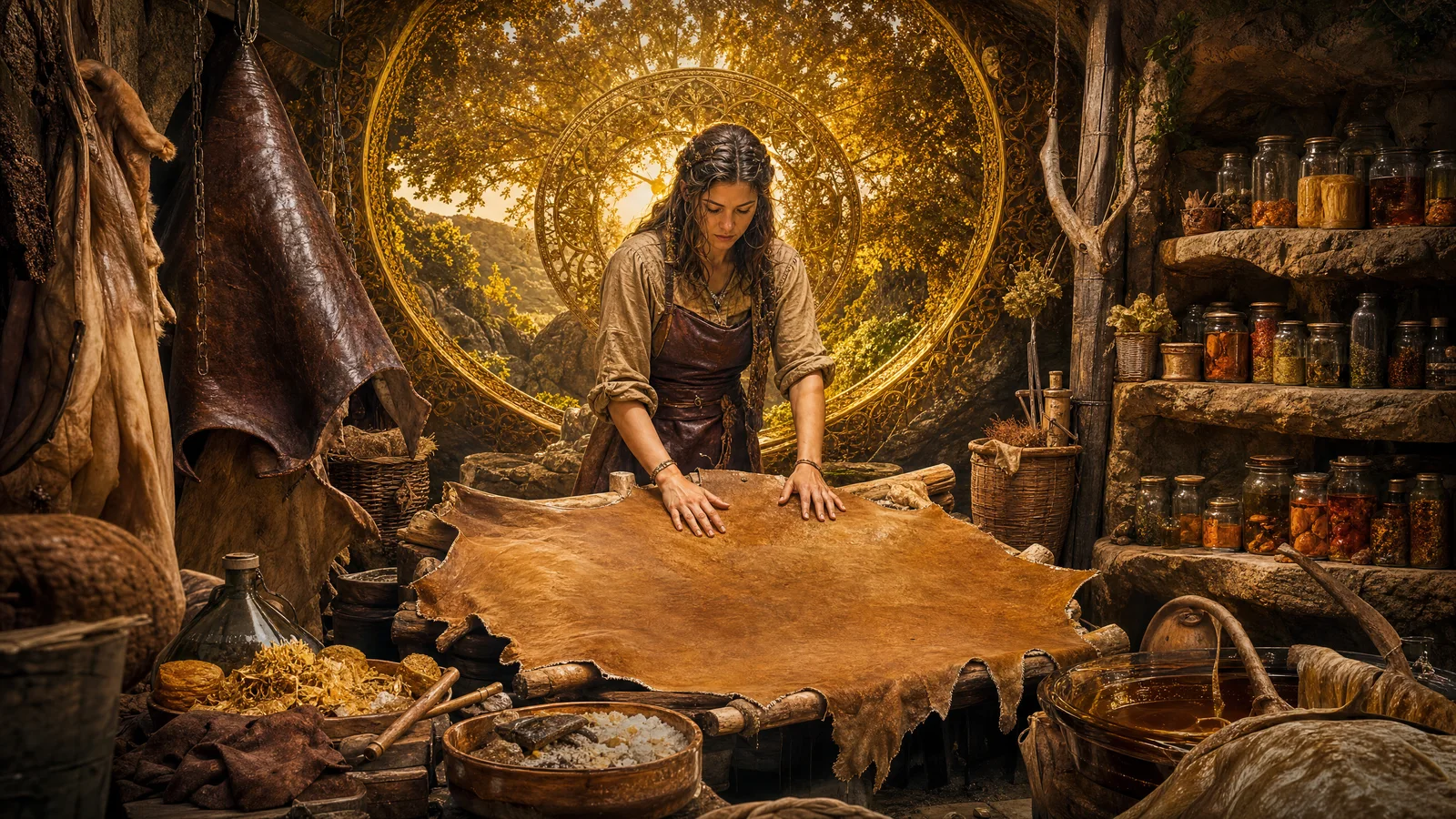
Preserve the Skin
Complete Tanning, Hide Processing, and Leather Production Guide
Complete Tanning, Hide Processing, and Leather Production Guide
Leather is essential for footwear, belts, harness, armor, containers, and bookbinding. Without tanning, hides rot within days. This campaign covers every tanning method from brain to bark to chrome alternatives.
Chapter 1: Tanning Methods Compared
| Method | Time | Softness | Waterproof | Color | Difficulty | Historical Use |
|---|---|---|---|---|---|---|
| Brain tan | 2-5 days | Very soft (buckskin) | No (unless smoked) | White/cream | Moderate | Indigenous worldwide |
| Bark tan (vegetable) | 2-12 months | Firm to moderate | Moderate | Brown/tan | Low (but slow) | European, all civilizations |
| Alum tan (tawing) | 1-2 weeks | Soft | No (reverts when wet) | White | Low | Medieval Europe |
| Chrome tan | 1-2 days | Soft, stretchy | Good | Blue-grey (dyed any color) | High (chemicals) | Modern industrial |
| Oil tan (chamois) | 1-2 weeks | Very soft | Excellent | Yellow/gold | Moderate | Historical, specialty |
| Smoke tan | Hours (after brain) | Soft | Good (resists reversion) | Golden to dark brown | Low | Indigenous worldwide |
| Rawhide (no tanning) | 1-3 days | Stiff (rigid when dry) | No | Translucent/white | Very low | Universal |
Chapter 2: Hide Preparation (All Methods)
| Step | Action | Time | Details |
|---|---|---|---|
| 1 | Skin animal carefully | 15-60 min | Minimize cuts and holes |
| 2 | Flesh (remove all meat, fat, membrane from flesh side) | 30-90 min | Fleshing beam + dull blade |
| 3 | Salt (if not processing immediately) | Apply immediately | 1 lb salt per lb of hide, fold flesh-to-flesh |
| 4 | Soak to rehydrate (if dried/salted) | 12-48 hours | Room temperature water, change water |
| 5 | De-hair (if desired): lime/ash soak | 3-10 days | 1 lb hydrated lime per gallon water (or hardwood ash water) |
| 6 | Scrape off hair and grain layer | 1-2 hours | Fleshing beam + scraper (grain side) |
| 7 | De-lime: rinse thoroughly, optional acid rinse | 1-2 hours | Vinegar water or bird droppings (traditional bate) |
| 8 | Wring out excess water | 15 min | Twist on stick or wring by hand |
Chapter 3: Bark Tanning (Vegetable)
| Step | Action | Time | Details |
|---|---|---|---|
| 1 | Prepare bark liquor: oak, hemlock, or chestnut bark | 1-2 weeks | Grind bark, soak in water, strain |
| 2 | Start with weak solution (used/diluted liquor) | 2-4 weeks | Prevents case-hardening (surface tans, center rots) |
| 3 | Move to medium-strength liquor | 4-8 weeks | Turn hides daily |
| 4 | Move to strong fresh liquor | 4-12 weeks | Turn hides daily |
| 5 | Remove when tanned through (cut edge shows uniform color) | Test at 8-12 weeks | No white/raw center visible |
| 6 | Rinse, oil while damp (neatsfoot oil or tallow) | 1 day | Work oil into both sides |
| 7 | Dry slowly (not in sun or heat) | 2-5 days | Stretch and work periodically |
| 8 | Finish: sand, buff, or polish as desired | As needed | Smooth surfaces |
Tannin sources (ranked by strength): Chestnut bark/wood (highest), oak bark, hemlock bark, sumac leaves, mimosa bark, quebracho wood, tea leaves, walnut hulls.
Chapter 4: Brain Tanning
| Step | Action | Details |
|---|---|---|
| 1 | Prepare brain solution: mash brain in warm water | Every animal has enough brain to tan its own hide |
| 2 | Work brain solution into wrung-out hide | Both sides, thoroughly saturated |
| 3 | Roll up hide, let soak overnight (or 4-8 hours minimum) | Brain penetrates fibers |
| 4 | Wring out hide (twist on stick until no more liquid) | Must remove excess |
| 5 | Stretch and work hide continuously while drying | Pull, stretch, work over cable or stake |
| 6 | Do not stop until completely dry | If you stop, it stiffens (must re-wet and start over) |
| 7 | If not soft enough, re-brain and repeat | 2-3 applications may be needed for thick hides |
| 8 | Smoke (cold smoke 15-30 minutes per side) | CRITICAL: prevents reversion when wet |
The smoking step converts brain-tanned leather from water-sensitive to water-resistant. Unsmoked brain tan becomes rawhide again when wet. Smoked brain tan stays soft through wetting and drying.
Chapter 5: Leather Products
| Product | Leather Type | Thickness | Special Requirements |
|---|---|---|---|
| Shoes/boots | Bark-tanned (sole), brain or oil-tanned (upper) | Sole: 4-6mm. Upper: 1.5-2mm | Waterproofing (wax, oil) |
| Belts | Bark-tanned | 3-4mm | Firm, holds shape |
| Harness/tack | Bark-tanned (heavy) | 4-6mm | Strong, oiled regularly |
| Gloves | Brain-tanned or alum-tanned | 0.5-1mm | Soft, flexible |
| Bookbinding | Bark-tanned (goat preferred) | 0.5-1mm | Thin, supple |
| Water containers | Bark-tanned, waxed interior | 2-3mm | Sealed with beeswax/pitch |
| Armor (cuir bouilli) | Bark-tanned, hardened | 4-8mm | Soaked in hot water, molded, dried hard |
| Rawhide lacing | Rawhide (untanned) | 2-3mm wide strips | Cut in spiral from hide |
Chapter 6: Leather Care and Repair
| Task | Method | Frequency |
|---|---|---|
| Cleaning | Damp cloth, saddle soap for heavy soiling | As needed |
| Conditioning | Neatsfoot oil, mink oil, or tallow | Every 1-3 months (working leather) |
| Waterproofing | Beeswax + oil mixture, heated and rubbed in | Before wet season |
| Stitching repair | Saddle stitch (two needles, waxed thread) | When seams fail |
| Patch repair | Cut patch larger than damage, stitch or glue | Holes or tears |
| Mold prevention | Store dry, ventilated, lightly oiled | Ongoing |
| Hardening (cuir bouilli) | Soak in hot water (not boiling), mold to shape, dry | When rigid leather needed |
Reference Card
- Flesh hide immediately after skinning (or salt heavily if delayed)
- De-hair with lime water: 1 lb hydrated lime per gallon, soak 3-10 days
- Bark tanning takes 2-12 months but produces the most durable leather
- Brain tanning: work hide continuously while drying (cannot stop or it stiffens)
- MUST smoke brain-tanned hide or it reverts to rawhide when wet
- Every animal has enough brain to tan its own hide (universal rule)
- Neatsfoot oil is the best leather conditioner (penetrates without damaging)
- Cuir bouilli (boiled leather): soak bark-tanned leather in hot water, mold, dry = rigid armor
TransmissionCOMPLETE — unaltered & unabridged
Words1,148 — every one of them
SHA-256 of source textde186da15cdaad4c85156fcbf5647ead88391f331ff553a47f327c18356fea55
Canonical textdownload campaign-tanning-complete.md — byte-identical to what this page renders