Sovereignty Module: Harvest the Wild
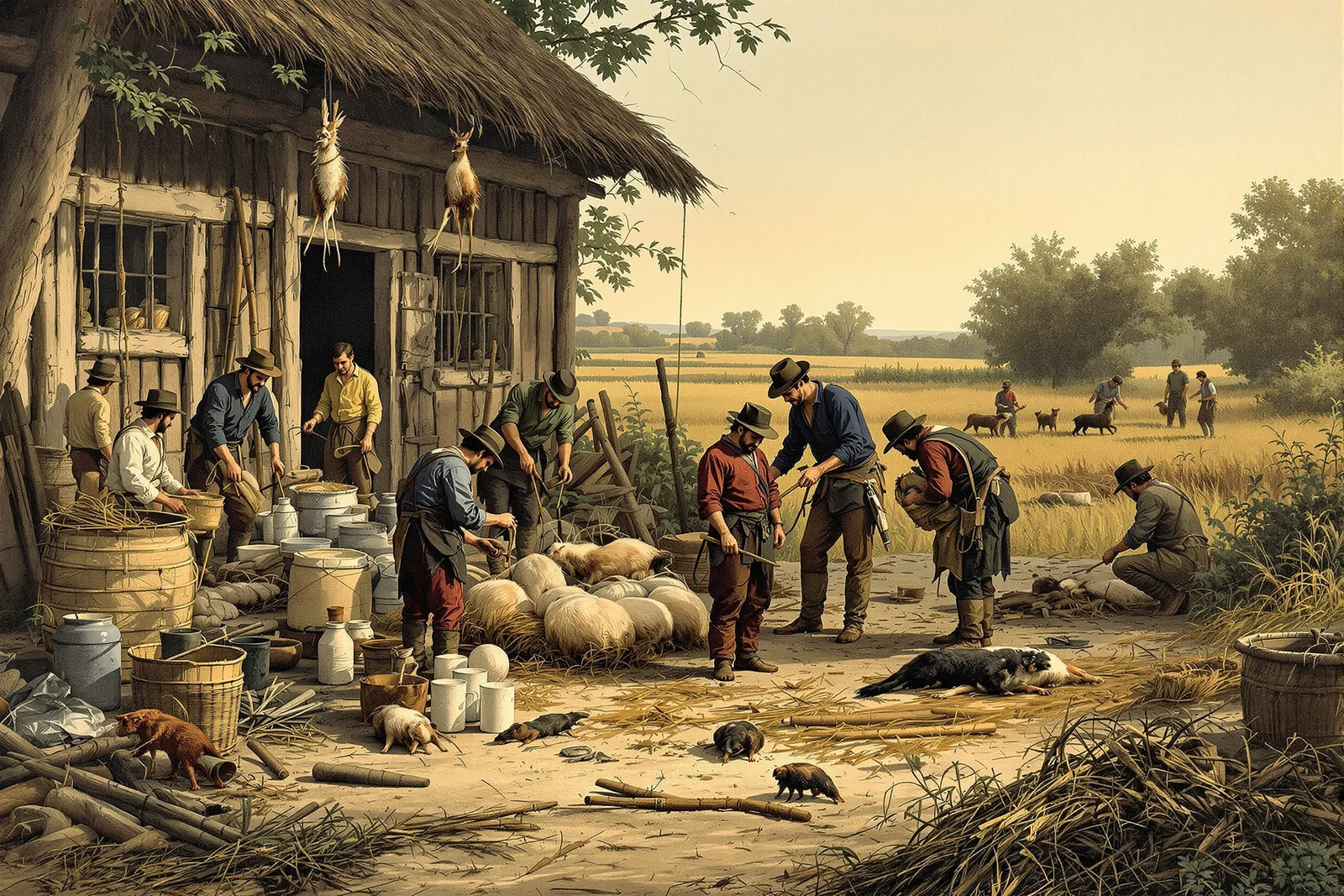
Complete Animal Trapping, Snaring, and Fur Processing Guide
Trapping provides food, fur, and pest control when hunting is impractical. A single person can maintain dozens of traps simultaneously, harvesting protein and materials while performing other work. This campaign covers humane, effective trapping and complete fur processing.
Chapter 1: Trap Types
| Trap Type | Target | Mechanism | Humaneness | Complexity |
|---|---|---|---|---|
| Deadfall (figure-4, Paiute) | Small-medium mammals | Crushing weight | Quick kill (if sized correctly) | Low |
| Snare (cable/wire) | Small-large mammals | Tightening loop | Variable (can be lethal or live-capture) | Low |
| Conibear (body-grip) | Small-medium mammals | Spring-loaded bars crush | Quick kill | Moderate (manufactured) |
| Leg-hold (padded) | Medium-large mammals | Holds foot (padded = less injury) | Live capture (check frequently) | Moderate |
| Pitfall | Small mammals, reptiles | Animal falls into pit | Live capture | Low-moderate |
| Box trap (live trap) | Small-medium mammals | Door closes behind animal | Live capture | Moderate |
| Spring snare (lifted) | Small mammals, birds | Snare lifts animal off ground | Quick (strangulation) | Moderate |
| Fish trap (weir/funnel) | Fish | Funnel entrance, cannot exit | Live capture | Moderate |
| Bird snare/net | Birds | Net or snare on perch | Variable | Low-moderate |
Chapter 2: Snare Construction
| Component | Material | Specification |
|---|---|---|
| Cable/wire | Aircraft cable, brass wire, or natural cordage | 1/16 inch cable (rabbit), 3/32 inch (coyote), 1/8 inch (deer) |
| Lock (sliding) | Manufactured lock or bent-wire lock | Must slide freely, not release |
| Loop diameter | Sized to target animal | Rabbit: 4-5 inches. Coyote: 10-12 inches. Deer: 12-15 inches. |
| Loop height | Center of loop at head height of target | Rabbit: 3-4 inches off ground. Coyote: 10-12 inches. |
| Anchor | Stake, tree, or drag (heavy stick) | Must hold struggling animal |
| Support wire | Thin wire holding loop in position | Breaks away when animal enters |
Snare placement: On established trails (look for tracks, droppings, worn paths). Between natural funnels (logs, rocks, brush that channels movement). Loop perpendicular to travel direction. Animal walks into loop, tightens around neck or body.
Chapter 3: Deadfall Traps
| Trap | Components | Target Size | Trigger Sensitivity |
|---|---|---|---|
| Figure-4 deadfall | 3 sticks (carved to interlock), heavy flat rock | Mouse to raccoon | Adjustable (carve notches deeper = less sensitive) |
| Paiute deadfall | 2 sticks + cordage + toggle, heavy rock | Mouse to rabbit | Very sensitive |
| Log deadfall | Heavy log, trigger stick, bait stick | Rabbit to beaver | Moderate |
| Samoan deadfall | Bent sapling + weight + trigger | Medium mammals | Sensitive |
Rock weight rule: Deadfall weight must be at minimum 5x the target animal's weight for quick, humane kill. Rabbit (3 lbs) = 15+ lb rock. Raccoon (15 lbs) = 75+ lb rock or log.
Chapter 4: Trap Placement Principles
| Principle | Application |
|---|---|
| Trails and runs | Place on established animal paths (visible tracks, droppings, worn vegetation) |
| Funneling | Use natural or constructed barriers to guide animal into trap |
| Bait selection | Match target species: meat scraps (carnivores), fruit/grain (herbivores), fish (mustelids) |
| Scent control | Handle traps with gloves, boil in bark water, avoid human scent near trap |
| Set height | Loop/trigger at head height of target species |
| Check frequency | Every 12-24 hours (legal requirement in most jurisdictions, ethical requirement always) |
| Multiple sets | 12-24 traps per trapline for consistent harvest |
| Season | Fur-bearers: late fall through winter (prime fur). Food: year-round as needed. |
Chapter 5: Fur Processing (Brain Tanning)
| Step | Action | Time | Details |
|---|---|---|---|
| 1 | Skin animal carefully (avoid cuts in hide) | 15-60 minutes | Cut around legs, down belly, peel |
| 2 | Flesh hide (remove all meat, fat, membrane) | 30-60 minutes | Fleshing beam + dull knife |
| 3 | Stretch and dry (if not processing immediately) | 1-3 days | Frame or board, flesh side out |
| 4 | Soak dried hide to rehydrate | 12-24 hours | Room temperature water |
| 5 | Remove hair (if desired): lime soak or ash-water soak | 3-7 days | Check daily, hair slips when ready |
| 6 | De-grain (scrape off hair roots and grain layer) | 1-2 hours | Fleshing beam + scraper |
| 7 | Wring out excess water | 15 minutes | Twist on stick or wring by hand |
| 8 | Apply brain solution (brain mashed in warm water) | Work in thoroughly | Every animal has enough brain to tan its own hide |
| 9 | Work hide while drying (stretch, pull, flex continuously) | 4-12 hours | Must not stop until completely dry |
| 10 | Smoke hide (cold smoke, 15-30 minutes per side) | 30-60 minutes | Prevents hide from reverting when wet |
Brain tanning produces soft, washable buckskin. The smoking step is critical: unsmoked brain-tan reverts to rawhide when wet.
Chapter 6: Fur Garment Construction
| Garment | Hides Needed | Difficulty | Warmth Rating |
|---|---|---|---|
| Fur hat | 1 rabbit or 1/2 beaver | Low | Excellent |
| Fur mittens (pair) | 2 rabbits or 1 beaver | Low-moderate | Excellent |
| Fur vest | 6-8 rabbits or 2-3 beaver | Moderate | Very good |
| Fur-lined coat | 12-15 rabbits or 4-6 beaver | High | Exceptional |
| Fur blanket | 20-40 rabbits (sewn together) | Moderate (repetitive) | Exceptional |
| Moccasins (pair) | 1 deer hide (brain-tanned) | Moderate | Good (add fur lining for cold) |
Rabbit fur: Extremely warm but fragile (tears easily). Best used as lining or sewn in overlapping strips. Beaver fur: Dense, waterproof, extremely durable. The gold standard for cold-weather fur.
Reference Card
- Snare loop diameter = 1.5x target animal's head diameter
- Deadfall weight = minimum 5x target animal's body weight
- Check all traps every 12-24 hours (ethical and legal requirement)
- Place traps on established trails with natural funneling
- Brain tanning: every animal has enough brain to tan its own hide
- MUST work brain-tanned hide continuously while drying (or it stiffens)
- Smoke brain-tanned hide to prevent reversion when wet
- Fur is prime in late fall through winter (summer fur is thin and patchy)