Sovereignty Module: Shape the Timber
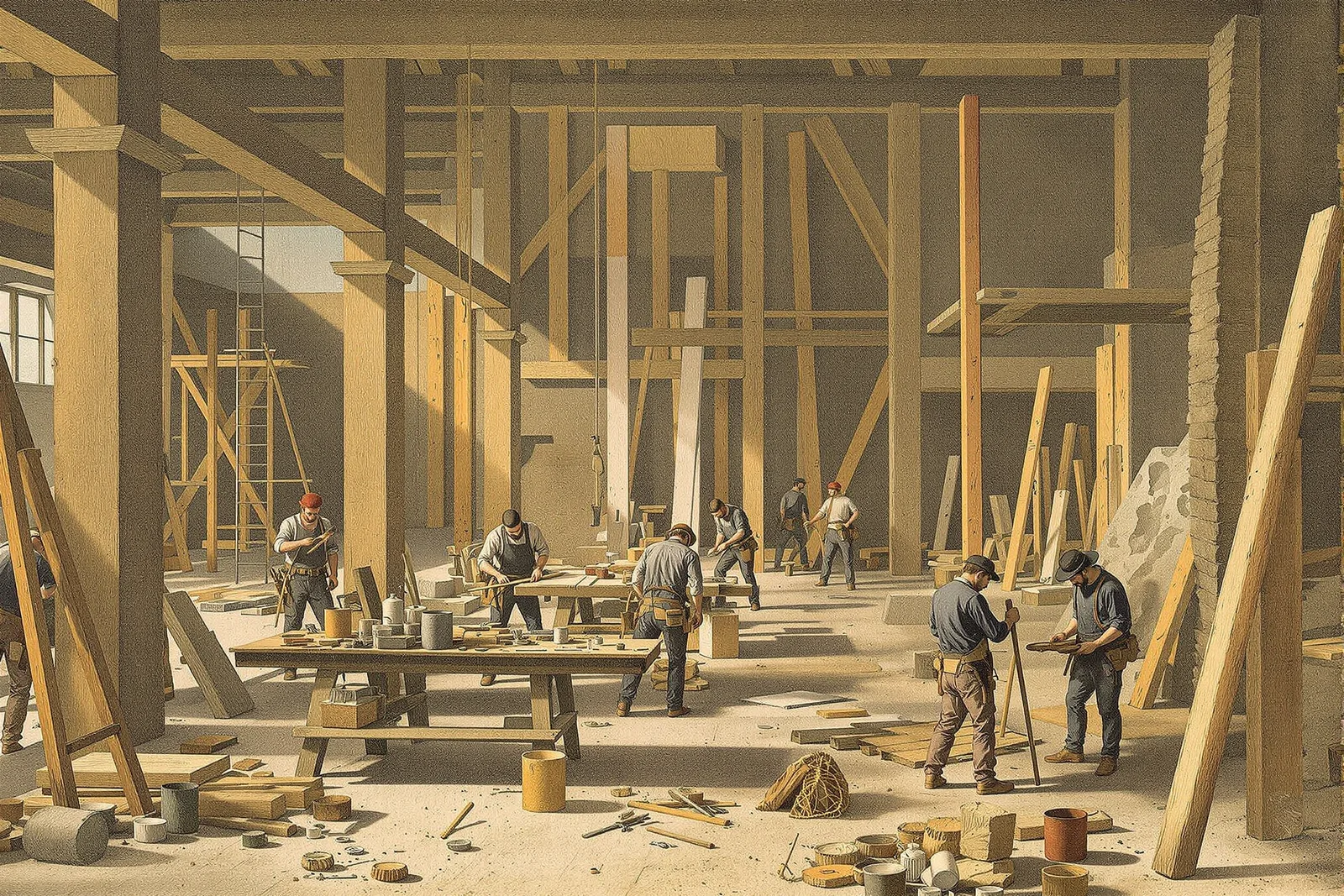
Complete Woodworking: From Tree to Finished Product
Wood is the most versatile building material. This campaign covers tree selection, processing, joinery, tool use, and essential projects for rebuilding.
Chapter 1: Wood Properties by Species
| Species | Hardness | Weight | Workability | Rot Resistance | Best Uses |
|---|---|---|---|---|---|
| Oak (white) | Very hard | Heavy | Moderate | Excellent | Furniture, boats, barrels, framing |
| Oak (red) | Hard | Heavy | Moderate | Poor (porous) | Furniture, flooring, interior |
| Maple (hard) | Very hard | Heavy | Difficult | Poor | Flooring, tools, cutting boards |
| Walnut | Medium-hard | Medium-heavy | Excellent | Good | Furniture, gunstocks, carving |
| Cherry | Medium | Medium | Excellent | Moderate | Furniture, cabinets, turning |
| Pine (white) | Soft | Light | Very easy | Poor | Construction, carving, interior |
| Pine (yellow) | Medium-soft | Medium | Easy | Moderate | Construction, flooring, decking |
| Cedar (red) | Soft | Light | Easy | Excellent | Siding, fencing, chests, shingles |
| Ash | Hard | Medium-heavy | Good | Poor | Tool handles, bows, bending |
| Hickory | Very hard | Very heavy | Difficult | Poor | Tool handles, smoking meat |
| Poplar/tulip | Soft | Light | Very easy | Poor | Paint-grade, interior, learning |
| Douglas fir | Medium | Medium | Good | Moderate | Construction, beams, plywood |
Chapter 2: Hand Tools (Priority Order)
| Tool | Function | Priority | Can Substitute? | Notes |
|---|---|---|---|---|
| Handsaw (crosscut) | Cut across grain | Critical | Bow saw (make from scratch) | 8-10 TPI for general work |
| Handsaw (rip) | Cut along grain | Critical | Frame saw | 5-6 TPI, aggressive |
| Chisels (set: 1/4, 1/2, 3/4, 1") | Joinery, mortises, shaping | Critical | Single 3/4" to start | Keep razor sharp |
| Mallet | Drive chisels | Critical | Any hardwood club | Softer than chisel handle |
| Hand plane (jack, #5) | Flatten, smooth, dimension | Critical | Drawknife for rough work | Most versatile single plane |
| Hand plane (block) | End grain, small work | Important | Jack plane (less ideal) | Low angle preferred |
| Marking gauge | Consistent layout lines | Important | Knife + straight edge | Accuracy depends on this |
| Square (try square) | 90° reference | Critical | Shop-made from wood | Check for accuracy regularly |
| Brace and bits | Drill holes | Important | Bow drill (primitive) | Various bit sizes |
| Drawknife | Rapid shaping, debarking | Important | Axe + plane (slower) | Two-handed, fast removal |
| Spokeshave | Curved surfaces, rounding | Useful | Knife + sandpaper | Flat and curved sole versions |
| Rasp/file | Shaping, smoothing | Useful | Sandstone (primitive) | Coarse for shaping, fine for finishing |
Chapter 3: Fundamental Joinery
| Joint | Strength | Difficulty | Tools Needed | Best For |
|---|---|---|---|---|
| Butt joint (nailed/screwed) | Low | Very easy | Saw, hammer | Rough construction, temporary |
| Lap joint (half-lap) | Moderate | Easy | Saw, chisel | Frames, crosses, simple furniture |
| Mortise and tenon | Very high | Moderate | Saw, chisel, mallet, drill | Furniture, timber framing, doors |
| Dovetail | Very high (tension) | High | Saw, chisel, marking tools | Drawers, boxes, casework |
| Tongue and groove | Moderate | Moderate | Plane (match planes) | Flooring, paneling, tabletops |
| Dado/housing | Moderate | Easy-moderate | Saw, chisel, router plane | Shelving, bookcase, cabinet |
| Bridle joint | High | Moderate | Saw, chisel | Frames, gates, light structures |
| Pegged/doweled | High | Moderate | Drill, dowel plate | Timber framing, furniture |
| Scarf joint | High (length) | Moderate-high | Saw, chisel, plane | Extending length (beams, masts) |
| Box joint (finger) | High | Moderate | Saw, chisel (or jig) | Boxes, cases, decorative |
Mortise and tenon: The king of joints. Mortise = rectangular hole. Tenon = tongue that fits in hole. Rule of thirds: tenon thickness = 1/3 of stock thickness. Tenon length = 2/3 to full width of receiving piece. Cut tenon first (easier to fit mortise to tenon). Glue + peg for permanent. Wedged tenon = strongest variation.
Chapter 4: Wood Processing (Tree to Board)
| Step | Tools | Output | Notes |
|---|---|---|---|
| Felling | Axe, crosscut saw | Log on ground | Fell away from obstacles, escape route planned |
| Limbing | Axe, hatchet | Clean log | Work from butt to top, stand on uphill side |
| Bucking | Crosscut saw | Log sections | Cut to needed lengths + 6" extra |
| Splitting (riving) | Froe, wedges, mallet | Boards/planks | Strongest method (follows grain). Best for shingles, staves |
| Pit sawing | Pit saw (2-person) | Sawn boards | One person above, one in pit. Slow but effective |
| Hewing | Broadaxe, chalk line | Squared timbers | Score with axe, then hew to line. For beams |
| Air drying | Stickers, time | Dried lumber | Stack with spacers (stickers). 1 year per inch thickness |
| Kiln drying | Kiln (heat + airflow) | Dried lumber (fast) | Days-weeks instead of months-years. Requires fuel |
Air drying rules: Stack off ground (18"+ on bearers). Stickers (spacers) every 2 feet, aligned vertically. Weight on top (prevents warping). Cover top (rain protection) but allow air flow on sides. 1 year per inch of thickness for hardwoods. End-seal cut ends (paint, wax) to prevent checking.
Chapter 5: Essential Projects
| Project | Skill Level | Time | Wood | Tools Minimum |
|---|---|---|---|---|
| Mallet | Beginner | 1-2 hours | Hardwood (any) | Saw, knife/axe |
| Stool (3-leg) | Beginner | 2-4 hours | Hardwood + green wood | Saw, drill, drawknife |
| Shelf (wall) | Beginner | 1-2 hours | Any | Saw, plane, drill |
| Tool handles | Beginner-intermediate | 1-3 hours | Hickory, ash | Drawknife, rasp, knife |
| Door (board and batten) | Intermediate | 4-8 hours | Pine, cedar | Saw, plane, drill, chisel |
| Table (trestle) | Intermediate | 8-16 hours | Hardwood | Saw, plane, chisel, drill |
| Chest (dovetailed) | Advanced | 16-30 hours | Hardwood | Saw, chisel, plane, marking tools |
| Chair (Windsor style) | Advanced | 20-40 hours | Mixed (seat: soft, legs: hard) | Lathe or drawknife, drill, reamer |
| Workbench | Intermediate-advanced | 20-40 hours | Hardwood (beech, maple) | All hand tools |
| Timber frame (building) | Advanced | Weeks-months | Large timbers | Saw, chisel, mallet, auger |
Chapter 6: Finishing and Preservation
| Finish | Protection | Appearance | Durability | Application | Best For |
|---|---|---|---|---|---|
| Linseed oil (boiled) | Moderate | Warm, natural | Moderate (reapply yearly) | Wipe on, wipe off | Furniture, tools, interior |
| Tung oil | Good | Warm, slight sheen | Good | Multiple thin coats | Furniture, countertops |
| Beeswax | Low-moderate | Soft sheen | Low (reapply often) | Melt and rub in | Cutting boards, hand tools |
| Shellac | Good | High gloss or satin | Moderate (not waterproof) | Brush or pad | Interior furniture, musical instruments |
| Tar/pitch (pine) | Excellent | Dark | Excellent | Brush hot | Exterior, boats, fence posts |
| Charring (shou sugi ban) | Excellent | Black, textured | Excellent | Torch surface, brush | Exterior siding, fence posts |
| Paint (linseed oil based) | Excellent | Opaque (any color) | Very good | Brush | Exterior, interior (any wood) |
Reference Card
- Mortise and tenon: king of joints. Tenon = 1/3 stock thickness. Cut tenon first, fit mortise to it. Glue + peg = permanent.
- Sharp tools: a dull tool is dangerous and frustrating. Sharpen chisels and planes on stones. Test on end grain (should slice cleanly).
- Grain direction: always plane/cut with the grain (downhill). Against grain = tearout. Read grain direction before cutting.
- Air dry lumber: 1 year per inch thickness. Stack with stickers. Weight on top. Cover from rain. Seal end grain.
- Measure twice, cut once: layout is everything. Use marking gauge for consistency. Square for 90°. Knife line > pencil line.
- Riving (splitting): strongest boards follow the grain perfectly. Use froe and mallet. Best for shingles, tool handles, chair parts.
- Wood selection: rot-resistant (cedar, white oak, locust) for exterior. Hard (maple, oak) for wear surfaces. Easy (pine, poplar) for learning.
- Workbench: your most important tool. Build one early. Flat top, sturdy, with vise. Everything else gets easier with a good bench.