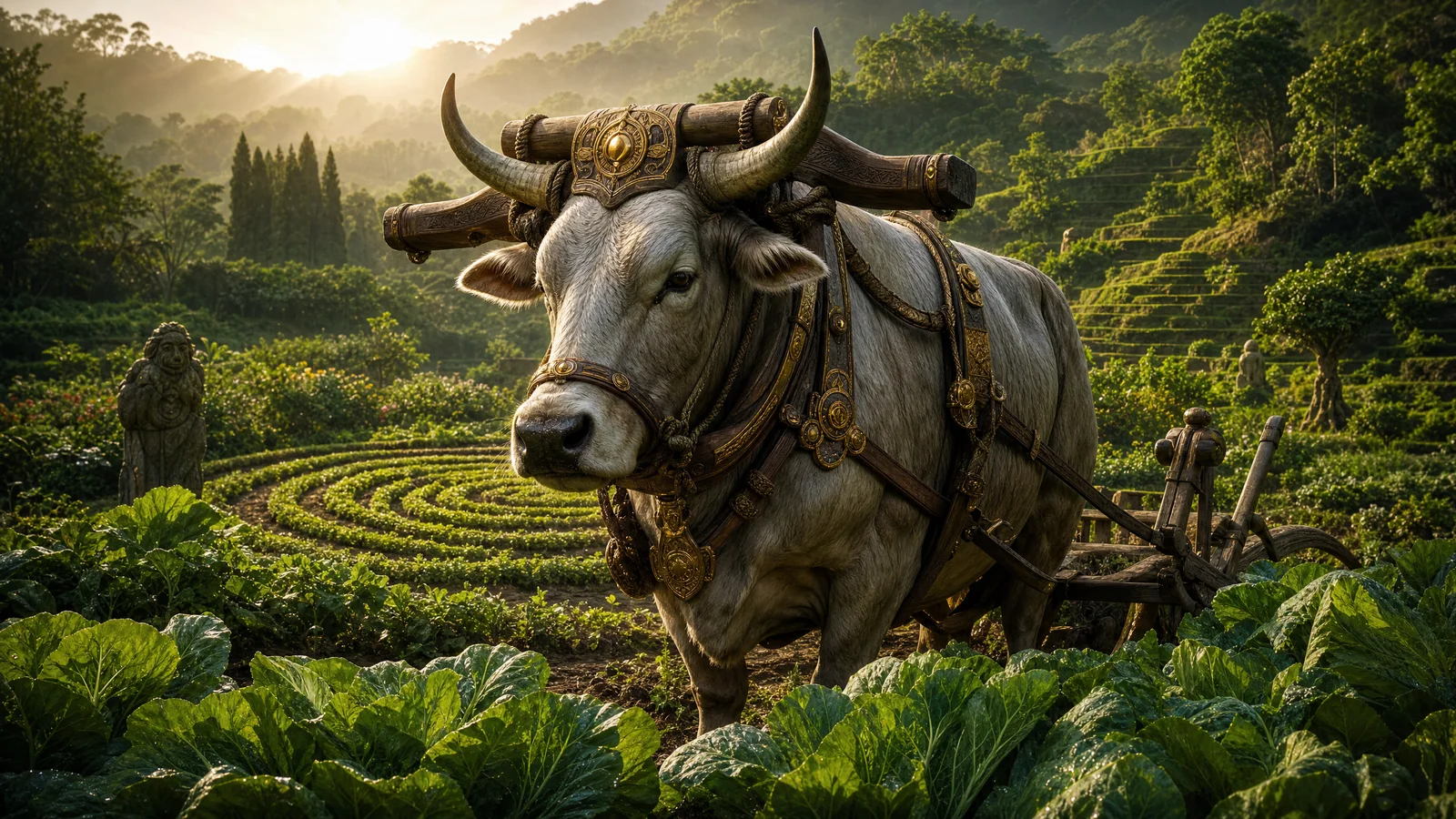
Complete Draft Animal Equipment: From Tree to Team
Draft animals multiply human labor tenfold. This campaign covers yoke construction, harness making, training draft animals, and implement attachment.
Chapter 1: Draft Animals
Animal
Pull Strength
Speed
Temperament
Feed Requirements
Best For
Ox (cattle)
Very high
Slow
Calm, steady
Grass, hay
Plowing, logging, heavy hauling
Horse
High
Fast
Variable
Grain + hay
Plowing, transport, speed work
Mule
High
Moderate-fast
Intelligent, cautious
Grass, hay, some grain
All-purpose, rough terrain
Donkey
Moderate
Slow
Stubborn but reliable
Grass, hay (efficient)
Packing, light hauling
Water buffalo
Very high
Slow
Calm
Grass, water plants
Wet fields, rice paddies
Chapter 2: Ox Yoke Construction
Yoke Type
Animals
Use
Complexity
Head yoke
Single or pair
Light work, training
Low
Neck yoke (bow yoke)
Pair
Heavy work, plowing
Moderate
Withers yoke
Pair
Heavy work (European style)
Moderate
Bow yoke construction: 1) Select yoke beam: hardwood (elm, maple, or ash), 4 feet long, 6x6 inches. 2) Shape beam: rounded on top, flat on bottom. 3) Carve two U-shaped notches (bow seats) spaced to match ox pair. 4) Drill holes for bow pins (vertical holes through beam at each bow seat). 5) Carve bows: bent hardwood (elm or hickory), U-shaped to fit around ox neck. 6) Steam-bend or green-bend bows to shape. 7) Fit bows through beam holes. 8) Secure bows with wooden pins (removable for yoking/unyoking). 9) Attach ring or chain at center of beam (connection point for load). 10) Pad bow seats with leather (prevents chafing). 11) Yoke must fit snugly but not restrict breathing. 12) Each yoke is custom-fitted to a specific pair of oxen.
Chapter 3: Training Draft Animals
Training Phase
Duration
Goal
Method
Halter breaking
1-2 weeks
Accept halter and lead
Patience, gentle handling
Voice commands
2-4 weeks
Respond to gee, haw, whoa
Consistent commands, reward
Yoke training (light)
2-4 weeks
Accept yoke, walk in pair
Empty yoke, short sessions
Light load training
2-4 weeks
Pull light implements
Sled, light log
Full work training
4-8 weeks
Full day's work
Gradually increase load
Voice commands: 1) Gee: turn right. 2) Haw: turn left. 3) Whoa: stop. 4) Get up (or hup): start moving. 5) Back: reverse. 6) Easy: slow down. 7) Commands must be consistent (same word, same tone, every time). 8) Reward correct response immediately. 9) Never punish confusion (re-train, do not punish). 10) Training sessions: short (30-60 minutes) and positive.
Chapter 4: Harness Making
Component
Material
Purpose
Fitting
Collar
Leather, stuffed with straw
Distribute pull force
Must fit neck precisely
Hames
Wood or metal
Attach traces to collar
Fit over collar
Traces
Leather straps or chains
Connect collar to implement
Length matches animal to implement
Belly band
Leather strap
Stabilize traces
Snug but not tight
Breeching
Leather strap around hindquarters
Braking, backing
Allows stopping and reversing
Reins
Leather straps
Steering control
From bit to driver's hands
Bit
Metal
Mouth control
Properly fitted
Chapter 5: Implement Attachment
Implement
Attachment Method
Draft Requirement
Use
Plow (moldboard)
Clevis and pin
1-2 animals
Breaking ground
Harrow (drag)
Chain or rope
1 animal
Smoothing, weed control
Sled (stone boat)
Chain to yoke ring
1-2 animals
Hauling heavy loads
Cart (two-wheel)
Shafts to harness
1 animal
Transport
Wagon (four-wheel)
Tongue to yoke/harness
2-4 animals
Heavy transport
Log (skidding)
Chain wrapped around log
1-2 animals
Logging
Reference Card
An ox is the most practical draft animal (oxen are cheaper than horses, eat only grass, are calm and steady, and can be eaten when retired; they are the ideal homestead draft animal). 2. The yoke must fit perfectly (a poorly fitted yoke causes sores, restricts breathing, and reduces pulling power; every yoke is custom-made for a specific pair). 3. Bows must not restrict breathing (the U-shaped bows fit around the ox's neck; they must be snug enough to transmit force but loose enough to allow full breathing). 4. Voice commands must be consistent (always use the same word in the same tone for each command; inconsistency confuses the animal and delays training). 5. Training takes patience (a well-trained ox team is worth more than the implements they pull; invest 3-6 months in proper training). 6. The collar distributes force (a horse collar spreads the pulling force across the shoulders; without a collar, the horse pulls against its windpipe and cannot work effectively). 7. Breeching allows stopping (the strap around the hindquarters allows the animal to brake and back up; without breeching, the load pushes the animal on downhills). 8. Draft animals multiply labor tenfold (one ox can plow in a day what takes a person a week; draft power is the single greatest force multiplier in pre-industrial agriculture).